In the world of elevated aesthetics, a smile is no longer treated as a simple before-and-after. It is considered an investment in presence, poise, and personal brand. Modern dental procedures now live at the intersection of precision medicine, fine craftsmanship, and nuanced design—quietly shaping the way we are perceived in photographs, boardrooms, and intimate conversations. This is not about obvious “cosmetic work”; it is about cultivated refinement, where dentistry becomes an invisible collaborator in your overall look.
Below, we explore how sophisticated dental procedures are evolving—and share five exclusive insights that discerning patients should understand before embarking on a smile makeover.
Redefining the Modern Dental Procedure
Today’s advanced dental treatments are as much about strategy as they are about technique. A veneer, an implant, or a contouring adjustment is no longer viewed in isolation; leading clinicians now treat the mouth as an integrated environment, taking into account bite dynamics, facial symmetry, gum architecture, and even how the lips rest when you’re not smiling.
This comprehensive approach means that a “procedure” is really a curated sequence of micro-decisions. Shade selection is refined beyond simple color charts; texture and translucency are balanced to avoid the uniform, overly bright appearance that often gives away cosmetic work. Even the way light plays across the front teeth is considered, ensuring that restorations look luminous rather than flat. As a result, the final outcome feels convincingly natural—elevated, but never obvious.
Precision Planning: Where Technology Meets Taste
Digital dentistry has revolutionized how premium practices plan treatment. Intraoral scanners, 3D imaging, and digital smile design software allow your dentist to simulate outcomes with striking accuracy before any irreversible work begins. This offers two key advantages: predictability for the clinician, and creative control for the patient.
However, technology alone is not the differentiator; discernment is. A sophisticated dentist uses digital tools not to chase exaggerated, “perfect” smiles, but to explore subtle, intentional enhancements—adjusting tooth length by fractions of a millimeter, fine-tuning incisal edges, and softening overly sharp contours. When paired with high-resolution photography and video of your natural expressions, digital planning helps ensure that your new smile looks as compelling in motion as it does in a still image. The result is a treatment plan that feels more like bespoke tailoring than one-size-fits-all dentistry.
Materials as Luxury Craft: What You Don’t See Matters Most
In high-end dentistry, material choice is a design decision as much as a clinical one. Not all ceramics and composites are created equal, and discerning patients increasingly ask what their restorations are made from—not just how they will look. Premium porcelain systems, such as modern lithium disilicate or layered feldspathic ceramics, can mimic the nuanced brilliance of natural enamel with remarkable realism.
Equally important is the collaboration between dentist and dental laboratory. Top-tier practices often work with master ceramists who sculpt restorations by hand, layering different porcelains to replicate depth, translucency, and micro-texture. They may individualize each tooth with subtle characterization—tiny details that avoid the “identical veneer” look. While this craftsmanship is nearly invisible to others, it makes all the difference in photographs, under varied lighting, and in how restorations age over time. Luxury in dentistry often resides not in what you notice, but in what others never suspect has been done.
Five Exclusive Insights for Discerning Smile Seekers
For those considering a sophisticated dental makeover, there are quiet truths that rarely make it into mainstream conversations. These five insights can help you navigate the process with clarity and confidence:
- Your bite is the silent architect of long-term success.
A beautifully designed smile can fail prematurely if the bite (occlusion) is not properly balanced. Subtle misalignments can lead to chipping, fractures, jaw tension, or headaches. High-level clinicians often begin with a detailed occlusal analysis—sometimes incorporating bite splints, minor orthodontics, or selective reshaping of enamel—to ensure your new restorations are built on a stable, harmonious foundation.
- Gums frame the smile as much as the teeth.
Gum levels that are uneven or too prominent can make teeth appear short, asymmetrical, or “crowded” even when they are not. Minimally invasive soft-tissue procedures—such as laser gum recontouring or crown lengthening—can transform the aesthetics of the smile before a single porcelain veneer is placed. The most refined results typically come from balancing tooth proportions with carefully sculpted gingival architecture.
- Not every tooth should be flawless.
Hyper-symmetric, uniformly bright teeth often look artificial. Natural smiles contain intentional irregularities: a slightly varied edge, a gentle rotation, a whisper of translucency near the tips. Advanced cosmetic dentists often preserve or recreate these elements on purpose, integrating them into the design so the overall effect is polished but believable. The art lies in knowing which “imperfections” to keep.
- Longevity is a design choice, not just a material property.
While premium ceramics are durable, their lifespan is strongly influenced by how they are designed and placed. Proper thickness, adhesion techniques, bite calibration, and even a custom nightguard can extend the life of restorations significantly. A sophisticated treatment plan anticipates how your smile will behave over years—not just how it will look the day you leave the chair.
- The consultation is as critical as the procedure itself.
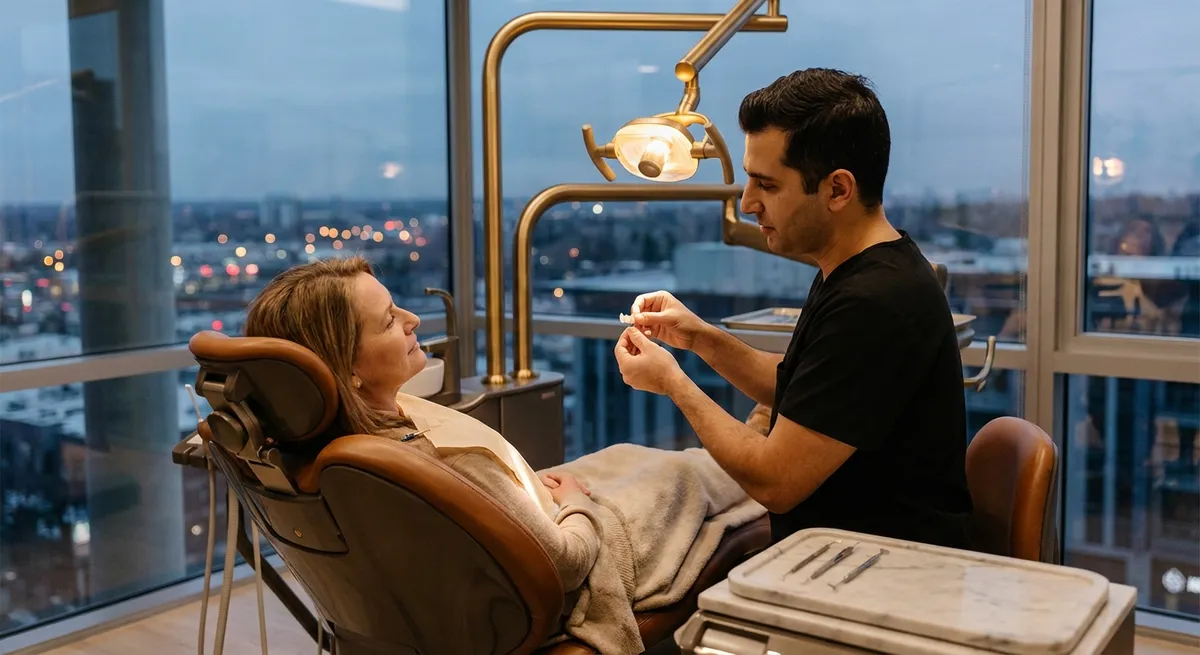
In elevated dentistry, the most revealing moments often happen before any instruments are picked up. A meaningful consultation should feel like a design interview: your lifestyle, professional demands, camera exposure, travel schedule, and aesthetic preferences all guide the strategy. The best outcomes emerge when patients articulate how they want their smile to feel—approachable, powerful, youthful, understated—and the clinician translates those descriptors into specific design choices.
Comfort, Recovery, and the Luxury of a Seamless Experience
Modern dental procedures at the premium level place equal emphasis on comfort and discretion. Advanced anesthetic techniques, sedation options, and minimally invasive preparations mean that many treatments are far more comfortable than patients anticipate. For complex cases, procedures may be staged in a way that minimizes downtime, with carefully designed temporaries that look remarkably polished during the transition.
High-end practices often coordinate with patients’ work and travel commitments, offering condensed treatment timelines, extended appointments, or collaboration with other specialists to consolidate visits. Follow-up care is similarly elevated: custom maintenance plans, hygienists trained in caring for ceramic restorations, and ongoing monitoring of bite changes help preserve results. The goal is a journey that feels thoughtfully choreographed—from first scan to final polish—so that your upgraded smile seamlessly integrates into an already demanding life.
Conclusion
Sophisticated dental procedures today are defined less by dramatic reveal photos and more by their quiet, enduring impact. When done well, they do not announce themselves; they simply allow your face, your expressions, and your presence to register at their absolute best. By understanding the importance of bite harmony, gum design, material craft, nuanced “imperfections,” and a meticulously curated consultation, you step into the process as an informed collaborator rather than a passive recipient.
In this elevated space, dentistry is no longer just about fixing teeth. It becomes the fine-tuned, invisible infrastructure behind a smile that feels authentically yours—only exquisitely refined.
Sources
- American Academy of Cosmetic Dentistry – About Cosmetic Dentistry - Overview of modern cosmetic dentistry principles, materials, and treatment considerations
- Mayo Clinic – Dental Veneers - Clinical explanation of veneer procedures, benefits, and risks
- Columbia University College of Dental Medicine – Occlusion and Bite - Educational material on occlusion, bite mechanics, and their importance in dental treatment
- National Institute of Dental and Craniofacial Research (NIDCR) - Research-based information on tooth wear and factors affecting long-term dental health
- Harvard School of Dental Medicine – Esthetic Dentistry and Smile Design - Insight into contemporary esthetic dentistry concepts and interdisciplinary approaches
Key Takeaway
The most important thing to remember from this article is that this information can change how you think about Dental Procedures.