A remarkable smile is rarely an accident. It is the outcome of intention, nuance, and collaboration between patient and clinician—an aesthetic conversation translated into enamel, porcelain, and proportion. Today’s most refined smile makeovers are no longer about simply “fixing teeth”; they are about crafting a look that feels inherently yours, harmonizing with your features, your lifestyle, and even your personal brand.
In this world of elevated smile design, the difference between “nice” and “exceptional” lies in subtleties most people never see—but always sense. Below, we explore five exclusive insights that quietly shape the most coveted smile transformations.
Redefining Beauty: From Perfect Teeth to Personal Symmetry
The era of identikit, ultra-white, identically shaped teeth is gracefully fading. In its place: a more curated concept of beauty that favors personal symmetry over textbook perfection.
Elite cosmetic dentists now look beyond the dental arch and study the entire facial composition—cheekbones, lip dynamics, nose, chin, and even eye shape—to define what will look authentically “right” on you. The goal is not mathematical perfection; it is visual balance. A slightly softened lateral incisor, a gentle variation in length, or a deliberately restrained whiteness can keep a smile from looking artificial.
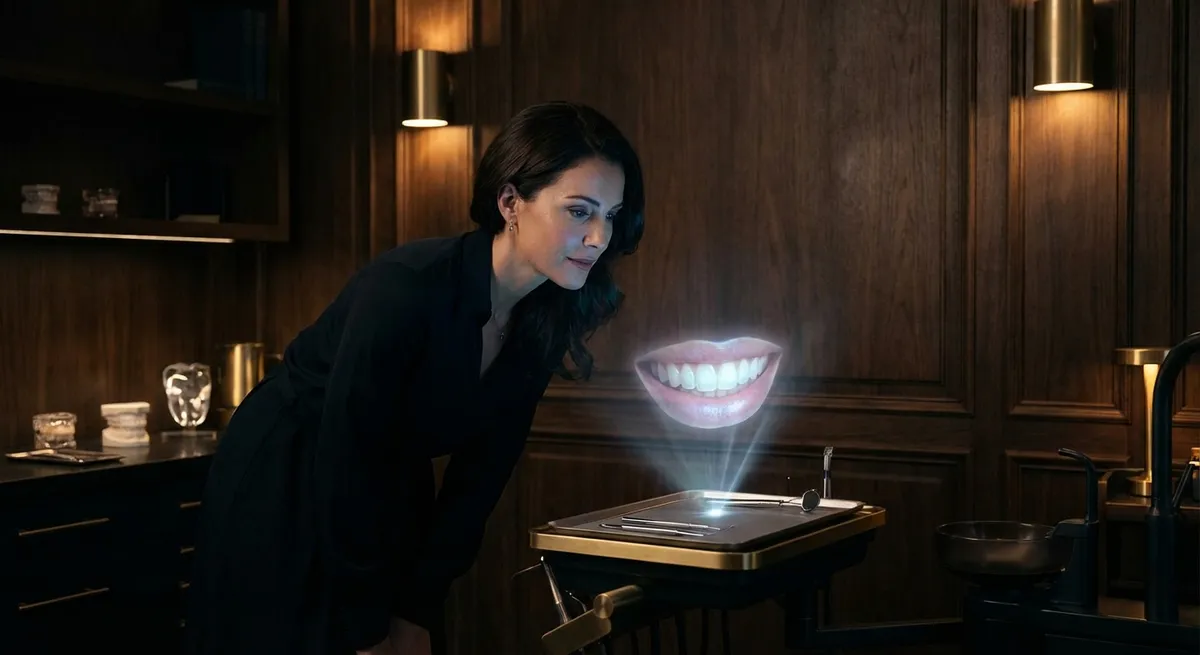
Digital smile design software allows your dentist to overlay proposed changes on photographs or video of your face in motion. This introduces a level of precision that goes far beyond a static before-and-after shot. Your smile is evaluated as you speak, laugh, and rest—because a luxurious result must perform beautifully in every context, not just under studio lighting.
The most refined outcomes are those that seem almost inevitable, as though your smile could never have been any other way. That effect is carefully engineered.
The New Language of Texture, Translucency, and Light
To the untrained eye, porcelain is porcelain. To a discerning clinician and a skilled master ceramist, it is a medium with almost infinite possibilities. Texture, translucency, and the way a surface interacts with light are now key tools in sophisticated smile design.
Natural teeth are not flat and uniformly shiny. They have micro-textures, subtle ridges, and delicate gradations of translucency from the incisal edge to the neck of the tooth. High-end veneers and crowns seek to replicate this complexity. Instead of a single, opaque shade, they may incorporate multilayered porcelains, micro-layered stains, and tailored surface polishing that mimics the way light passes through and reflects off real enamel.
The result is a smile that does not shout “cosmetic work” but instead exudes an understated radiance. In professional and social settings, this distinction is vital; a glossy, overly uniform smile can be as conspicuous as a logo-laden accessory. A thoughtfully textured, light-responsive restoration, by contrast, reads as quiet luxury.
Patients seeking this level of refinement should ask about the laboratory their dentist partners with, the type of ceramic used, and whether a dedicated ceramist will customize shade and texture chairside. That collaboration is often where the magic happens.
Precision Planning: Why Mock-Ups and Trials Are the New Standard
In elevated smile makeovers, guesswork is no longer acceptable. Precision planning—often involving digital models, 3D scans, and physical mock-ups—has become the new standard for those who expect an exacting result.
A diagnostic wax-up or digitally printed mock-up is essentially a rehearsal for your future smile. These prototypes allow you to see and feel the proposed changes before any definitive work is done. In some practices, temporary “trial smiles” are placed so you can live with the new shape, length, and contour in real time, under real lighting, in your real life.
This trial phase is invaluable for fine-tuning details: the way your upper incisors show when you say certain words, whether the length feels appropriate when you relax your lips, or how your new smile photographs at events. Subtle adjustments at this stage—fractional millimeters of contouring—can make the difference between “almost right” and impeccably right.
For patients investing in a comprehensive makeover, this level of foresight protects both outcome and peace of mind. You are no longer simply “hoping” to love your new smile; you are co-directing its design.
The Lifestyle Equation: Designing for How You Live, Not Just How You Look
A truly bespoke smile does more than complement your features—it aligns with your lifestyle and daily realities. The most sophisticated smile design consultations quietly explore questions that extend beyond color charts and photographs: How do you use your teeth? Do you travel frequently? Are you on camera often? Do you grind or clench?
A frequent public speaker, for example, may benefit from slightly more visible upper teeth at rest to maintain a youthful, engaged appearance under lighting. Someone who travels extensively might prioritize durable materials and streamlined maintenance protocols. A patient with bruxism may require customized night guards, reinforced ceramics, or alternative treatment options to preserve both function and aesthetics.
Your diet, wellness habits, and even aesthetic preferences in fashion and beauty can inform design choices. An individual who favors a minimal, natural aesthetic may prefer a softer, warmer shade and subtle characterization. Someone with a more polished, high-glamour style might gravitate toward a brighter, high-luster smile—with careful restraint to keep it refined, not theatrical.
This lifestyle-driven approach ensures your smile does not simply look exquisite on day one but continues to feel at home in every chapter of your life.
Longevity as Luxury: Quiet Engineering Behind a Seamless Result
While the visual transformation often takes center stage, the true luxury of advanced smile design lies in longevity. The best work is underpinned by quiet engineering: periodontal health, precise bite alignment, and minimally invasive preparation whenever possible.
A meticulously designed bite distributes forces evenly, protecting both natural teeth and restorations from premature wear or fractures. High-caliber clinicians use digital bite analysis, detailed occlusal mapping, and sometimes orthodontic refinement before veneers or crowns to create a stable, harmonious foundation. This is not over-treatment—it is future-proofing.
Equally critical is the health of the supporting tissues. Well-contoured margins, biocompatible materials, and careful gum management help prevent inflammation and recession, which can quickly undermine even the most beautiful work. Paired with tailored home-care routines and professional maintenance, these decisions allow your smile to age gracefully, rather than visibly “expire.”
In this sense, the most luxurious smile is not the one that looks the most dramatic initially, but the one that remains quietly impeccable five, ten, or fifteen years later—with minimal intervention and maximum ease.
Conclusion
Elevated smile design is as much about discretion and intention as it is about visible transformation. It relies on an intimate understanding of facial harmony, the physics of light, the realities of daily life, and the quiet engineering that preserves beauty over time.
For those considering a dental makeover, the path to an exceptional result is not a single procedure but a curated process: collaborative planning, thoughtful material choices, lifestyle alignment, and a commitment to long-term health. When all of these elements converge, the outcome is not merely a better smile—it is a refined expression of who you are, captured in a single, effortless glance.
Sources
- American Academy of Cosmetic Dentistry (AACD) – Cosmetic Dentistry Overview – Outlines principles of modern cosmetic dentistry, including smile design, materials, and treatment options.
- Journal of Esthetic and Restorative Dentistry – Esthetic Smile Analysis – Peer-reviewed research on facial and dental esthetics, symmetry, and design considerations.
- Mayo Clinic – Veneers – Explains veneers, indications, and considerations for long-term success.
- Harvard School of Dental Medicine – Research & Publications – Provides insight into emerging evidence-based approaches in restorative and esthetic dentistry.
- U.S. National Library of Medicine (NIH PubMed) – Digital Smile Design and Esthetics – Discusses digital smile design workflows and their impact on predictability and patient satisfaction.
Key Takeaway
The most important thing to remember from this article is that this information can change how you think about Smile Design.