When cosmetic dentistry is executed at the highest level, it feels less like “having work done” and more like revealing a more composed, more confident version of yourself. Today’s most refined smile makeovers are not defined by whiteness alone, nor by a single procedure, but by a thoughtful orchestration of proportion, texture, light, and time. For those accustomed to investing in craft—whether in tailoring, interiors, or skincare—the same discerning eye can (and should) be applied to your smile. What follows are five exclusive, often-overlooked insights that separate a merely improved smile from one that feels effortlessly, unmistakably you.
Redefining Aesthetic Success: From “Perfect” to Persuasive
In premium cosmetic dentistry, the goal is no longer the “perfect” smile; it is a persuasive one—credible, coherent, and in harmony with your overall aesthetic.
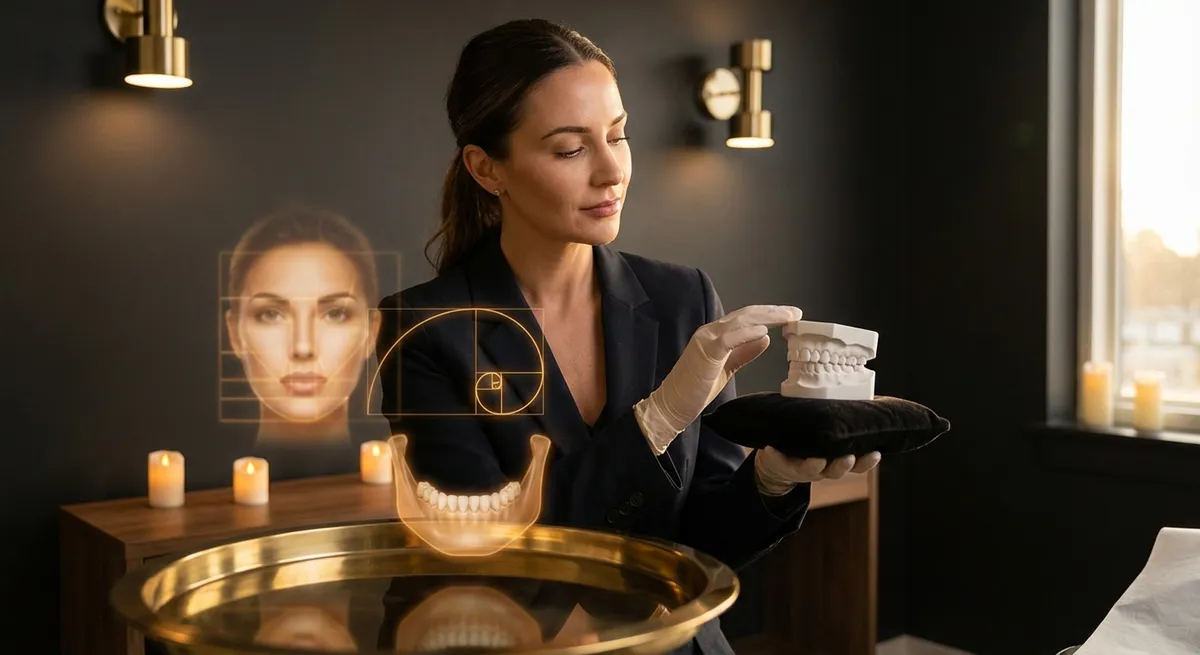
A persuasive smile respects your natural facial architecture: the width of your cheekbones, the strength of your jawline, the curve of your lips at rest, even your preferred hairstyle and glasses. Rather than chasing a generic “Hollywood” template, leading cosmetic dentists build a visual narrative that feels consistent with how you already present yourself—your wardrobe, your grooming, your posture.
This may mean deliberately preserving a tiny, characteristic asymmetry or softening the apparent “perfection” of veneers with subtle texturing and shade variation. The result is a smile that looks naturally elevated, not newly installed. Patients often report that friends can’t quite identify what changed—only that they appear more rested, more polished, somehow more composed. That quiet credibility is the new gold standard.
Insight 1: Shade Is a Gradient, Not a Number
Most people arrive at a consultation asking, “How white can we go?” The more discerning question is, “How refined can we make the shading?”
Professional shade guides include a wide spectrum of whites, but within each shade are nuances: translucency at the edges, a warmer core in the center of the tooth, subtle halo effects under certain lighting. High-caliber cosmetic work uses layered porcelains or advanced composites to mimic these natural variations, rather than a single flat shade.
For patients who are often photographed—on stage, in boardrooms, or under event lighting—this is crucial. Extremely opaque, ultra-white restorations can look striking on social media, yet appear artificial in natural light or during close conversation. A sophisticated smile makeover respects different lighting environments and camera angles, ensuring your teeth respond to light the way healthy enamel does: with gentle depth, not a hard glare.
The most exclusive outcome is often a “premium natural” shade: brighter than your original teeth, but calibrated with warmer undertones that flatter your skin tone and age. When done well, the teeth don’t read as “white” first; they read as “healthy, luminous, and completely plausible.”
Insight 2: Micro-Texture Is the Hidden Signature of Luxury Dentistry
At first glance, all veneers can look similar. But under natural light—especially at a conversational distance—micro-texture is what separates luxury work from mass-produced.
Natural enamel is not glass-smooth. It has vertical ridges, faint undulations, and a soft, almost satin-like surface. Expert ceramists replicate these tiny details by hand: delicate vertical striations, slightly varied surface reflectivity, and gentle transitions between the front and edge of each tooth. These details control how light scatters, which is why truly elite veneers don’t simply look white; they look alive.
Micro-texture also influences function and comfort. A tooth that is too slick can feel unfamiliar to the tongue and can alter how you pronounce certain sounds initially. With anatomical detailing, the teeth integrate more seamlessly into your bite and speech patterns.
When reviewing a dentist’s portfolio, look closely for close-up images of the teeth in natural light. Can you see gentle texture, or do the teeth look overly shiny and flat? That small distinction often reveals the level of craftsmanship behind the work.
Insight 3: Smile Design Should Begin with Your Lifestyle, Not Just Your Teeth
A premium smile makeover is as much a lifestyle consultation as it is a clinical evaluation. The wear patterns on your teeth, your daily routines, your travel schedule, and even your professional demands all shape the ideal treatment plan.
Patients who travel frequently or lead highly visible careers may require phased treatment, temporary restorations designed to photograph well, and maintenance protocols that fit a demanding schedule. Night-time clenching, frequent coffee or red wine, and athletic activity all influence material choice—whether your dentist recommends ultra-strong ceramics, layered porcelains, or high-end composite bonding for micro-adjustments.
The way you use your teeth in daily life also matters. Do you speak frequently in public? Your dentist may subtly adjust tooth length and position to support clearer enunciation. Do you prefer minimal maintenance? Your plan might emphasize treatments that age gracefully with low intervention, such as careful orthodontic alignment combined with conservative bonding and professional whitening.
True personalization means your smile is not only beautiful at the final reveal, but also realistic to maintain without disrupting the rest of your life.
Insight 4: Strategic Minimalism Can Outperform a Full-Veneer Approach
In certain circles, a “smile makeover” is assumed to mean a full set of veneers. In the most sophisticated practices, however, restraint is often the more intelligent luxury.
Thoughtful cosmetic dentists now begin by asking what can be preserved. Subtle orthodontics (including clear aligners), targeted gum contouring, precise whitening, and highly skilled bonding can often transform a smile with far less removal of natural tooth structure. In some cases, veneers may be recommended only for a handful of key teeth that dominate the smile line, while adjacent teeth are harmonized through less invasive treatments.
This strategic minimalism offers several advantages. First, it preserves more of your enamel, which is your most valuable natural material for long-term oral health. Second, it allows for future adaptability: as your face naturally changes with age, your dentist can fine-tune or update select restorations rather than redesigning an entire arch.
For the aesthetically attuned, there is also a philosophical appeal: knowing that your smile has been refined with precision rather than overwritten. The work feels like an edit, not a replacement.
Insight 5: The Most Successful Makeovers Plan for How You’ll Age
A truly elevated smile makeover is designed not just for this year’s photographs, but for the way your face and features will evolve over the next decade.
Teeth naturally wear and shift. Lips lose some volume over time. The lower third of the face can subtly shorten with age. A forward-thinking dentist anticipates these changes and builds in allowances—slightly more length in areas that may wear, materials chosen for their ability to be polished or revised, and tooth shapes that will still look appropriate and balanced if your lips become less full.
For patients considering other aesthetic treatments—such as orthodontics, dermal fillers, or jawline-enhancing procedures—coordination between providers can be invaluable. Aligning the timing and extent of dental work with facial aesthetic plans prevents competing outcomes: a too-aggressive tooth length combined with future lip volume, for example, can appear exaggerated instead of refined.
The quiet hallmark of a well-planned makeover is that your smile continues to look “right” as you age—neither too youthful in a way that feels incongruent, nor prematurely worn. It evolves with you, rather than against you.
Conclusion
Cosmetic dentistry at its highest level is less a procedure and more a curated collaboration. It blends clinical precision, material science, and an almost sartorial attention to proportion and detail. When approached thoughtfully—with an emphasis on shading nuance, micro-texture, lifestyle integration, strategic minimalism, and graceful aging—a smile makeover becomes something more enduring than a trend-driven transformation.
For those who value quiet excellence, the most rewarding outcome is not that your smile looks “done,” but that it feels inevitable—exactly the smile you were meant to have, revealed through expertise you hardly notice, yet benefit from every time you enter a room, speak, or simply catch your reflection.
Sources
- American Academy of Cosmetic Dentistry (AACD) – What Is Cosmetic Dentistry? - Overview of cosmetic procedures and considerations from a leading professional organization
- Mayo Clinic – Dental Veneers - Explains veneer materials, risks, and how they interact with natural tooth structure
- Columbia University College of Dental Medicine – Esthetic Dentistry - Academic perspective on modern esthetic techniques and treatment planning
- National Institute of Dental and Craniofacial Research (NIDCR) – Oral Health Topics - Evidence-based information on oral health foundations relevant to long-term cosmetic outcomes
- Journal of Esthetic and Restorative Dentistry – Clinical Considerations in Smile Design - Peer-reviewed research on principles guiding contemporary smile design and material selection
Key Takeaway
The most important thing to remember from this article is that this information can change how you think about Cosmetic Dentistry.