A beautifully designed smile doesn’t look “done”; it looks inevitable—quietly aligned with who you are, how you move, and how you live. Contemporary smile design has evolved far beyond simply straightening teeth or whitening enamel. It has become a bespoke, high-precision discipline where aesthetics, function, and personality are orchestrated with the same care you would expect from haute couture or custom architecture.
This is the world where millimeters matter, digital planning meets human intuition, and the end result is not just a better smile, but a more considered expression of self. Below are five exclusive insights that sophisticated patients are using to elevate their dental makeovers from “nice result” to “impeccably curated.”
The Smile as Portrait: Designing for Your Face, Not Just Your Teeth
A refined smile makeover starts well beyond the mouth. Leading cosmetic dentists evaluate your entire facial composition: the width of your cheekbones, the softness or sharpness of your jawline, lip volume, midface support, and even how your face ages when you speak or laugh.
High-level smile design is less about “perfect” teeth and more about proportion and coherence. For example, slightly softer corner angles on veneers may harmonize better with a rounded facial structure, while more defined incisal edges might complement a sharper, angular profile. The goal is to create a smile that looks native to your face, not imported.
Sophisticated practitioners now employ facially driven treatment planning—often using 2D photography and 3D scans overlayed with your facial features—to ensure that tooth length, width, and position work in concert with your lips and facial expressions. The result is a smile that doesn’t dominate the face, but frames it with quiet precision.
Beyond Shade Charts: The Nuance of Color, Texture, and Translucency
To the untrained eye, “white” is the objective. To the discerning patient, it is merely a starting point.
Premium smile design takes a layered approach to color. Natural teeth are rarely a single shade; they display gradations—slightly deeper chroma near the gumline, more translucency at the edges, faint internal halos, and subtle surface characteristics like perikymata or micro-texture. These small details are what separate an elegant, believable restoration from an obviously cosmetic one.
Bespoke veneers and crowns can be customized with:
- Controlled translucency at the incisal edges for a youthful yet understated glow
- Micro-texturing (barely perceptible grooves and ridges) that catch and diffuse light realistically
- Custom saturation that respects your skin tone, lip color, and even your preferred makeup palette
This is the difference between a standardized “celebrity white” and a refined, tailored brightness that looks luxurious in daylight, office lighting, and flash photography—without ever veering into artificial.
The Dynamics of a Moving Smile: Designing for Speech, Laughter, and Everyday Life
A truly refined smile is evaluated in motion, not just as a still frame. You don’t live in a portrait; you live in conversations, laughter, and subtle micro-expressions throughout the day.
Forward-thinking dentists will often record short videos of you speaking, smiling, and laughing to evaluate:
- How far the upper lip rises when you smile
- How visible the lower teeth become during speech
- Whether your gums show—and if so, how to manage that elegantly
- How your jaw and lips move through natural conversation
This helps refine decisions such as how much tooth length to show at rest, whether the smile line should closely follow the curve of the lower lip, and how to soften transitions so the smile looks fluid rather than “switch-like.”
Designing for motion is also crucial for comfort and function. Overly bulky restorations can interfere with speech sounds (particularly “s,” “f,” and “v”), while poorly balanced bite adjustments can strain muscles and joints. A high-end smile design process cares just as much about how your smile performs in a busy workday as it does in curated photographs.
Silent Engineering: Bite Harmony as the Hidden Luxury
Many patients focus on what they see: symmetry, brightness, alignment. But the quiet luxury of an exceptional smile makeover lies in what you don’t feel—no clicking joints, no muscle fatigue, no mysterious headaches or chipped edges months later.
Sophisticated smile design integrates occlusal (bite) analysis from the outset. This may include:
- Digital or analog bite records to map how your teeth contact in real time
- Assessment of functional pathways, such as how your teeth glide during chewing and side-to-side movements
- Evaluation of parafunctional habits, like clenching or grinding, that can damage new restorations
A well-designed bite distributes forces evenly. This preserves both natural teeth and restorations, and can subtly soften facial tension, particularly in the lower face and jawline. For some patients, bite harmony even contributes to a more relaxed overall expression—one of the most underappreciated benefits of a properly engineered smile.
The most elite results are not just photogenic; they are structurally calm. You feel it every time you eat, speak, or rest your teeth together—and notably, you don’t think about it at all.
Personal Signature Details: Subtle Customization That No One Can Quite Name
High-end smile design embraces the concept of a “personal signature”—small, intentional deviations from textbook perfection that make your smile distinctly yours.
These might include:
- A microscopically asymmetric incisor length, echoing natural imperfection
- Slightly softened canine tips for a gentle, less aggressive aesthetic
- A custom degree of translucency at specific edges to mimic the character of your younger teeth
- Harmonizing the smile with other features, such as lip fillers, orthodontic refinement, or even future facial treatments
When executed well, these choices are nearly impossible for others to pinpoint, yet they dramatically affect how authentic your smile appears. Instead of a uniform, “template” look, you gain a smile that feels innately familiar—like a beautifully restored version of what was always meant to be there.
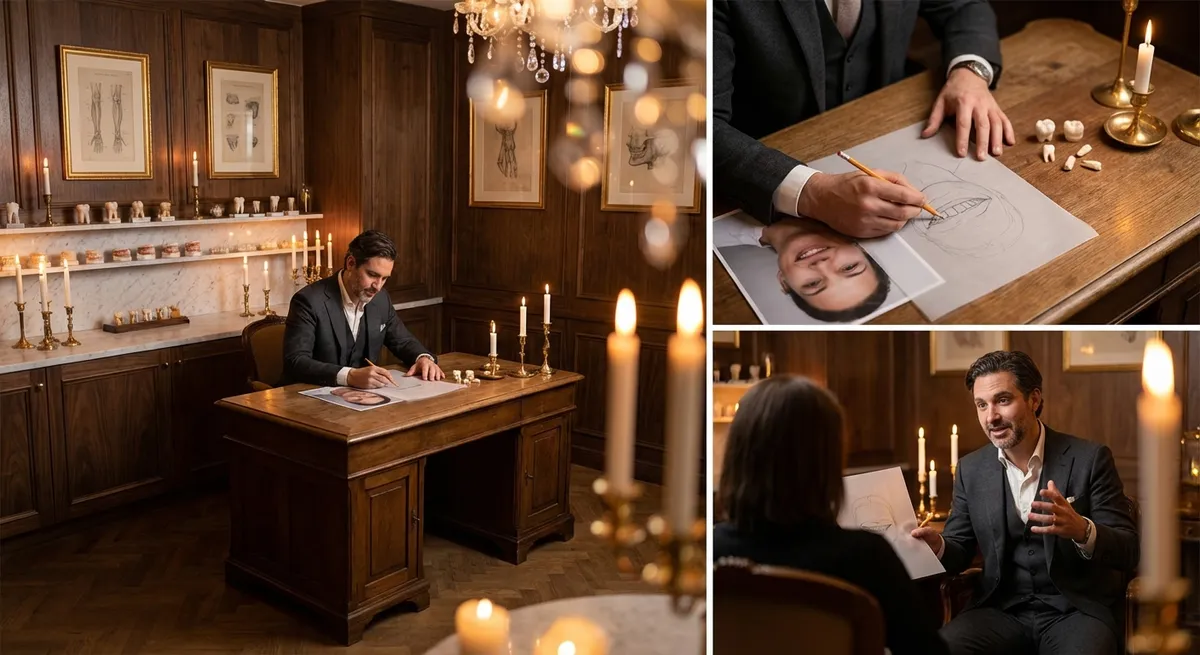
In premium settings, this personalization can extend to a collaborative design session, where you and your dentist review mock-ups or temporary restorations and fine-tune them with the same attention you might give to tailoring a couture garment. The standard is not simply “better than before,” but “precisely right for you.”
Conclusion
A sophisticated smile makeover is not a single procedure; it is a curated process. It blends facial analysis, color science, motion-aware design, functional engineering, and personal nuance into one cohesive outcome. The finest results are the ones that draw no overt attention—only quiet admiration and an intuitive sense that everything about your expression feels balanced, confident, and entirely your own.
For those seeking more than a generic cosmetic upgrade, modern smile design offers something rarer: a meticulously considered, enduring enhancement that respects both your aesthetics and your daily life. It is less about changing your smile, and more about revealing it at its highest possible resolution.
Sources
- American Academy of Cosmetic Dentistry (AACD) – About Cosmetic Dentistry – Overview of cosmetic dentistry principles, including aesthetics, materials, and planning
- UCLA School of Dentistry – Esthetic Dentistry Overview – Describes how modern esthetic dentistry integrates function, facial harmony, and individualized planning
- Mayo Clinic – Dental Veneers – Evidence-based explanation of veneer indications, benefits, and limitations
- Harvard Health Publishing – Grinding, Clenching, and the Dental Bite – Discusses how bite issues and parafunctional habits affect teeth and restorations
- NYU College of Dentistry – Digital Dentistry and Smile Design – Outlines how digital tools and 3D planning are used in contemporary smile design and restorative care
Key Takeaway
The most important thing to remember from this article is that this information can change how you think about Smile Design.