The most compelling smiles rarely happen by accident. They are thoughtfully curated—subtle compositions of proportion, color, and character that feel as natural as they look refined. Today’s elevated smile design is less about “perfect teeth” and more about orchestrating a look that aligns with your face, lifestyle, and personal brand. For those considering a dental makeover, understanding the nuances behind that curation can mean the difference between a generic cosmetic result and a smile that feels exquisitely, unmistakably yours.
Below, explore five exclusive insights that the most discerning patients use to guide their smile transformation—insights that go far beyond shade charts and before-and-after photos.
Beyond Symmetry: Designing a Smile with Personality, Not Uniformity
Many assume that the ideal smile is perfectly symmetrical, uniformly bright, and identically shaped from tooth to tooth. In premium smile design, that thinking is outdated. A refined smile retains a sense of individuality—what high-end designers might call “intentional irregularity.”
Subtle variations in tooth length, contour, or translucency can keep the smile from looking artificial. The two front teeth may be slightly more prominent to create a focal point, while lateral incisors can be delicately shorter or softer in shape to introduce charm and approachability. Even the smallest details—micro-texture on the enamel, a carefully preserved gap, or a controlled asymmetry—can become part of your visual signature.
Sophisticated smile design does not erase character; it curates it. The goal is harmony, not uniformity. When done correctly, observers notice how good you look, not that you “had your teeth done.”
Exclusive Insight #1: The most elevated smiles preserve a touch of asymmetry and individuality—by design, not by accident.
The Architecture of Proportion: How Your Face Quietly Dictates Your Smile
A premium smile makeover begins long before any tooth is touched. It starts with facial analysis—the architecture around the mouth that quietly dictates what will look both natural and elevated.
Your facial shape (oval, heart, square, or diamond), lip dynamics (how much tooth you show at rest and during a full smile), and midline alignment all influence ideal tooth size and positioning. The “golden proportion” may serve as an initial guideline, but today’s sophisticated clinicians use it flexibly, adapting ratios to suit your specific facial features and style preferences.
The vertical dimension—the distance between your nose and chin when your teeth are together—can subtly affect everything from perceived age to jawline definition. Adjusting this with carefully planned restorations can soften a harsh profile, refine facial support around the lips, or gently rejuvenate a tired expression.
Refined smile design is architectural: each tooth is placed with an eye toward the entire face, not just the mouth. The result is a smile that feels native to your features, as if you were born with it at its best.
Exclusive Insight #2: Your ideal smile is not a template; it’s an architectural response to your unique facial structure, lip movement, and profile.
Color as Couture: Custom Shades, Translucency, and the New Luxury of “Understated White”
In entry-level cosmetic dentistry, “white” often means one thing: as bright as possible. In elevated smile design, color is treated more like couture fabric—carefully chosen for depth, nuance, and context.
Tooth color has multiple dimensions: value (lightness), chroma (intensity), and hue (underlying warmth or coolness). A refined smile rarely uses a single flat shade. Instead, it layers slightly different tones near the gumline, along the center of the tooth, and toward the biting edge to mimic natural light behavior.
Translucency is equally critical. Natural enamel allows light to pass through at the edges, creating a subtle halo effect. Overly opaque restorations may photograph well but can appear heavy or “chalky” in real life. A skilled ceramist can introduce very fine gradations of translucency, tiny internal characterizations, and even micro-gloss variations to produce a luminous, life-like finish.
The new luxury is an “understated white”: bright enough to feel fresh and polished, but tuned to your skin tone, eye color, and age so it looks sophisticated rather than overdone.
Exclusive Insight #3: True luxury in tooth color lies in layered nuance—subtle translucency and tone variations that behave like natural enamel under real-world lighting.
The Lifestyle Blueprint: Designing for How You Live, Not Just How You Look
A premium smile is not only an aesthetic object; it’s a functional, everyday companion. The best clinicians design smiles around your actual life—your profession, habits, speech, and even the way you interact socially.
If you speak frequently on camera or on stage, your dentist may prioritize precise phonetics, ensuring that tooth length, thickness, and positioning complement your speech patterns. If you are a frequent coffee or red wine drinker, material choices may lean toward ceramics with superior stain resistance and polish retention over time.
Night grinding or clenching demands a different design strategy—subtle adjustments to bite, reinforcement in high-stress areas, and protective appliances to preserve your investment. Even your wardrobe palette and personal style can inform shade, contour, and overall expression: bolder, more angular lines for a modern aesthetic; softer edges and warmer tones for a more classic or understated presence.
A sophisticated smile makeover functions as quietly and reliably as a well-tailored suit. It integrates into your life so seamlessly that you forget about it—while everyone else silently notices.
Exclusive Insight #4: The most successful smile designs are lifestyle-aware: they account for how you speak, eat, dress, and present yourself in daily life and on camera.
The Art of Trial Smiles: Experiencing Your Future Look Before Committing
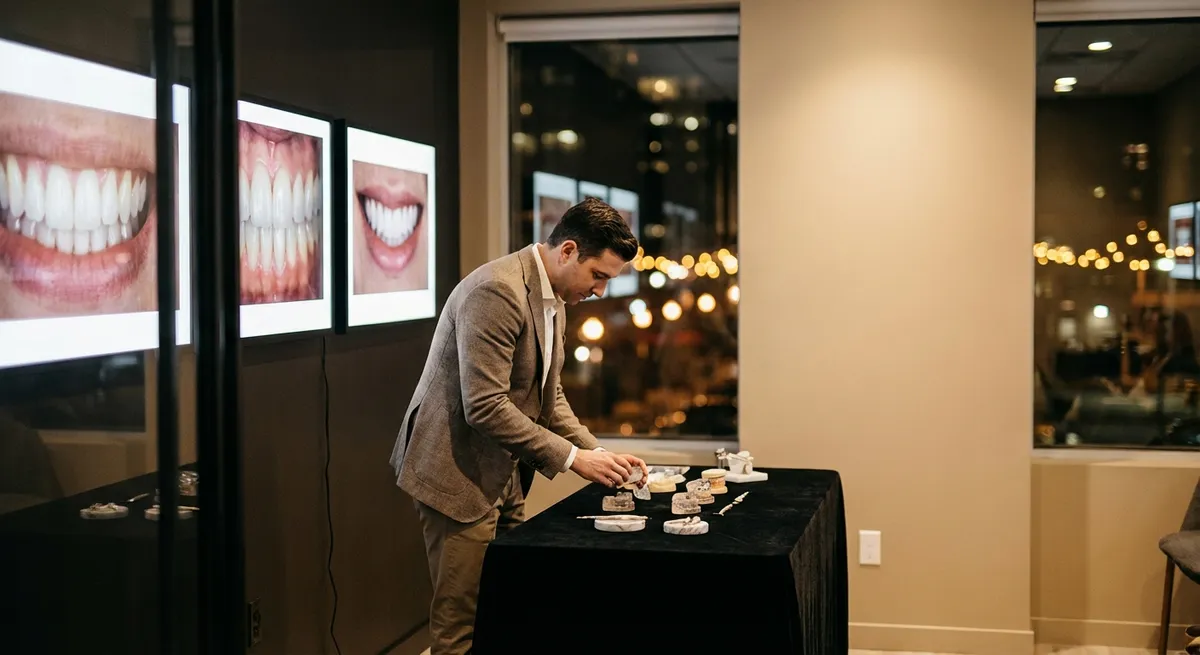
One of the most underappreciated luxuries in modern smile design is the ability to “test drive” your future smile. This goes far beyond digital simulations. Thoughtful clinicians often offer a physical mock-up—sometimes directly on your teeth with temporary material, sometimes via 3D-printed prototypes—that allows you to see, feel, and live with a preview before finalizing anything permanent.
This trial phase is where subtle refinements happen: perhaps the front teeth feel slightly too long when you speak, or a contour catches the light a bit more than you’d like in photographs. Adjustments can then be made to length, width, texture, and even color balance based on how the smile performs in real conditions—natural daylight, indoor lighting, video calls, and high-resolution photography.
For discerning patients, this stage is invaluable. It transforms the process from passive acceptance to active collaboration, ensuring that the final outcome isn’t just “beautiful” by clinical standards but deeply aligned with your own aesthetic instincts.
Exclusive Insight #5: A trial smile—both digital and physical—lets you co-create and refine your result before committing, elevating the process from treatment to true collaboration.
Conclusion
Elevated smile design is not a quick cosmetic fix; it is a curated, multidisciplinary experience that blends architecture, artistry, and lifestyle intelligence. The most refined results respect your individuality, honor your facial structure, and anticipate how your smile must perform in the real world—under scrutiny, on camera, and in the quiet intimacy of everyday life.
For those seeking more than a generic makeover, the path forward lies in thoughtful questions and deliberate choices: How will this smile age with me? Does it reflect who I am, not just how I wish to appear? And most importantly, does the process invite me to be a co-designer in the creation of my own most confident expression?
When these elements align, a smile stops being a procedure and becomes a signature—subtle, composed, and entirely your own.
Sources
- American Academy of Cosmetic Dentistry – What Is Cosmetic Dentistry? – Overview of modern cosmetic dentistry principles and treatment options.
- Mayo Clinic – Dental Veneers – Clinical explanation of veneers, indications, and considerations.
- Harvard Health Publishing – Oral Health: A Window to Your Overall Health – Insight into how oral health and overall wellness are interrelated.
- Cleveland Clinic – Occlusion and Bite Problems – Discussion of bite alignment, function, and its role in long-term dental health.
- National Institute of Dental and Craniofacial Research – Dental Ceramics & Materials Research – Background on advanced dental materials and their performance.
Key Takeaway
The most important thing to remember from this article is that this information can change how you think about Smile Design.