A refined smile makeover is no longer about simply “fixing teeth.” It is about orchestrating a series of precise, highly individualized dental procedures that respect your facial character, lifestyle, and long-term oral health. Today’s most sought-after results are not obvious overhauls, but curated transformations—quietly meticulous, technically advanced, and designed to age gracefully with you.
In this landscape, the real luxury lies in the details: the way porcelain interacts with light, how bite forces are balanced to protect restorations, and how your dentist collaborates with specialists and digital tools to deliver a result that feels less like treatment and more like tailored craftsmanship.
Below are five exclusive insights into modern dental procedures that discerning patients seeking elevated smile makeovers rarely see discussed in depth—but absolutely should.
1. The Hidden Architecture: How Your Bite Dictates Every Procedure
Behind every polished veneer or impeccably placed crown sits an invisible structure: your bite (occlusion). While many patients focus on color and shape, advanced cosmetic and restorative dentists start with how your upper and lower teeth meet, slide, and bear pressure. This functional “blueprint” quietly determines which procedures will succeed—and which may fail prematurely.
An imbalanced bite can crack porcelain, loosen implants, and accelerate wear, regardless of how perfectly a procedure appears on day one. That is why sophisticated smile makeovers often begin with occlusal analysis, sometimes using digital scanners, articulators, and even muscle activity assessments. Subtle adjustments—reshaping select tooth surfaces, refining restorations, or incorporating orthodontics or aligners—create a more even distribution of forces. The result is a smile that feels natural when you chew, speak, and rest, and that remains stable for years, not just months.
For patients investing in premium cosmetic work, insisting on bite evaluation before veneers, crowns, or implants is not an indulgence—it is prudent insurance for longevity and comfort.
2. Porcelain as Couture: Why Material Selection Is a Strategic Decision
Not all porcelain—and certainly not all ceramics—are created equal. High-end smile makeovers treat material selection like couture tailoring: every case demands considered choices about translucency, strength, and how the material will interact with your natural tooth and surrounding tissues.
Lithium disilicate ceramics, for example, offer remarkable strength with lifelike translucency, making them favorites for certain veneers and crowns in the esthetic zone. Zirconia, especially newer, more translucent generations, provides exceptional durability for areas that endure heavy bite forces, such as molars and some implant crowns. In many curated treatment plans, a dentist will deliberately mix materials: a more translucent ceramic for the front teeth where light and esthetics matter most, and stronger zirconia-based restorations for functional areas further back.
Beyond material categories, the layering technique is crucial. Master ceramists can layer porcelains of varying opacity to mimic the subtle gradations you see in natural enamel—more translucent toward the edges, slightly warmer near the gumline. For the discerning patient, this means you can move confidently from daylight to evening lighting, flash photography to close-up conversation, without your smile ever looking flat, opaque, or artificial.
3. Micro-Preparation and Preservation: The New Luxury in Minimal Intervention
In the past, a beautiful result often came at the cost of significant tooth reduction. Today, premium dental procedures emphasize preservation, favoring techniques that conserve as much healthy structure as possible. The luxury is subtle: strength and beauty, without unnecessary sacrifice.
Modern adhesive dentistry, advanced ceramics, and precision planning allow for ultra-thin veneers, onlays instead of full crowns, and additive approaches that build up rather than aggressively cut down teeth. In some cases, orthodontics or clear aligners are used first to position teeth more favorably, so that the subsequent cosmetic work can be more minimal and conservative.
This micro-preparation philosophy has several advantages. Preserved enamel provides a stronger bond for veneers, improving long-term stability. Patients often experience less sensitivity, shorter chair time, and more predictable aging of the restorations. Over the span of decades, the ability to re-treat or refresh work without “running out” of tooth structure becomes an invaluable asset. For those seeking a smile that must remain impeccable through different life stages, tooth preservation is one of the most elegant investments you can make.
4. The Soft-Tissue Frame: Why Your Gums Are Part of the Makeover
The most exquisite porcelain becomes instantly compromised if the gums framing it are uneven, inflamed, or asymmetrical. Sophisticated smile design treats the gingival line—where your teeth meet your gums—as part of the aesthetic canvas, not a background detail.
Procedures such as laser contouring, surgical crown lengthening, or periodontal re-shaping can refine the visible proportions of teeth without over-preparing the enamel. In some cases, small adjustments to gum levels create the illusion of longer, more balanced teeth, correcting a “gummy smile” or asymmetry that veneers alone cannot resolve. For implant dentistry, soft-tissue management is even more critical: the way gums heal around an implant crown can define whether it reads as “implant” or as a convincingly natural tooth.
Healthy, well-contoured gums also support the long-term success of every restorative procedure. Inflammation and bone loss are silent enemies of even the most premium work. That is why many high-level treatment plans include periodontal therapy or guided maintenance protocols before, during, and after cosmetic phases. A truly elevated makeover is one where the gums and teeth are in harmony—visually, functionally, and biologically.
5. Digital Design, Human Judgment: The Dual Engine of Refined Results
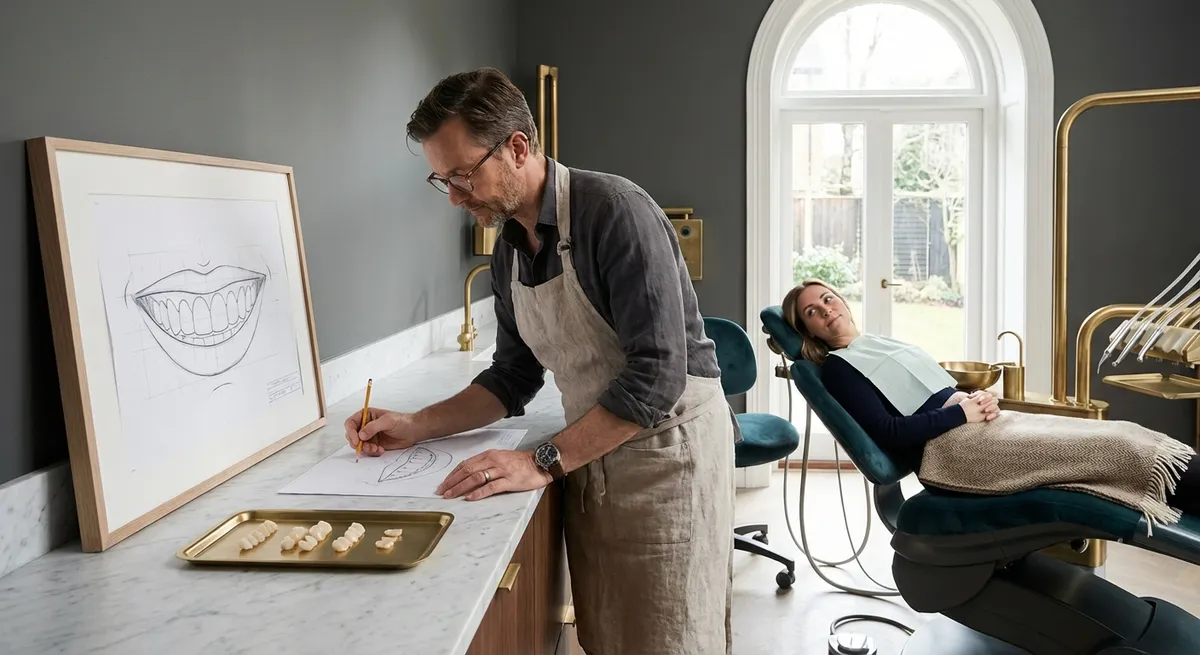
Digital dentistry has revolutionized how smile makeovers are planned and executed. Intraoral scanners, 3D imaging, and smile-design software can simulate tooth shapes, preview proportions, and predict how procedures will alter your overall facial expression. Yet in elite practices, technology is not the star—it is the instrument.
Photographs, video, and digital mock-ups allow your dentist and ceramist to evaluate how your teeth look when you speak, laugh, and rest, not just when you pose for a single static image. Temporary “trial smiles” fabricated from digital designs can be worn and experienced in real life before the final porcelain is crafted. This iterative process lets patients refine length, contour, and texture from an informed, lived-in perspective rather than a quick chairside glance.
However, the most exquisite results still rely on human discernment: the clinician’s sense of balance, the ceramist’s ability to recreate micro-textures and subtle imperfections that keep teeth looking authentic, not over-polished. The true luxury is this synergy—a calm, data-informed process guided by a finely tuned aesthetic eye, rather than a rushed, one-size-fits-all approach.
Conclusion
A sophisticated smile makeover is not a single procedure; it is a curated sequence of decisions, each one grounded in biology, function, and refined aesthetics. The most successful outcomes honor your individuality: your facial structure, your bite, your soft-tissue architecture, your long-term oral health, and your personal definition of beauty.
For patients who view their smile as part of their overall presence—something that must withstand close scrutiny, photography, conversation, and time—the difference lies in the details: occlusal harmony, materials chosen like couture, minimalist preparation, meticulous gum design, and a seamless interplay of digital precision with human artistry.
When these elements are orchestrated thoughtfully, the result is not simply “new teeth,” but a quiet transformation that feels inevitable, effortless, and distinctly your own.
Sources
- American Dental Association – Esthetic Dentistry Overview - General overview of cosmetic and esthetic procedures and their indications
- Mayo Clinic – Dental Work and Oral Health - Explains how various dental treatments interact with overall oral health
- National Institutes of Health (NIH) – Ceramics in Dentistry - Peer-reviewed discussion of dental ceramic materials, strength, and esthetics
- Harvard School of Dental Medicine – Periodontal Health - Describes the role of gums and periodontal structures in maintaining dental treatments
- Cleveland Clinic – Malocclusion and Bite Problems - Details how bite alignment affects function and the long-term success of dental procedures
Key Takeaway
The most important thing to remember from this article is that this information can change how you think about Dental Procedures.