A refined smile makeover is less about perfection and more about presence. The most memorable smiles aren’t simply white and straight; they feel authentic, proportional, and almost impossibly natural in motion and in stillness. Today’s most discerning patients aren’t asking for “movie star teeth”—they’re asking for a smile that looks like it has always belonged to them, only better. This is where true smile design begins: at the intersection of aesthetics, personality, and precision.
From Teeth to Expression: Designing the Entire “Smile Moment”
Traditional cosmetic dentistry often focuses on the teeth in isolation. Modern smile design elevates the lens: your dentist is not merely arranging incisors and canines, but curating an entire “smile moment” that includes your lips, cheeks, eyes, and even your posture as you speak.
A sophisticated plan considers how your upper lip rises when you laugh, how much gum shows at rest, and the way light travels across your teeth when you turn your head. Photo and video analysis, combined with digital smile design software, allows the dentist to evaluate your smile in motion, not just in static before-and-after shots. This is key to avoiding the “frozen” or artificial look that can appear flawless in a photograph yet feel conspicuously off in person.
When executed well, the result is an expression that feels fluid and unforced. Your smile ceases to look “done” and instead reads as a naturally confident part of your face—responsive, dynamic, and completely your own.
Exclusive Insight #1: The “Vowel Test” for Authenticity
One of the most overlooked aspects of smile design is how your teeth and lips work together when you speak—particularly on vowel sounds. The way your mouth shapes “ee,” “ah,” and “oh” reveals more about your teeth than a standard posed grin.
A meticulous clinician may ask you to speak on camera, recite phrases, or even read aloud. They’ll study the relationship between:
- Tooth length and your lower lip line when you say “ee”
- How much upper tooth shows on relaxed “ah” sounds
- Whether veneers or bonding alter your natural enunciation
Why it matters: if teeth are too long, short, or thick, speech can subtly shift—producing faint whistling, lisping, or an overly “heavy” sound on certain consonants. While minor, these changes can be highly noticeable to the person wearing the smile.
Integrating the vowel test into design planning ensures your eventual smile looks exquisite but also sounds natural in everyday conversation. It’s not simply cosmetic; it’s functional elegance, aligning aesthetics with the music of your own voice.
Exclusive Insight #2: Micro-Asymmetry as the Secret to Natural Beauty
Perfect symmetry looks impressive on a computer rendering, but in real life, absolute uniformity is often what makes a smile feel artificial. The most believable and beautiful smiles contain micro-asymmetries—those minuscule, intentional variations that mimic nature’s own design.
A skilled smile designer might:
- Soften one canine slightly more than the other
- Introduce a barely perceptible difference in the angle of two front teeth
- Vary translucency at the edges rather than creating a flat, opaque block of color
These variations are measured in fractions of a millimeter, yet they dramatically influence how natural your restorations feel to the observer. This is especially true in high-end veneers and ceramic work, where surface texture and light reflection can make the difference between “nice veneers” and “I can’t believe those aren’t your real teeth.”
Micro-asymmetry is the language of authenticity. The artistry lies in knowing exactly where to deviate from perfection so the smile appears effortlessly real.
Exclusive Insight #3: The Role of Surface Texture and Light, Not Just Shade
Most patients ask for whiter teeth; the most sophisticated smile designs ask, instead, “How will these teeth interact with light?” The shade is only one factor. Equally important is the surface texture of each tooth and the degree of translucency at the edges.
Natural enamel is not a flat, glossy shell. Under close inspection, it reveals:
- Fine vertical texture lines (perikymata)
- Micro-undulations that catch and scatter light
- A transition from more opaque at the neck of the tooth to more translucent at the edge
High-end ceramics and meticulously layered composites replicate this complexity. By controlling gloss, texture, and translucency, your dentist and ceramist can ensure your smile looks radiant in natural daylight, under indoor lighting, and in flash photography—without appearing overly reflective or “plastic.”
This is also why a luxury smile rarely aims for the brightest possible white on the shade guide. Instead, the goal is a tone that sits harmoniously with your skin, eyes, and overall coloring, catching the light with dimension rather than overwhelming it with flat brightness.
Exclusive Insight #4: Facial Posture and the “Resting Smile Line”
While much attention is paid to how you look when you are smiling broadly, an equally crucial moment is your resting expression—those in-between seconds in conversation, listening, or being photographed unexpectedly.
The resting smile line describes how much tooth shows when your face is relaxed, lips gently parted. In youth, we see more of the upper teeth; with age, this exposure diminishes and the lower teeth become more prominent. When a smile makeover disregards this, the results can feel either prematurely aged or conspicuously overdone.
A refined design will:
- Assess how much upper tooth display is appropriate for your age, gender expression, and facial features
- Consider the long-term stability of that display as facial structures naturally shift with time
- Harmonize with any existing or planned facial aesthetics (e.g., subtle lip filler, Botox, or other anti-aging treatments)
The outcome is a resting expression that seems calm, approachable, and age-appropriate—never strained, over-stretched, or “overfilled” in appearance. A truly elevated smile makeover supports not just the act of smiling but the way your face exists in quiet.
Exclusive Insight #5: Sequencing Treatment Like a Bespoke Wardrobe
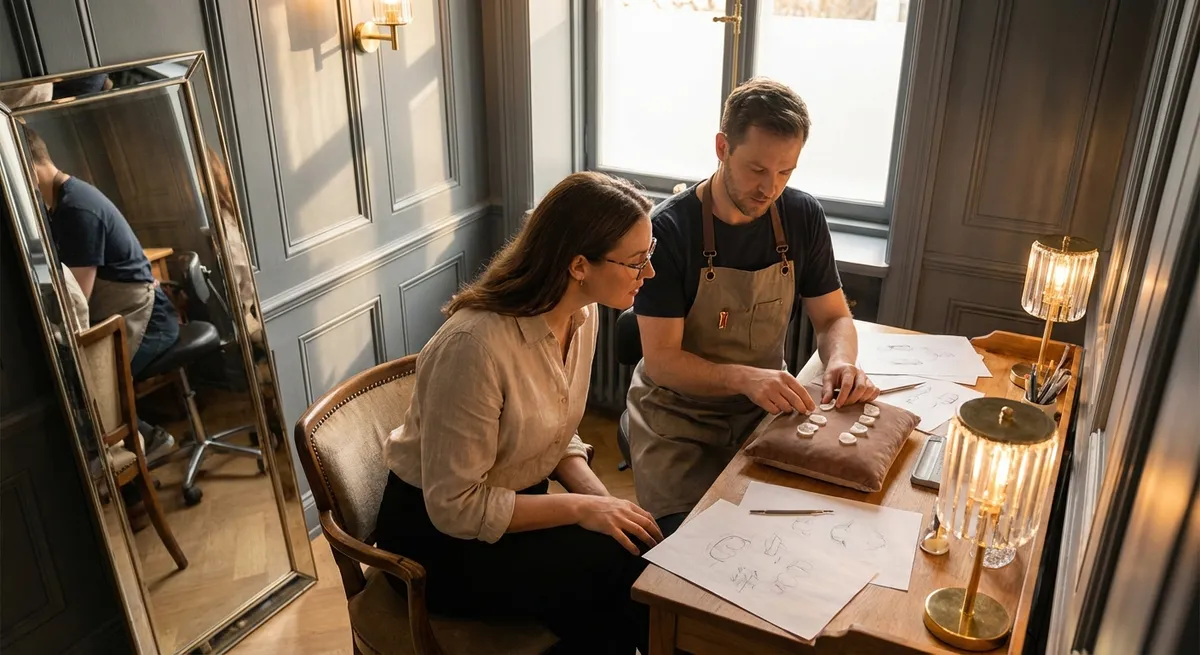
The most successful smile transformations are curated, not rushed. Instead of treating everything at once, a discerning dentist will often sequence your procedures much like assembling a bespoke wardrobe—starting with foundational pieces and layering in refinement.
This might mean:
- First establishing periodontal health and gum balance (the “hemline” of your smile)
- Then aligning teeth conservatively with clear aligners or limited orthodontics
- Only afterward finalizing veneers, bonding, or contouring with full awareness of the new tooth positions
- Finishing with precision whitening and fine-tuning edges or texture once you’ve “lived in” the new smile for a little while
This staggered approach allows you to adapt, give feedback, and collaborate. Provisional (temporary) restorations can be worn as a “test drive,” allowing subtle refinements in shape, length, or proportion before committing to final ceramics.
The result is less a single appointment makeover and more an elevated, iterative process—akin to working with a tailor who refits and adjusts until every detail falls perfectly into place.
Conclusion
A truly sophisticated smile makeover is not a set of veneers; it is a designed experience that honors your individuality, your voice, your expressions, and your long-term confidence. It accounts for how you speak, how you laugh, how you rest, and how you age. The most successful results are almost impossible to pinpoint as “cosmetic work”—they simply register as you, at your most composed and luminous.
For those considering a dental transformation, the real luxury lies not merely in advanced materials or technology, but in the meticulous attention to nuance: micro-asymmetry over rigid perfection, texture over flat whiteness, speech and expression over static photographs. When these elements are orchestrated with care, your new smile doesn’t enter the room before you do—it arrives with you, seamlessly integrated, quietly compelling.
Sources
- [American Academy of Cosmetic Dentistry – What Is Cosmetic Dentistry?](https://aacd.com/cosmeticdentistry) - Overview of modern cosmetic dentistry principles and considerations for natural-looking results.
- [Harvard School of Dental Medicine – Esthetic Dentistry](https://hsdm.harvard.edu/esthetic-dentistry) - Educational insights into esthetic treatment planning and the integration of function and appearance.
- [Journal of Esthetic and Restorative Dentistry – The role of dental aesthetics in the appearance of the smile](https://onlinelibrary.wiley.com/doi/10.1111/j.1708-8240.2007.00074.x) - Research-based discussion of smile line, tooth display, and aesthetic parameters.
- [UCLA School of Dentistry – Veneers and Esthetic Restorations](https://www.uclahealth.org/dentistry/veneers) - Clinical explanation of veneer design, materials, and natural-looking outcomes.
- [National Institutes of Health (NIH) – Smile Esthetics in Dentistry](https://www.ncbi.nlm.nih.gov/pmc/articles/PMC4942310/) - Peer-reviewed article examining factors such as symmetry, tooth proportion, and gingival display in smile design.
Key Takeaway
The most important thing to remember from this article is that this information can change how you think about Smile Design.