A refined smile makeover is less about spectacle and more about precision. The most discerning patients are no longer seeking an obvious “before and after,” but a quiet evolution—subtle, harmonious, and impeccably executed. In this world, dental procedures are not isolated treatments; they are orchestrated decisions that consider facial balance, long-term function, and the patient’s lifestyle down to the finest detail.
Below, we explore how a sophisticated approach to dental procedures can elevate a makeover from “nice” to truly world‑class—and share five exclusive insights that those planning a high-end transformation rarely hear during a typical consultation.
The Foundation: Planning a Smile Like a Bespoke Project
Exceptional outcomes start long before any drill or scanner appears. High-caliber clinicians treat a smile makeover the way an architect approaches a custom residence: with exhaustive planning and rigorous design.
Advanced diagnostics—3D cone beam CT, intraoral scanning, detailed facial photography, and video analysis—allow your dentist to understand not just each tooth, but how your teeth move as you speak, laugh, and rest. Digital planning software can preview different scenarios: how lengthening your front teeth may alter your lip line, how adjusting your bite might sharpen your jawline, or how slight changes in gum contour could create a more youthful, lifted look.
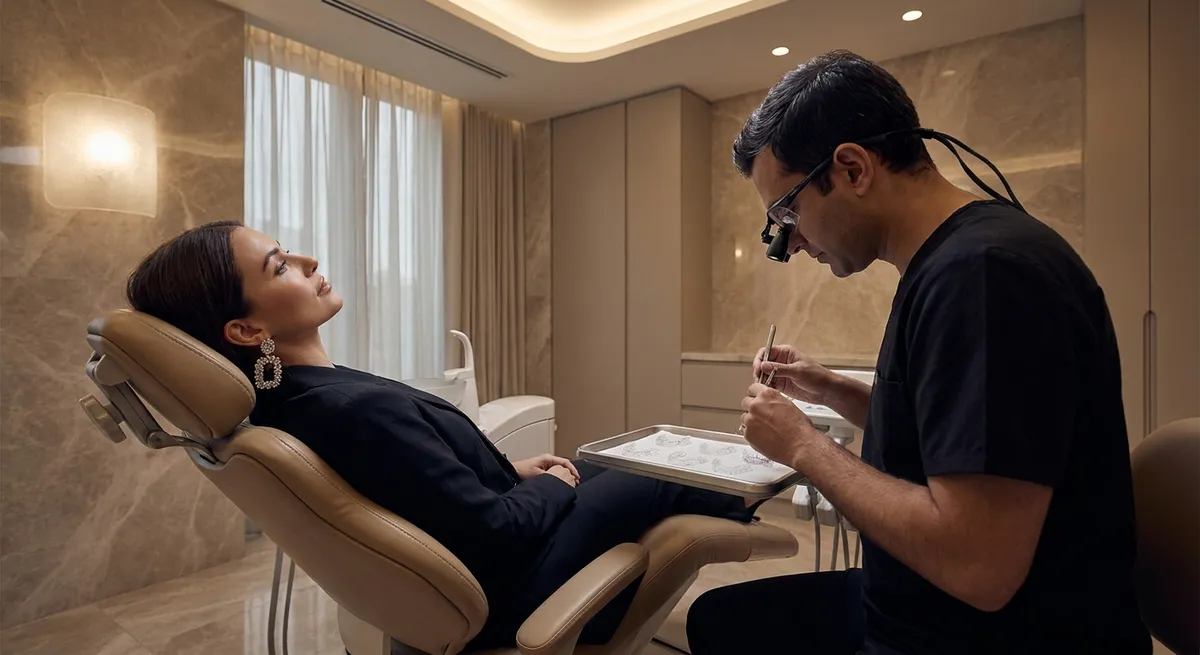
In premium practices, this design phase is collaborative. You may review digital mock-ups on a screen, try a “prototype” smile made in temporary materials, and refine details—translucency at the tips, micro-texture on the surface, the exact shade gradient from gumline to edge—before any definitive work begins. The emphasis is on control, reversibility, and personalization, not speed.
The result is a blueprint so precise that, once treatment begins, every procedure is simply the execution of a carefully composed plan.
Beyond Veneers: A Modern Palette of Procedures
For many, “dental makeover” is synonymous with veneers, but sophisticated treatment plans typically combine multiple procedures, often in conservative, targeted ways.
Porcelain veneers may be used to refine shape, color, and symmetry on key visible teeth, while minimal bonding enhances adjacent teeth without the need for full coverage. Orthodontics—often clear aligners—may quietly reposition teeth and roots so that restorative work can remain thinner, more natural, and longer-lasting. Contouring of the gums, sometimes via laser or microsurgical techniques, harmonizes the “frame” of the teeth, particularly in patients with a gummy or uneven smile line.
Bite optimization is another subtle but critical layer. Adjusting how upper and lower teeth meet can reduce tension in facial muscles, soften lines in the lower face, and improve comfort when speaking and chewing. In some cases, small restorative adjustments to the back teeth can lift the vertical dimension of the face, creating a discreet rejuvenation effect without fillers or surgery.
The most refined makeovers rarely rely on a single procedure. Instead, they weave orthodontic alignment, gum aesthetics, restorative artistry, and functional bite design into one coherent, tailored narrative.
Five Exclusive Insights for the Discerning Makeover Patient
Within the world of high-end dental transformations, a few nuanced truths consistently surprise even well-informed patients. These five insights can help you navigate decisions with greater clarity and confidence.
1. Micro-Details in Texture and Translucency Matter More Than Shade
Most patients focus on tooth color, requesting “whiter” as a primary goal. Expert ceramists and cosmetic dentists, however, regard shade as only one of several critical dimensions.
Natural teeth have layers: a warmer core, subtle translucency at the edges, faint white “mamelons” near the biting edge in younger smiles, and very fine vertical texture lines that catch the light. Overly flat, solid-white restorations can look artificial even if the color technically matches a shade guide.
Refined ceramic work incorporates:
- Graduated color from gumline to edge
- Individually varied translucency between teeth
- Micro-texture that mimics age-appropriate enamel
The most luxurious result is not the brightest white, but a luminous, complex surface that behaves like real enamel under restaurant lighting, camera flashes, and natural daylight.
2. Your Lip Dynamics Are as Important as Your Tooth Shape
A static smile photo tells only part of the story. True excellence considers how your lips move when you speak, laugh, and rest.
Elite practitioners analyze video footage in slow motion: how much gum shows when you say certain sounds, how your upper lip lifts when you smile broadly, whether your lower lip tracks the edges of your upper teeth, and how your smile line curves across your face.
This lip dynamics analysis influences:
- Ideal tooth length (too long may look elegant when still, but theatrical in motion)
- Degree of incisal translucency (how bright or soft the edges appear against your lower lip)
- Gum contouring decisions (especially in patients whose upper lip lifts high when laughing)
When your teeth are designed in harmony with your lip movements, your smile feels “inevitably right,” not newly installed.
3. Occlusion (Your Bite) Shapes Facial Comfort and Longevity
Many people view bite adjustments as purely functional or orthodontic concerns, separate from aesthetics. In reality, occlusion is the hidden framework that supports both the longevity of your restorations and your overall facial comfort.
An imbalanced bite can lead to:
- Micro-fractures and chipping in veneers or crowns
- Jaw tension and headaches
- Excess wear on certain teeth, aging your smile prematurely
High-end dentists often incorporate a detailed occlusal analysis—sometimes using digital sensors that map bite forces—to fine-tune contacts between upper and lower teeth. They may recommend small adjustments to back teeth or nighttime protection with a custom guard to preserve the new restorations.
The true luxury is not only how your smile looks, but how relaxed your jaw feels across long days, flights, and high-pressure events.
4. Exceptional Results Often Depend on an Artist You Never Meet: The Master Ceramist
Patients typically evaluate a practice by the dentist and the office environment. Yet, in sophisticated cases, a significant portion of the aesthetic outcome is in the hands of the dental laboratory—specifically, the master ceramist.
In boutique labs, ceramists function much like couture tailors: they study your photos, videos, and sometimes even meet you in person. They select ceramic systems, hand-layer porcelain, adjust surface texture, and customize color based on your skin tone, lip color, and eye hue.
Two practices using similar materials can deliver vastly different outcomes depending on the artistry and philosophy of the lab. When considering a makeover, it’s worth asking:
- Which lab do you use, and why?
- Will a senior or master ceramist be involved?
- How are my photos and preferences communicated to them?
Discerning patients often find that the subtle realism they admire in high-profile smiles is as much the work of a master ceramist as it is of the clinician.
5. A “Maintenance Blueprint” Is Part of Any Truly Premium Makeover
A sophisticated dental makeover is not an endpoint; it is the beginning of a new standard for how you care for your teeth. High-caliber clinicians plan for this from day one.
A maintenance blueprint may include:
- Customized hygiene intervals based on your specific risk profile (e.g., every 3–4 months instead of 6)
- Gentle, non-abrasive home-care products to protect ceramic and enamel luster
- Periodic bite checks and refinements as your muscles and joints adapt
- Scheduled professional polishing to preserve surface texture and brilliance
In many ways, this is akin to owning a mechanical watch or fine leather goods: the initial craftsmanship is only fully realized when paired with thoughtful, ongoing care. Patients who understand and embrace this blueprint tend to maintain impeccable results for a decade or more.
Technology With Taste: Digital Tools Used Discreetly
Digital dentistry has transformed what is possible, but the most sophisticated practices use technology as an instrument, not a spectacle.
Intraoral scanners replace most traditional impressions, improving comfort and accuracy. CAD/CAM systems help design restorations with precision, while 3D printing allows for rapid fabrication of mock-ups and temporary restorations. Digital smile design software can overlay proposed changes onto your actual facial photographs, enabling nuanced discussions about proportion, symmetry, and character.
Yet the most premium experiences resist the temptation to over-automate. Instead, technology supports human judgment. A dentist may use AI-driven tools to analyze tooth position or simulate orthodontic movements, then refine the plan based on artistry, intuition, and knowledge of your personal style.
The hallmark of tastefully integrated technology is that you notice the effect—efficiency, comfort, predictability—but not the machinery itself.
Selecting a Clinical Team for Elevated Results
For patients accustomed to a high standard of service in other areas of life, the difference between “good cosmetic dentistry” and truly exceptional work often lies in the team’s philosophy.
Key indicators of a premium clinical environment include:
- A strong emphasis on consultation and co-creation rather than rapid treatment
- Willingness to discuss long-term stability, not just initial appearance
- Partnerships with top-tier labs and ceramists, openly acknowledged and celebrated
- Integration of preventive and restorative dentistry so the makeover is built on health, not camouflage
Many sophisticated patients benefit from seeking practitioners who lecture, publish, or teach in advanced cosmetic or restorative programs. These clinicians are usually deeply engaged with both the scientific and artistic evolution of their craft.
Conclusion
An elevated smile makeover is not defined by how many procedures you undergo, but by how thoughtfully they are curated and executed. When planning is exhaustive, materials are chosen with discernment, and micro-details are respected, dental procedures become instruments of quiet transformation rather than obvious alteration.
For those seeking a truly premium result, the most valuable investments are often invisible: time spent in design, collaboration with a master ceramist, meticulous bite refinement, and a tailored maintenance plan. The payoff is a smile that feels as though it has always belonged to you—simply revealed in its most polished, enduring form.
Sources
- [American Academy of Cosmetic Dentistry – Smile Design Resources](https://aacd.com/profiles) - Professional organization detailing principles of cosmetic dentistry, smile design, and clinician education
- [Mayo Clinic – Dental Veneers Overview](https://www.mayoclinic.org/tests-procedures/dental-veneer/about/pac-20384572) - Clear explanation of veneer indications, procedure steps, and considerations
- [Cleveland Clinic – Malocclusion and Bite Alignment](https://my.clevelandclinic.org/health/diseases/10954-malocclusion) - Discusses the importance of occlusion, how bite issues develop, and implications for function
- [National Institutes of Health (NIH) – Esthetic Smile Design Review](https://www.ncbi.nlm.nih.gov/pmc/articles/PMC5004144/) - Peer-reviewed article exploring scientific concepts behind facially driven smile design
- [Harvard School of Dental Medicine – Digital Dentistry and Innovation](https://hsdm.harvard.edu/news/digital-dentistry-and-future-care) - Overview of digital tools in modern dental care and how technology is reshaping treatment planning
Key Takeaway
The most important thing to remember from this article is that this information can change how you think about Dental Procedures.