A beautifully executed smile makeover is never an accident. Behind every effortless, camera-ready smile lies a sequence of highly considered clinical decisions, design choices, and micro-adjustments that most patients never fully see. For those accustomed to thoughtful investments—whether in art, interiors, or personal style—the same level of discernment applies to the way your dentistry is planned and performed. This is not about chasing a “Hollywood smile”; it is about commissioning a result that feels singular, balanced, and quietly elevated.
Below, we explore what actually unfolds during contemporary cosmetic and restorative procedures—and share five exclusive insights that discerning patients often appreciate only after they’ve experienced a truly refined smile transformation.
Beyond the Drill: How Modern Procedures Are Quietly Reimagined
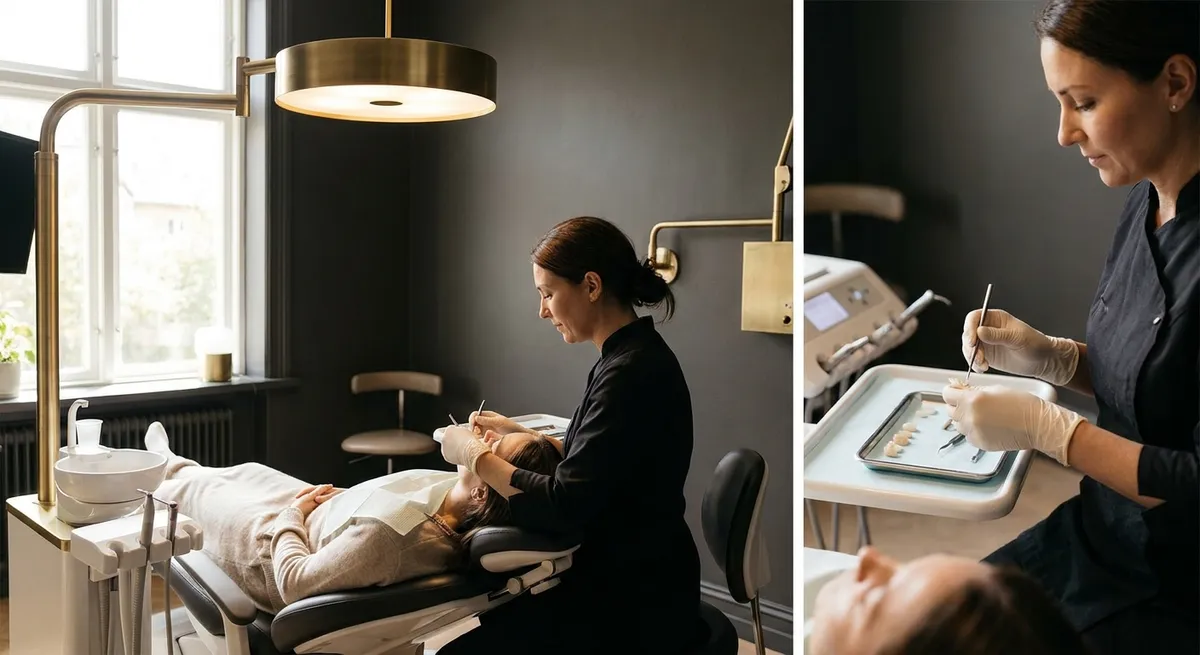
The archetypal image of dentistry is still a bright light, a high-speed handpiece, and little else. In well-curated practices, the reality is considerably more nuanced. Today’s procedures—whether veneers, crowns, implants, or complex full-mouth rehabilitation—are orchestrated like a design-led project rather than a single appointment.
Your clinician may begin with detailed diagnostics: high-resolution intraoral cameras, digital impressions, 3D cone-beam CT scans, and facial photographs in multiple expressions. These are not just for “records”; they are the raw materials for planning proportions, symmetry, functional movement, and long-term stability.
Digital smile design software can simulate tooth shape, length, and arrangement in harmony with lip dynamics and facial features. Instead of guessing how porcelain will appear, you and your dentist can preview options and adjust before a single tooth is altered. The seat time you experience—preparation, impressions, bonding—is only the visible tip of a longer, highly choreographed process that takes place behind the scenes in both the clinic and the dental laboratory.
Exclusive Insight 1: “Minimally Invasive” Is a Design Philosophy, Not a Buzzword
For sophisticated patients, one of the most valuable shifts in modern dentistry is the move toward conservative preparation. When done properly, veneers, onlays, and bonded restorations are not about aggressively reshaping teeth; they are about preserving as much natural structure as possible.
A discerning clinician evaluates enamel thickness, existing wear, prior restorations, and bite dynamics before deciding how much to reshape. In some cases, orthodontic alignment or minor contouring will be recommended first, simply to reduce the amount of drilling required later. This may seem like an extra step, but it is a long-term investment: more enamel means stronger bonding, better longevity, and fewer invasive procedures in the future.
Laboratory-crafted restorations can now be made thinner and more precise thanks to advances in ceramics and digital milling. Your dentist’s ability to be “minimal” is not only a matter of skill; it depends on owning or collaborating with technology that can support ultrafine tolerances. When you hear “minimally invasive,” ask what that practically means for your specific teeth—how much structure will be removed, and what measures will be taken to protect it.
Exclusive Insight 2: Shade Matching Is Only the Beginning of True Aesthetics
Color is the most obvious feature of a new smile, but in high-level cosmetic dentistry, it is the least interesting. Subtle characterizations—translucency at the edges, delicate surface texture, and refined internal shading—are what distinguish lifelike ceramic from something that looks flat and artificial.
In premium practices, the shade selection process may feel more akin to a design consultation than a clinical step. Your dentist may evaluate your teeth in natural daylight and under different artificial lighting, photograph your smile with shade tabs, and consider skin tone, lip color, and the whites of your eyes to choose a hue that appears naturally luminous rather than stark.
The dental ceramist plays a crucial role here. An exceptional laboratory can add microscopic surface grooves, opalescent halos, and layered color that mimic natural enamel. You might be invited for a “custom shading” appointment with the ceramist, allowing them to observe how your teeth and lips behave in motion. For patients used to bespoke tailoring or custom interiors, this level of nuance in ceramic artistry tends to feel intuitively right—and is worth specifically requesting when you explore treatment options.
Exclusive Insight 3: Your Bite Is the Quiet Architect of Smile Longevity
Many patients focus on how their teeth will look when they smile, but the real test of a dental procedure is how it performs when you chew, speak, and sleep. Sophisticated cosmetic work that ignores the bite—technically known as occlusion—is at high risk of chipping, cracking, or causing jaw discomfort.
Before major work, your dentist may analyze how your upper and lower teeth meet from multiple angles, often using digital scans, articulators, or even jaw-tracking technology. Subtle issues such as nighttime clenching, asymmetrical muscle activity, or previously undiagnosed temporomandibular joint (TMJ) strain can dramatically influence the design of veneers, crowns, and implants.
A refined smile makeover weaves function into aesthetics from the start. This might mean adjusting tooth length so your front teeth guide the jaw properly, reinforcing certain contact points to withstand stress, or recommending a slim, custom night guard to protect your investment. The most luxurious outcome is not only one that looks exquisite on day one, but one that feels comfortable and remains intact years later—because it was engineered around your individual biomechanics.
Exclusive Insight 4: Time Horizons Matter More Than Treatment Labels
Patients often arrive with a specific procedure in mind: “I want veneers,” or “I just need whitening and bonding.” A sophisticated practitioner gently shifts the discussion from individual treatments to time frames and durability.
A short-horizon approach might prioritize quick, reversible enhancements—like professional whitening and minimal bonding—ideal for an upcoming event or when you are still exploring your aesthetic preferences. A medium-horizon plan may layer orthodontics with selective ceramic work, giving you more stability and better tissue health over 5–10 years.
Long-horizon planning looks beyond the next decade. If you have a history of gum disease, significant wear, or missing teeth, the strategy might involve staged implant placement, periodontal maintenance, bite correction, and then cosmetic refinements. From the patient’s perspective, this can feel like a curated journey rather than a single “big procedure.” When consulting with a dentist, ask them to articulate what your smile will likely need in 5, 10, and 20 years under different treatment paths. The right plan will align with how you invest in other aspects of your life: considered, phased, and future-focused.
Exclusive Insight 5: The Soft Tissues Frame the Story Your Teeth Tell
Even the most beautifully crafted porcelain can feel “off” if the gums and lips are not equally considered. A refined smile is framed as carefully as a piece of art, and in dentistry, the frame is soft tissue.
For some patients, minor reshaping of the gums (often with a laser) can balance tooth length, reveal hidden enamel, and create a more harmonious gum line. In more advanced cases, crown lengthening or periodontal reshaping may be planned in concert with veneers or crowns to ensure that the final result is not just white and straight, but elegantly proportioned.
Your lips also influence procedural planning. Lip mobility, fullness, and resting position determine how many teeth show when you speak or smile, and whether your gum line is visible. Some practices collaborate with facial aesthetic specialists to subtly enhance lip support or symmetry, ensuring that dental work and facial features complement one another rather than competing for attention.
The most discreet smile makeovers are rarely about the teeth alone. They are integrated facial enhancements, executed so thoughtfully that most people simply register you as “looking incredibly well,” without being able to pinpoint exactly why.
Conclusion
A sophisticated smile transformation is less about a single marquee procedure and more about the orchestration behind it: conservative preparation guided by technology, bespoke ceramic artistry, meticulous bite engineering, long-horizon planning, and a considered approach to gums and lips. For individuals who view their appearance as an ongoing, curated project, understanding what truly happens in the chair—and behind the scenes—transforms dentistry from a necessary service into a deliberate investment in how you present yourself to the world.
When you next sit down with a prospective cosmetic dentist, bring these insights into the conversation. Ask about their philosophy on tooth preservation, their relationship with their ceramist, how they analyze occlusion, how they plan for the next decade, and how they approach soft tissues. The answers will tell you far more than any before-and-after gallery—and will help ensure that your future smile feels as refined as every other detail you choose to surround yourself with.
Sources
- American Dental Association – Veneers – Overview of porcelain veneers, indications, and procedure steps
- Mayo Clinic – Dental Implants – Explanation of implant surgery, planning, and long-term considerations
- Cleveland Clinic – Bite Problems (Malocclusion) – How bite relationships affect oral function and treatment planning
- National Institute of Dental and Craniofacial Research – Periodontal Disease – Role of gum health and soft tissues in overall dental outcomes
- Harvard School of Dental Medicine – Digital Dentistry and CAD/CAM – Discussion of digital technologies reshaping modern restorative and cosmetic procedures
Key Takeaway
The most important thing to remember from this article is that this information can change how you think about Dental Procedures.