A refined smile is rarely the result of a single dramatic gesture. More often, it’s the sum of dozens of small, deliberate decisions made chairside—each one invisible to everyone but your clinician and, ultimately, the camera. For those considering a dental makeover, understanding what truly differentiates a high-caliber experience from a merely adequate one can transform how you choose your provider, how you collaborate in planning, and how satisfied you are with the final result.
This is not about chasing perfection. It’s about recognizing the quiet, meticulous craftsmanship that turns routine dental procedures into an investment in your overall aesthetic—and your long-term oral health.
The Interview Behind the Smile: How Advanced Diagnostics Shape Every Procedure
Before a tooth is touched, leading cosmetic dentists conduct what is essentially an aesthetic and functional interview with your mouth. This goes far beyond a quick glance and a set of X‑rays.
Digital imaging, high-resolution intraoral photographs, and 3D cone‑beam CT scans allow your clinician to evaluate bone structure, root position, gum contours, and bite dynamics in extraordinary detail. The goal isn’t just to confirm that a crown or veneer is possible—it’s to determine which material, thickness, shape, and placement will harmonize with your facial structure and withstand real-life function.
Subtle asymmetries in your bite, for instance, can determine whether veneers will last a decade or begin chipping in a year. The way your lips move when you speak and smile can influence where the incisal edge (the visible biting edge) should begin and end. Even the shade of the whites of your eyes can guide color selection so that your teeth look luminous rather than artificial.
In high-end practices, every procedure—whether a single crown, a full-arch restoration, or gingival contouring—is informed by this deep diagnostic work. Patients who understand this process can better appreciate why a thoughtfully planned makeover takes multiple visits: the “before” phase is where the real artistry begins.
Micro-Millimeters of Luxury: Precision Tooth Preparation and Preservation
To the untrained eye, tooth preparation can seem straightforward: remove damaged or discolored enamel, place a restoration, polish, and go. In reality, the way your dentist prepares a tooth is one of the clearest signatures of clinical craftsmanship—and a defining factor in how natural your results will look and feel.
Elite providers treat enamel as a finite luxury material. Every fraction of a millimeter preserved is an investment in longevity and sensitivity control. Modern bonded ceramics and advanced composite materials allow for more conservative preparations than ever before, but only when the dentist has the skill—and the discipline—to execute them.
Refined preparation involves:
- Deliberate planning of which surfaces actually require reduction
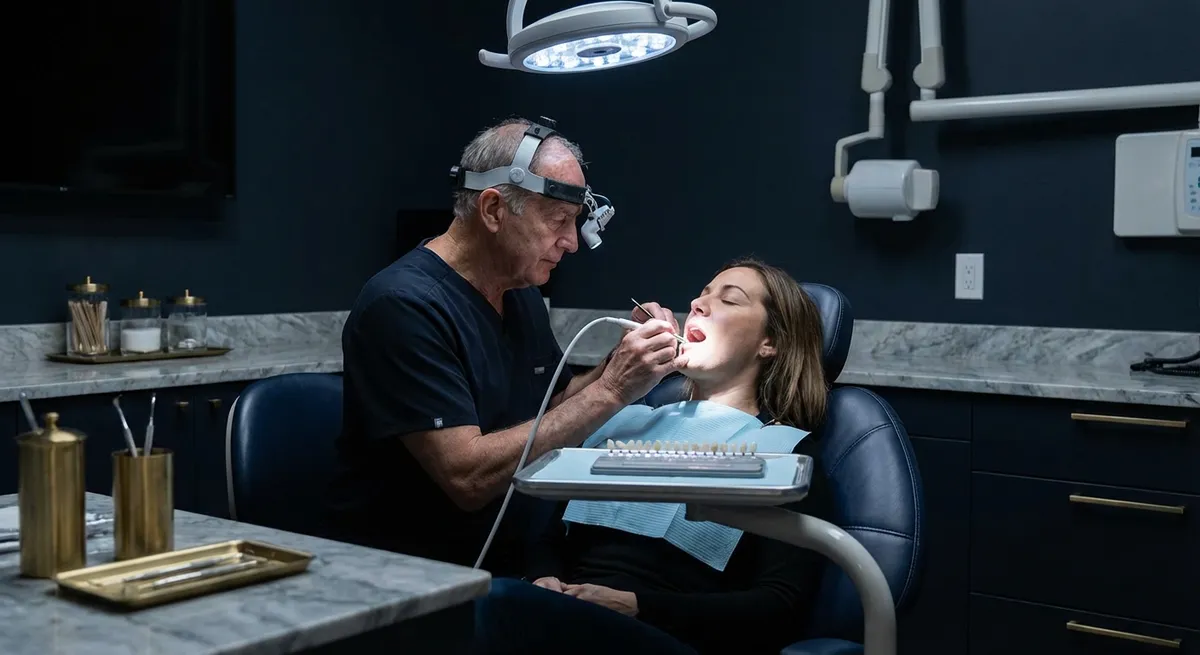
- Strategic use of magnification (loupes or operating microscopes) to guide ultra-precise enamel removal
- Thoughtful management of the transition from natural tooth to restoration so there is no visible or tactile “step”
- Smooth, continuous margins that make restorations easier to clean and more resistant to staining at the edges
For a patient, this translates into restorations that disappear into your smile rather than sit on top of it. It also means a lower risk of post-operative sensitivity and a higher likelihood that your teeth will tolerate future treatment, should it ever be needed. When you consult with a cosmetic dentist, listen not just for what they can add to your teeth—but how intentionally they plan to preserve what you already have.
The Palette You Never See: Shade, Texture, and Translucency as Design Tools
Tooth color, in skilled hands, is less like paint and more like layered glass. The most natural, luxurious dental work doesn’t aim for one flat “white” but instead recreates the depth and light-play of real enamel and dentin.
Precision shade matching considers:
- Hue: the base color family (warm, neutral, cool)
- Chroma: the intensity or saturation of that color
- Value: how light or dark the tooth appears overall
Beyond this, high-end dentists and ceramists study micro-features: slight translucency at the edges, faint internal characterizations, and surface texture that subtly breaks up light. These details are not to make your smile look “fake” or overdone; they are precisely what prevent that outcome.
For patients seeking a brighter, more youthful smile, the key is a carefully calibrated enhancement, not a uniform, opaque white. An advanced practitioner will often take multiple shade photographs under different lighting conditions, may use digital shade-matching devices, and will collaborate closely with a dedicated dental laboratory to fine-tune the final result.
An important insight: your ideal tooth shade is not chosen in isolation. Skin tone, lip color, and the environments where you are frequently seen (boardroom, studio lighting, outdoor events) influence which shade will look both elevated and believable. Trust the process if your dentist seems meticulous or even slightly obsessive about shade—it’s a hallmark of premium work.
The Invisible Architecture: Bite Refinement and Functional Comfort
A visually stunning smile that feels “off” when you chew or speak can quickly become a daily frustration. The most exclusive dental work is engineered not only to look extraordinary but to integrate seamlessly into your bite—the way your upper and lower teeth meet and move.
After veneers, crowns, or implants are placed, a skillful dentist will spend significant time refining your occlusion (bite). This isn’t an afterthought; it’s a critical phase where tiny adjustments—often measured in fractions of a millimeter—ensure that:
- Forces are distributed evenly across teeth and restorations
- There are no high spots that could cause cracks, chips, or jaw discomfort
- Your jaw joints (TMJ) are not strained by an altered bite position
- Speaking and swallowing feel natural and unforced
This may involve articulating paper, digital bite analysis, or even a short adaptation period with interim restorations before finalizing your case. It’s a process of quiet calibration.
Patients who understand this dimension of care are more likely to communicate clearly about how their teeth feel, not just how they look. They recognize that the slight tap-tap adjustments at the end of an appointment are not minor housekeeping—they are a form of fine engineering that protects both their investment and their comfort.
The Luxury of Continuity: Post-Procedure Refinement and Long-Term Stewardship
In elevated cosmetic dentistry, the moment your new smile is revealed is not the finale; it’s the beginning of an ongoing collaboration. High-end practices approach your restorations as something to be curated and maintained, much like a bespoke garment or timepiece.
This stewardship often includes:
- Scheduled follow-up visits specifically for aesthetic and functional fine-tuning
- Custom night guards to protect against unconscious grinding or clenching
- Professional cleanings tailored to the materials in your mouth, using instruments and techniques that preserve luster and minimize microscopic scratching
- Regular photographs and digital scans to monitor subtle changes in gums, bite, or wear over time
The value of this approach is twofold. First, it extends the life of your restorations, preserving their gloss, fit, and integrity. Second, it allows minor adjustments as your face matures—tiny contour changes, polish, or selective re-bonding that keep your smile in quiet harmony with the rest of your features.
For patients planning a makeover, it’s worth asking not just, “What will this look like when we’re done?” but “How will this be cared for in five years?” True luxury in dentistry is less about a single dramatic unveiling and more about the confidence that your smile will age gracefully, under expert supervision.
Conclusion
A sophisticated dental makeover is defined less by dramatic before-and-after photos and more by the choices you never see: meticulous diagnostics, conservative tooth preparation, nuanced shade design, engineered bite harmony, and ongoing refinement. These are the dimensions that separate routine dental procedures from a truly elevated smile experience.
When you understand these quiet markers of excellence, you’re better equipped to ask meaningful questions, select the right provider, and participate in shaping a result that feels both authentically yours and unmistakably refined. In the end, the most compelling smile is not the brightest or the most symmetrical—it’s the one that has been crafted with enough insight and restraint to look as though it could have always belonged to you.
Sources
- American Dental Association – Cosmetic Dentistry Overview – General information on cosmetic procedures, materials, and considerations for aesthetic treatment
- Mayo Clinic – Dental Implants – Detailed explanation of diagnostic planning, surgical considerations, and long-term maintenance of implant-based restorations
- Cleveland Clinic – Veneers – Insight into veneer preparation, material choices, and longevity considerations
- Columbia University College of Dental Medicine – Occlusion and Bite – Educational perspective on occlusion, bite dynamics, and their role in restorative and cosmetic dentistry
- National Institute of Dental and Craniofacial Research (NIDCR) – Research-focused resource covering oral health, biomaterials, and advances that underpin modern restorative and cosmetic procedures
Key Takeaway
The most important thing to remember from this article is that this information can change how you think about Dental Procedures.