A beautifully designed smile is no longer about “perfect teeth” in isolation; it is about quiet harmony, proportion, and presence. Today’s most exquisite smile makeovers look less like dentistry and more like bespoke tailoring—subtle calibrations that honor your facial character rather than overwrite it. In this world, the most coveted outcome is not the most dramatic transformation, but the most seamless one: a smile that feels inevitable on your face, as though it had always been there.
Below, we explore modern smile design through a refined lens—focusing on five exclusive insights that discerning patients rarely hear in standard consultations, yet which often determine whether the result feels truly elevated or merely adequate.
The New Aesthetic: Beyond “White and Straight”
In high-level smile design, the goal is no longer a generic ideal. Instead, the focus shifts to visual coherence—how the smile interacts with skin tone, lip posture, and the natural rhythm of your expressions. The precise shade of your restorations, for example, should be chosen not simply by brightness, but by undertone: a slight warmth to complement olive or golden skin, cooler porcelain notes for fair complexions, and carefully calibrated translucency at the edges to mimic natural enamel.
Symmetry, too, is reconsidered. Absolute symmetry can appear artificial; refined design often embraces “balanced asymmetry”—a millimeter’s difference between central incisors, a faint irregularity in line angles, or a whisper of texture that prevents the teeth from looking like identical tiles. The effect is subtly cinematic rather than hyper-digitized.
Elite clinicians now use digital smile design (DSD) not just to plan tooth shapes, but to choreograph how your teeth will appear in motion: during speech, laughter, and even in repose. The real luxury is not the ability to smile for a photograph, but the confidence that your teeth look flawlessly natural in the unscripted moments in between.
Exclusive Insight 1: The Lip-to-Tooth Dialogue Is Everything
The true frame of a smile is not the teeth—it is the lips. How your upper and lower lips move, rest, and curve dictates what an elegant result will look like for you. This “lip-to-tooth dialogue” is where sophisticated smile design quietly distinguishes itself.
A considered designer will evaluate:
- Incisal display at rest: How much of the front teeth show when your mouth is relaxed. Too little display can age the face; too much can feel forced and youthful in the wrong way.
- Smile arc: The curvature of your upper teeth in relation to the lower lip. A harmonious arc often mirrors the lower lip line, but the exact contour should suit your age and personality.
- Gingival reveal: How much gum shows when you smile. A subtle “pink frame” can look youthful; excessive gum display may call for delicate gum contouring or orthognathic planning rather than simply making teeth longer.
- Vertical lip mobility: Some lips rise dramatically during smiling; others barely move. Each scenario requires different tooth lengths and proportions to avoid an over-engineered appearance.
The most striking makeovers often come not from changing much, but from changing the right detail at the border of tooth and lip—shortening a central incisor by half a millimeter, redefining canine shape to soften a severe smile line, or adjusting the central midline to align with the philtrum rather than the facial midline. These micro-calibrations allow the lips and teeth to “speak” the same visual language.
Exclusive Insight 2: Texture, Translucency, and the Luxury of Imperfection
In premium smile design, surface quality is as important as shape and color. Natural teeth have micro-texture, subtle vertical grooves, and changing translucency from neck to edge. When restorations overlook these nuances, they may look bright but curiously lifeless—what many patients describe as “too perfect” or “too fake” without being able to articulate why.
A refined clinician-technician team will consider:
- Enamel texture: Gentle horizontal perikymata and vertical striations that break up light, preventing a “plastic” sheen.
- Translucent halos: Slight opalescence toward the incisal edge, with careful control to avoid grey or blue tones under different lighting.
- Depth layering: Porcelain or composite layered in multiple masses rather than a single flat shade, mimicking the depth of real enamel over dentin.
- Micro-characterization: Almost invisible variations—tiny white opacities, faint craze lines, or a softened canine tip—that keep the smile from looking factory-made.
Counterintuitively, a touch of imperfection is a hallmark of luxury. Just as couture tailoring respects the body’s natural lines rather than erasing them, expert smile design preserves subtle individuality: a slightly rotated lateral incisor, a hint of asymmetry in translucency, or a barely perceptible difference in edge contour. These details signal authenticity and restraint—keys to a genuinely elevated result.
Exclusive Insight 3: Occlusion—the Quiet Architect of Longevity
Beautiful veneers that chip, fracture, or feel “off” after a year are not true luxury; they are simply expensive. Underneath every polished smile is an architectural system: your bite, or occlusion. This is where advanced smile design veers away from purely aesthetic dentistry and into functional artistry.
An occlusal analysis may include:
- Dynamic contacts: How teeth touch when you move from side to side and forward, not just when you bite down. Overloading a veneer or crown during these movements is a classic cause of fractures.
- Joint health: Subtle TMJ issues, muscle tension, or headaches can be exacerbated by poorly planned cosmetic work. A thoughtful plan can instead relieve strain and improve comfort.
- Tooth wear mapping: Existing wear patterns tell a story—grinding, clenching, acid erosion—that must be respected and addressed in any redesign.
- Vertical dimension: In some cases, slightly opening the bite can rejuvenate facial proportions and reduce the collapsed look associated with extensive wear.
Patients often focus on color and shape, but the hidden luxury lies in how comfortably the new smile integrates into everyday life. When occlusion is managed with precision, the restorations not only look refined, they feel effortless—no clicking, no tension, no subtle sense that the teeth are “in the way.” This is the difference between cosmetic dentistry and comprehensive smile architecture.
Exclusive Insight 4: The Power of a Rehearsal Smile
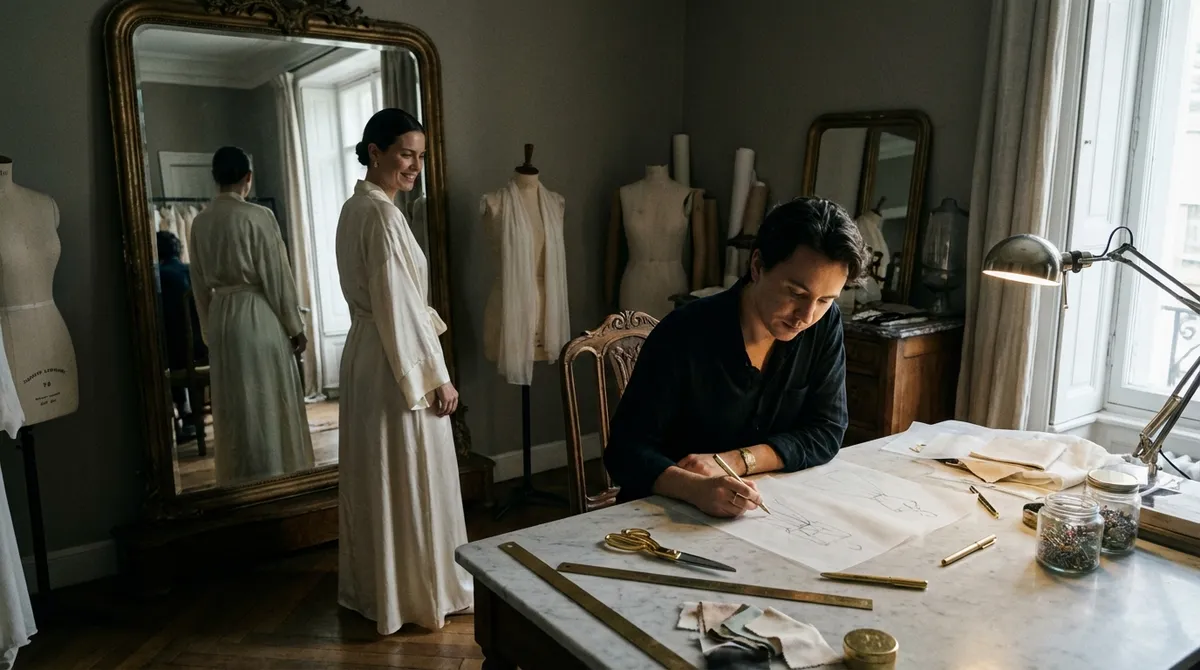
In couture fashion, a fitting precedes the final garment. In exceptional smile design, a similar principle applies: you should have the opportunity to “audition” your future smile before committing to irreversible changes.
Two advanced tools enable this:
- Digital simulation: High-resolution photos and scans are used to generate a proposed smile on-screen. This is not just a cosmetic preview; it allows for collaborative design—adjusting length, width, color tone, and even the emotional character of the smile (softer vs. bolder) before any drilling.
- Mock-up or trial smile: Using temporary materials bonded over your existing teeth, your dentist can create a reversible, wearable prototype. You live with it for days or weeks—speaking, eating, seeing yourself in different lighting and clothing.
This rehearsal phase yields insights you cannot access from a mirror in the dental chair:
- Whether your new tooth length affects certain sounds (“s,” “f,” “v”).
- How the smile appears in candid phone photos versus professional lighting.
- Whether the brightness level feels aligned with your wardrobe, complexion, and profession.
- How others respond—often a subtle but emotionally important data point.
Patients who experience a rehearsal smile tend to request adjustments they didn’t anticipate: shaving a fraction off tooth length, softening the line angles, or dialing back the shade slightly. These refinements, made before final ceramics are crafted, are often what transform a “very good” result into a signature one.
Exclusive Insight 5: Emotional Calibration—Designing for How You Want to Be Perceived
A rare but powerful dimension of elevated smile design is emotional intent: not just how you look, but how you wish to be perceived and how you want to feel in your daily interactions. Your smile broadcasts cues—warmth, authority, approachability, playfulness—and subtle design choices can amplify or temper these signals.
Consider the following design levers:
- Edge profile: Softer, more rounded incisal edges often read as friendly and youthful; sharper, more angular edges can project precision and authority.
- Tooth width and dominance: Slightly more prominent central incisors can create a confident, assertive aesthetic; a more blended, uniform arch can feel understated and gentle.
- Brightness level: Ultra-bright shades attract immediate attention; slightly softened tones can feel more discreet and refined, especially in executive or public-facing roles.
- Canine character: Strong, pointed canines add intensity; subtly blunted canines soften the overall impression.
A sophisticated consultation will explore questions rarely asked in standard dentistry:
- In which environments do you most use your smile—boardroom, camera, social gatherings?
- Do you want your smile to be noticed or simply to feel inherently “right”?
- Are you drawn to classic, timeless aesthetics or more fashion-forward, statement looks?
Aligning your smile with your personal and professional narrative creates a kind of emotional congruence. The result is not just cosmetic satisfaction, but a feeling that your external presence has finally caught up with who you are—or who you are becoming.
Conclusion
True smile design, at its highest level, is not about transformation for transformation’s sake. It is about considered enhancement: studying the dialogue between lips and teeth, honoring micro-imperfections, respecting functional architecture, rehearsing before committing, and aligning the final result with your emotional and social reality.
The most luxurious smiles do not shout; they resonate. They sit quietly, impeccably, within the architecture of your face and the rhythm of your life—so natural that others notice only that you seem unusually at ease, composed, and luminously yourself.
If you are contemplating a dental makeover, seek a clinician who speaks this more nuanced language of design—one who plans as meticulously as a couturier, adjusts as sensitively as a portrait artist, and builds as precisely as an architect. That is where a smile stops being “cosmetic work” and becomes an elegant extension of you.
Sources
- American Academy of Cosmetic Dentistry – Smile Design Principles – Overview of key aesthetic considerations in modern cosmetic dentistry
- Journal of Esthetic and Restorative Dentistry – Digital Smile Design Concepts – Peer-reviewed research on digital planning and esthetic parameters
- Harvard School of Dental Medicine – Esthetic and Restorative Dentistry Programs – Educational resources reflecting current best practices in esthetic treatment planning
- National Institutes of Health (NIH) – Occlusion and TMJ Health – Evidence-based information on occlusion, joint function, and long-term stability
- New York University College of Dentistry – Veneers and Esthetic Restorations – Clinical perspective on veneer design, materials, and indications
Key Takeaway
The most important thing to remember from this article is that this information can change how you think about Smile Design.