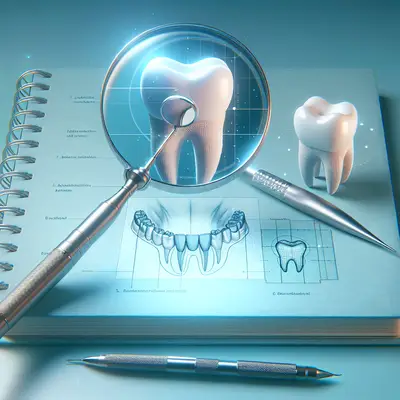
A beautifully designed smile is no longer about simply “fixing” teeth; it is about curating an expression that feels authentic, deliberate, and effortlessly refined. In high-end smile design, every millimeter matters, but so does every nuance of personality, lifestyle, and aesthetic preference. The result is not a generic “Hollywood smile,” but a tailored, quietly confident presence that feels like the best version of you—on your best day, every day.
Below, we explore how sophisticated smile design truly works, and reveal five often-overlooked insights that discerning patients appreciate long before they commit to a full transformation.
Beyond Straight and White: Smile Design as Facial Composition
In premium cosmetic dentistry, the smile is never treated in isolation. Your teeth become one element within a larger composition that includes facial structure, lip dynamics, skin tone, and even how you move and speak.
Instead of simply aligning and whitening, your dentist evaluates how tooth proportions interact with cheekbones, jawline, and the curvature of your lips when you laugh, speak, or rest. An incisive edge that appears perfect on a static photograph may look overly sharp when you’re mid-conversation. A bright shade of white that flatters under studio lighting might appear artificial in natural daylight.
Advanced digital smile design software allows your dentist to analyze:
- The arc of your smile line relative to your lower lip
- The amount of gum tissue visible when you speak and laugh
- The symmetry (and intentional asymmetry) between left and right sides
- How teeth support the lips and mid-face, subtly affecting perceived youthfulness
When done well, the end result does not draw attention to the dental work itself. Instead, people notice that you look rested, balanced, and more vibrant—without being able to explain exactly why.
The Private Language of Tooth Shape and Personality
One of the most exclusive aspects of elevated smile design is the micro-language of tooth shape. Shape is not just a technical choice; it is an aesthetic and psychological one.
Rounded edges and softer transitions tend to read as approachable, gentle, and youthful. Squarer edges with more defined line angles often project authority, decisiveness, and maturity. Delicate translucency at the incisal edges can suggest natural vitality, while very opaque, uniform surfaces can look more “done.”
A sophisticated smile designer will ask questions such as:
- Do you want your smile to soften your presence or sharpen it?
- Do you feel more aligned with classic elegance, modern minimalism, or subtle drama?
- Do you prefer a smile that blends seamlessly or one that makes a quiet statement?
By combining your answers with facial analysis, your dentist can curate tooth forms that align with your professional environment, social life, and personal brand. The result is a smile that does not just look “correct,” but feels like a visual extension of your character.
The Art of Imperfection: Why Tiny Flaws Make a Smile Believable
Ultra-symmetrical, ultra-bright smiles can be technically flawless yet visually unconvincing. The most elevated smile designs deliberately preserve—or introduce—microscopic irregularities that mimic nature and preserve believability.
These refined, controlled “imperfections” might include:
- Subtle variation in the lengths of the two front teeth
- Minimal texture on the enamel surface to catch light naturally
- Gentle, almost imperceptible rotation of a lateral incisor
- Soft, gradual color transition from the gum line to the edge of the tooth
For many patients, this is an eye-opening realization: the most luxurious smiles are rarely the most obviously perfect. Instead, they are meticulously imperfect—engineered to appear completely unengineered.
This approach also helps your new smile age gracefully. Harshly white, ultra-flat veneers can become conspicuous as trends shift. A nuanced, naturally inspired design remains timeless, much like a well-tailored garment that never feels out of season.
Exclusive Insight #1: Your Smile Can Be Timed to Your Lifestyle
Timing is an underappreciated luxury in smile design. A premium practice will not only consider the sequence of clinical steps, but also how the transformation integrates into your calendar, travel, and public appearances.
For example, your dentist may:
- Place exquisitely crafted temporary restorations that allow you to “test drive” your new smile for key events
- Schedule phases so that any mild post-procedure sensitivity or inflammation resolves before important meetings, vacations, or photo shoots
- Coordinate whitening, gum contouring, and porcelain work so each stage enhances the next rather than competing with it
For patients who are frequently in the public eye—or who simply value discretion—this level of planning allows a major transformation to occur almost invisibly. The smile seems to evolve subtly over time, rather than appearing overnight as an obvious intervention.
Exclusive Insight #2: The Best Smile Design Protects Your Joints and Posture
Sophisticated smile design is not only cosmetic; it is biomechanical. Your new bite impacts how your jaw joints function, how your facial muscles work, and even how your head and neck align.
When your bite is thoughtfully recalibrated:
- Jaw muscles operate more efficiently, reducing risks of tension headaches and facial fatigue
- Tooth wear slows, helping your investment last longer without frequent repairs
- The lower third of your face may regain subtle vertical height, softening deep folds around the mouth
Advanced practices use digital bite analysis, muscle evaluation, and sometimes even jaw-tracking technology to ensure that your new smile isn’t just beautiful today, but functionally stable for years to come. This is the quiet engineering behind a smile that feels as comfortable as it looks refined.
Exclusive Insight #3: Gum Architecture Is Your Smile’s Silent Frame
Teeth attract attention, but gums define the frame. Luxurious smile design often includes delicate gum sculpting—performed with lasers or microsurgical techniques—to refine proportions and symmetry.
Considerations include:
- How much gum is visible when you say certain sounds or laugh fully
- Whether one tooth appears “short” because of excess gum coverage
- How the curve of your gums follows—or disrupts—the curve of your upper lip
In some cases, a carefully planned gum recontouring alone can create an unexpectedly dramatic improvement, even before veneers or bonding are considered. For discerning patients, this level of detail is not an extra; it is essential to a polished, integrated result.
Exclusive Insight #4: Porcelain Is Not One Material—It Is a Palette
High-end ceramic work is closer to fine craftsmanship than simple lab work. The porcelain used in veneers and crowns can be layered, tinted, and textured much like an artist’s glaze.
Nuanced customization may involve:
- Layering multiple porcelains to recreate internal “depth,” mimicking natural enamel and dentin
- Incorporating faint translucency at the edges to catch and transmit light believably
- Slightly warming or cooling the shade to harmonize with your skin, sclera (whites of the eyes), and lip color
While many people ask for “white,” the refined question is: “Which white, in what undertone, at what intensity, and in what light?” Elevated smile design answers that question with the precision of a couture colorist, not a one-size-fits-all template.
Exclusive Insight #5: The Most Successful Makeovers Include Training Your New Smile
Once your new smile is in place, there is an adjustment phase that elite practices treat with the same seriousness as the design itself. This is where many standard treatments fall short.
A thoughtfully managed adaptation period might include:
- Coaching you on how to speak, laugh, and project confidence with your new teeth—especially if lengths or shapes have changed
- Monitoring how you chew and whether your muscles are adapting comfortably to the new bite
- Providing subtle refinements in contour or texture after a few weeks, once you’ve lived with the restorations
This “training” can be as simple as minor polishing or as involved as using protective night appliances while your muscles learn the new bite. The goal: your smile should feel so natural that, after a few months, you no longer think about it—you simply inhabit it.
Conclusion
Truly elevated smile design is a quiet collaboration between art, science, and self-awareness. It respects not just the position and color of your teeth, but the rhythm of your life, the way you express yourself, and the image you wish to project.
For those considering a sophisticated dental makeover, the most valuable shift is to stop asking, “How can I make my teeth look better?” and instead ask, “How can my smile be designed to feel entirely, unquestionably mine?” When that question guides the process, the result is not a cosmetic upgrade, but a refined, enduring expression of who you are—composed with intention, executed with precision, and worn with ease.
Sources
- American Academy of Cosmetic Dentistry – What Is Cosmetic Dentistry? - Overview of cosmetic dental procedures and principles used in modern smile design
- Journal of Esthetic and Restorative Dentistry – Principles of Smile Design - Peer-reviewed research on aesthetics, tooth proportions, and facial harmony
- Harvard School of Dental Medicine – Esthetic Dentistry Continuing Education - Educational resources highlighting advanced approaches to esthetic and restorative dentistry
- Mayo Clinic – Veneers - Clinical explanation of veneers, indications, and considerations for treatment
- National Institute of Dental and Craniofacial Research (NIDCR) - Authoritative information on oral health, bite function, and long-term dental wellness
Key Takeaway
The most important thing to remember from this article is that this information can change how you think about Smile Design.