A truly elevated smile makeover is less about chasing perfection and more about orchestrating harmony—between face, teeth, personality, and lifestyle. Modern smile design is where aesthetic nuance meets clinical precision, translating subtle choices into an undeniably refined presence. For discerning patients, the process is no longer a quick fix; it is a curated, data‑driven transformation with its own quiet standards of excellence.
Below, we explore how sophisticated smile design actually works—and share five exclusive insights that those considering a dental makeover rarely hear, yet deeply appreciate once they enter this world.
The New Language of Smile Design
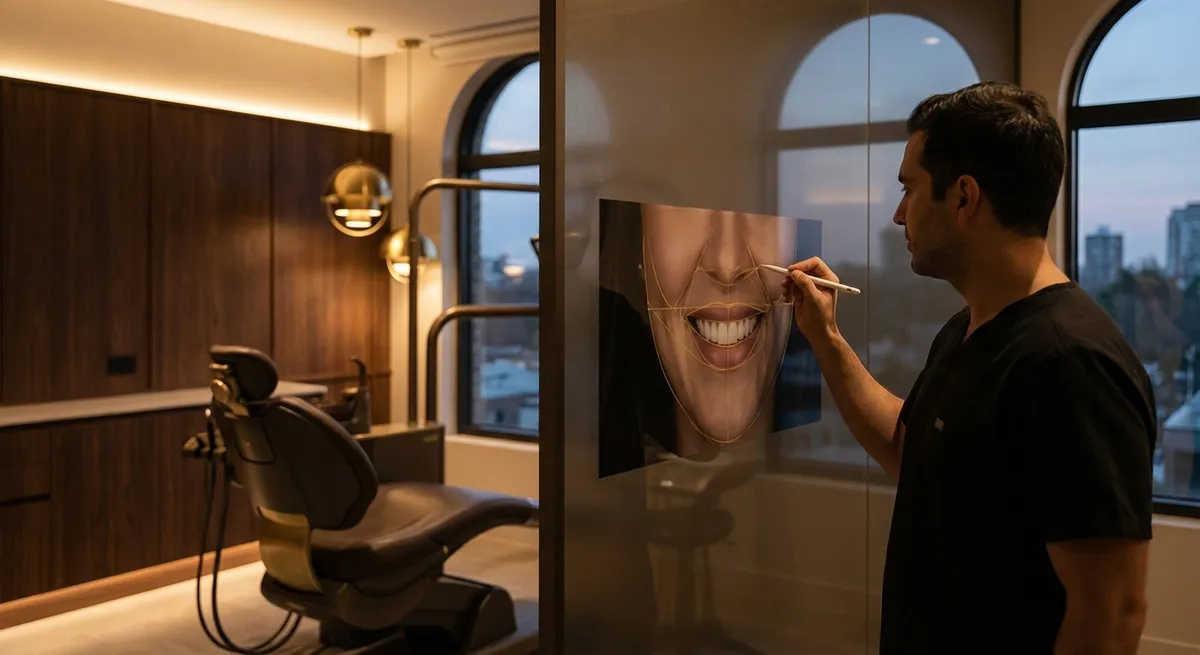
Smile design today is less a “before-and-after” exercise and more a design language with its own rules, ratios, and visual cues. Dentists trained in this discipline analyze not just your teeth, but also your facial thirds, lip dynamics, and even how your smile behaves during conversation, not only in posed photographs.
Digital tools have refined this process dramatically. High-resolution photos, 3D scans, and sometimes facial motion analysis allow the clinician to map how your teeth interact with your lips and cheeks in real time. Instead of working tooth by tooth, the dentist designs a composition—lengths, widths, contours, and luminosity are coordinated to support your face, not compete with it.
This means that two patients asking for “the same smile” will still emerge with wholly different results. Skin tone, age, tooth position, and personal style all influence the final design. The designer’s task is to translate these elements into a smile that feels both natural and distinctly elevated—polished, but never overdone.
Insight 1: Your Smile Has a “Style Profile”
Beyond shade and shape, refined smile design considers your aesthetic identity. Just as a tailor studies posture and proportions, a sophisticated dentist reads your style profile: how you dress, the spaces you frequent, your profession, and how you want to be perceived.
For someone in a public-facing leadership role, the smile may need to project authority and approachability—crisp incisal edges, restrained brightness, and slightly more defined line angles. For a creative or fashion-forward patient, the dentist may allow for bolder contours, a touch more value in the shade, or a subtly “editorial” asymmetry that feels modern rather than conventional.
This style profiling helps avoid the “template smile” that looks identical on every patient. Instead, your teeth are treated as part of your personal brand—a discreet but powerful visual signature that aligns with the rest of your life.
Insight 2: Micro-Asymmetry Is the Secret to Natural Luxury
Contrary to what many expect, ultra-symmetrical, identically shaped teeth often read as artificial, particularly under natural light or in candid moments. High-end smile design embraces a concept known as micro-asymmetry—imperceptible variations that soften the result and make it feel convincingly real.
This may include a slightly more prominent canine on one side, a whisper of texture in the enamel, or a minimal discrepancy in the reflective angles between central incisors. These choices are incredibly subtle, but they prevent that “one-size-fits-all” veneer look that even non-experts can detect.
Micro-asymmetry is the dental equivalent of haute couture tailoring: invisible to the casual observer, but essential to why the overall look feels so instinctively right. It’s the difference between a smile that is noticed and a smile that is simply admired.
Insight 3: Your Gum Line Is as Important as Your Teeth
Many patients focus solely on the color and shape of their teeth, overlooking the frame that surrounds them: the gingival (gum) architecture. In sophisticated smile design, the gum line is treated with the same precision that an architect gives to a building’s façade.
Uneven gum levels, bulky tissue, or excessive gum display can interrupt the flow of an otherwise beautiful design. Gentle contouring, crown lengthening, or minimally invasive laser sculpting can be used to reveal more tooth structure and create a balanced scallop pattern along the gum line. This can dramatically elevate the visual quality of the smile without aggressively altering the teeth themselves.
For patients with a “gummy smile,” thoughtful planning may involve skeletal or orthodontic considerations, not just cosmetic trimming. Handling the gums correctly is often what separates a good result from a quietly exceptional one—the eye may not know why the smile looks so polished, but the balance of teeth-to-gums is usually the reason.
Insight 4: Mock-Ups and Try-Ins Are Your Dress Rehearsal
In the luxury tier of smile design, nothing is left to guesswork. Provisional mock-ups—whether digitally designed or directly sculpted onto the teeth with temporary materials—serve as your rehearsal before any definitive treatment is finalized.
Digital smile design software can preview the projected outcome on your face, but a physical mock-up allows you to live in the design: to speak, laugh, and see how the teeth feel over several days. You can assess whether lengths interfere with certain sounds, whether the brightness feels comfortable in different lighting, and how the smile photographs from multiple angles.
This phase is highly collaborative. Patients may request nuanced changes—slightly shorter edges, softer corners, less translucency. These refinements are transferred meticulously to the final ceramic work. The result is comparable to multiple couture fittings: a final piece that feels inevitable, as if it always belonged to you.
Insight 5: Longevity Is Designed In, Not Added Later
An elevated smile makeover is not just about the moment you leave the chair—it is engineered with future years in mind. A sophisticated treatment plan anticipates how materials will age, how your bite will function under everyday forces, and how your face will subtly change over time.
High-quality ceramics, properly bonded, are chosen not only for beauty but for their ability to maintain luster and color stability. Occlusion (how your teeth meet) is meticulously evaluated to minimize stress points that could lead to chipping, fractures, or jaw discomfort. In many cases, orthodontic alignment or bite correction precedes cosmetic work to ensure the foundations are sound.
Maintenance is woven into the design philosophy. Night guards, tailored hygiene schedules, and periodic polish visits are part of preserving the investment. The goal is not simply a dramatic transformation, but a result that still feels coherent and dignified a decade later—aging gracefully alongside you, not against you.
Conclusion
Modern smile design lives at the intersection of art, science, and personal identity. It turns cosmetic dentistry from a single procedure into a curated experience—one where your facial structure, lifestyle, and aesthetic aspirations guide every decision. For patients seeking more than a generic “Hollywood smile,” this discipline offers something far more compelling: a smile that feels nuanced, intentional, and quietly luxurious.
In the end, the most successful smile makeovers are not the ones that shout their presence, but the ones that feel impossibly natural—polished yet effortless, structured yet soft, and unmistakably yours.
Sources
- [American Academy of Cosmetic Dentistry – About Cosmetic Dentistry](https://aacd.com/about) – Overview of modern cosmetic dentistry principles and treatment options
- [Columbia University College of Dental Medicine – Esthetic Dentistry](https://www.dental.columbia.edu/patient-care/specialty-care/esthetic-dentistry) – Academic perspective on aesthetic and restorative smile treatments
- [Mayo Clinic – Veneers](https://www.mayoclinic.org/tests-procedures/dental-veneer/about/pac-20384980) – Clinical explanation of dental veneers, indications, and considerations
- [Cleveland Clinic – Crown Lengthening](https://my.clevelandclinic.org/health/treatments/22265-crown-lengthening) – Detailed overview of gum contouring and crown lengthening procedures
- [National Institutes of Health (NIH) – Digital Smile Design in Interdisciplinary Dentistry](https://www.ncbi.nlm.nih.gov/pmc/articles/PMC7429929/) – Research article on digital smile design and its role in treatment planning
Key Takeaway
The most important thing to remember from this article is that this information can change how you think about Smile Design.