A refined smile is no longer a matter of chance or genetics; it is the result of meticulously orchestrated clinical skill, digital planning, and aesthetic discernment. Today’s leading dental procedures operate at the intersection of medicine, design, and technology—creating outcomes that feel less like “work done” and more like a smile that has always belonged to you. For those considering a high-end smile makeover, understanding the nuances behind the process is the difference between a generic transformation and a signature result that quietly enhances every room you enter.
This article explores how contemporary dental procedures have evolved beyond simple corrections, and it reveals five exclusive insights that discerning patients often only discover once they are already deep into their treatment journey.
The New Vocabulary of Dental Aesthetics
In the past, cosmetic dentistry focused primarily on “fixing” visible flaws: whitening dark teeth, closing gaps, or masking chips. Today’s approach is far more curated, with clinicians speaking the language of facial harmony, dental proportions, and long-term structural integrity.
Your dentist is no longer just assessing teeth; they are evaluating how your lips move when you speak, how your teeth frame your eyes in photographs, and how your bite distributes force when you chew. High-caliber practices draw on facial esthetics, dental photography, and digital imaging to create an integrated profile of you, not just your smile.
The result is a treatment plan that considers everything from how veneers will reflect ambient light at an evening event to how your jaw joints will feel after years of wear. Modern dental procedures are becoming less about cosmetic “updates” and more about creating a tailored aesthetic identity that endures in real-world conditions—not just under studio lighting.
From One-Size-Fits-All to Micro-Tailored Procedures
While procedures like veneers, crowns, dental implants, and clear aligners may appear standard on the surface, the way they are executed at a high level is anything but generic. Materials, preparation techniques, and laboratory craftsmanship now allow for degrees of customization that rival bespoke tailoring.
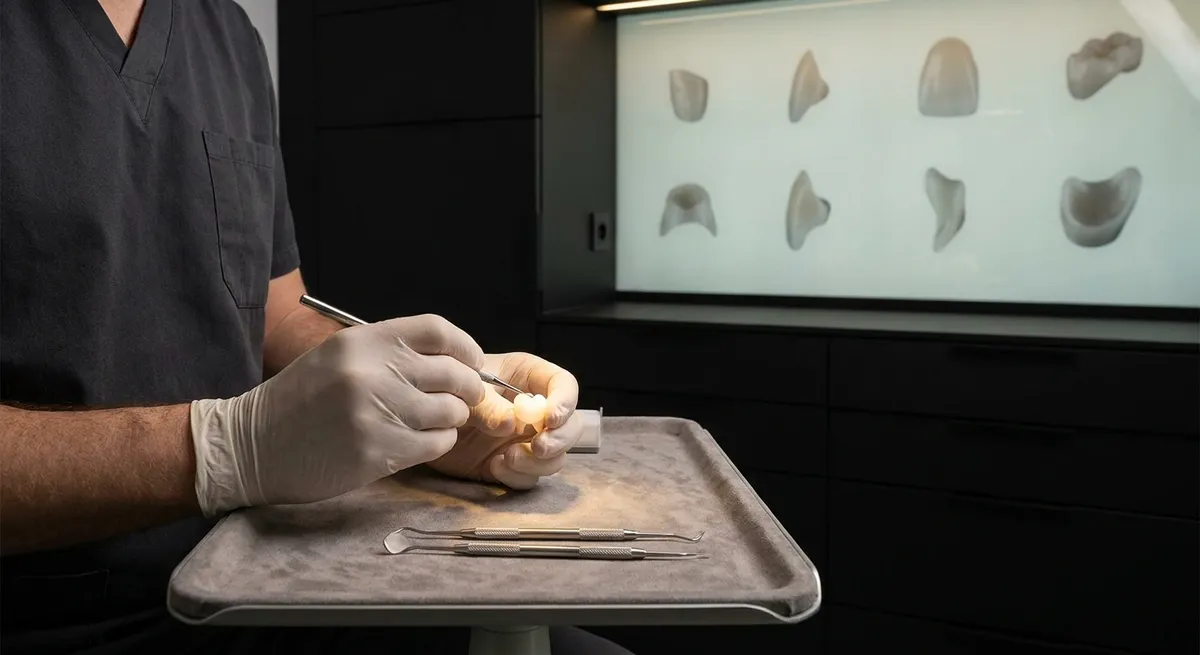
A porcelain veneer, for example, is not simply white and smooth. At a premium level, your dentist and ceramist collaborate to select translucency, texture, edge design, and internal character (think faint halo effects, subtle gradations from gumline to edge, or minimal surface “imperfections” that signal authenticity). Even the underlying tooth preparation is carefully controlled to conserve as much natural structure as possible, extending the life of both tooth and restoration.
Implant procedures follow a similarly individualized path, with 3D scans guiding the exact angle and depth of implant placement. This precision maintains bone structure, supports the soft tissue architecture, and allows restorations that truly mimic natural teeth—not just in appearance, but in how they feel when you bite into something as delicate as a berry or as firm as a crusty baguette.
The Hidden Architecture: Why Function Comes Before Glamour
Behind every beautiful smile is an invisible structure of forces and support that determines how long that beauty will last. High-end dental procedures prioritize bite harmony (occlusion), jaw joint health, and gum stability—long before the first ceramic is bonded or the final shade is chosen.
If veneers are placed on teeth that do not meet properly, micro-fractures, chipping, and sensitivity can occur. Likewise, lengthening teeth for an elegant look without considering lip closure and speech can result in subtle lisping or jaw fatigue. Premium makeover planning involves a quiet but rigorous functional analysis: models of your bite, digital scans, sometimes even overnight bite testing with temporary restorations.
By resolving bite discrepancies, addressing gum inflammation, and stabilizing bone support first, your dentist is effectively building a steel frame beneath a glass façade. The visible outcome appears effortless, but it stands on a foundation engineered to withstand years of use, expression, and life.
Exclusive Insight #1: Your “Trial Smile” Is Your Most Powerful Decision Tool
One of the most overlooked luxuries in modern dentistry is the provision of a “trial smile”—a reversible preview created using temporary materials or digital simulations.
Rather than committing immediately to permanent porcelain or composite, a skilled clinician can mock up your prospective results directly onto your teeth or in your mouth using provisional restorations. You can then live with this interim smile for days or weeks: speaking, eating, being photographed, and experiencing how it feels in everyday life.
This stage is not simply about aesthetics; it is a live test for function, comfort, confidence, and self-perception. Adjustments in tooth length, width, or contour can be made before the final restorations are crafted. Patients who embrace this trial phase often achieve outcomes that feel uncannily “right,” because they have played an active, experiential role in refining the design.
Exclusive Insight #2: Shade Is Only Half the Story—Translucency and Texture Define Luxury
To the untrained eye, “white” is the main objective. To a discerning patient, and certainly to a master ceramist, the real artistry is in translucency, opacity, and microscopic surface modeling.
High-end dental procedures treat the tooth as a layered structure: the core body shade, the translucency at the edge, the gentle gradation from gumline to biting surface, and the way light scatters on a subtly textured enamel surface. This is the difference between a smile that appears flat and artificial in natural daylight and one that remains believable—and quietly stunning—under any lighting condition.
Texture, in particular, is often underestimated. Ultra-polished, glassy veneers may look dramatic on social media, but in person they can read as “overdone.” A carefully textured surface, with delicate vertical striations and slight irregularities, mimics the optical properties of youthful enamel, creating a refined but authentic signature.
Exclusive Insight #3: Gum Contours Are Your Silent Frame of Elegance
While teeth often receive all the attention, the gums act as the frame, and the frame determines how the artwork is perceived. Asymmetrical gum heights, excess gum display, or flat, uneven contours can subtly diminish even the most carefully crafted restorations.
Contemporary smile makeovers frequently incorporate soft tissue procedures—such as gentle laser reshaping or surgical crown lengthening—to refine the gumline. When performed with precision, these interventions are virtually invisible to others, yet they profoundly enhance balance and symmetry.
For the discerning patient, minor gum sculpting can achieve what veneers alone cannot: a calm, harmonious upper arch where each tooth appears properly “seated” and proportioned. The most sophisticated smiles often owe their quiet elegance not just to the teeth themselves, but to this discreet architectural refinement of the tissue around them.
Exclusive Insight #4: Longevity Is Designed, Not Assumed
Premium dental procedures are an investment not only of resources, but of identity. Longevity, therefore, is not left to chance. It is deliberately engineered through planning, material choice, and aftercare.
Your dentist evaluates the anticipated load on each restoration—how you clench or grind, your dietary habits, your oral hygiene routine—and then selects materials accordingly. For example, ultra-thin ceramic may be ideal for minimally invasive veneers, while a more robust lithium disilicate or zirconia-based restoration may be chosen for molars bearing heavy forces.
Equally important is the maintenance blueprint. Customized night guards, periodic bite evaluations, and professional cleanings tailored to your specific restorations help safeguard sheen, color stability, and structural integrity. The subtle, premium advantage is a smile that does not just look new on delivery day—it matures gracefully with you.
Exclusive Insight #5: The Best Makeovers Respect Your Personal Narrative
In an era of filters and trends, it is tempting to pursue the “perfect” smile seen on screens. Yet the most sophisticated dental procedures resist uniformity. They preserve, or even highlight, elements of character that make your smile distinctly yours.
This might mean intentionally keeping a slight asymmetry, softening but not eliminating a small gap, or choosing a shade that complements your complexion and age rather than defaulting to the brightest option. An experienced clinician will ask about your professional presence, your personal style, and even how you feel about your childhood smile—details that inform whether your transformation should be subtle, restrained, or more pronounced.
True luxury in dentistry is not about conspicuous perfection; it is about congruence. When your dentist respects your story—who you are, how you live, and how you wish to be perceived—the result is a makeover that feels less like a new face and more like an elevated version of your authentic self.
Conclusion
Modern dental procedures, when approached with precision and artistry, transcend the idea of “fixing teeth.” They become a form of smile couture: custom-designed, structurally sound, and deeply aligned with your identity. The most rewarding transformations are those where every layer has been considered—the bite, the gums, the materials, the light, and, above all, the person behind the smile.
As you explore your options, look not just at before-and-after photographs, but at process: digital planning, trial smiles, gum contour analysis, and long-term maintenance strategies. In the quiet details of that process lies the difference between a merely improved smile and one that feels timeless, intentional, and entirely your own.
Sources
- [American Dental Association – Cosmetic Dentistry Overview](https://www.mouthhealthy.org/all-topics-a-z/cosmetic-dentistry) – General guidance on common cosmetic procedures and their indications
- [Mayo Clinic – Dental Implants](https://www.mayoclinic.org/tests-procedures/dental-implants/about/pac-20384622) – Explains the process, planning, and long-term considerations for implant-based restorations
- [Cleveland Clinic – Veneers: Porcelain & Composite](https://my.clevelandclinic.org/health/treatments/25260-veneers) – Details veneer types, preparation, and durability factors relevant to high-end smile design
- [UCSF School of Dentistry – Occlusion and TMJ Disorders](https://dentistry.ucsf.edu/patient-care/tmj-and-occlusion) – Discusses bite function, jaw health, and why occlusion matters in restorative and cosmetic work
- [National Institute of Dental and Craniofacial Research – Periodontal (Gum) Disease](https://www.nidcr.nih.gov/health-info/gum-disease/more-info) – Outlines gum health fundamentals that underpin stable, long-lasting aesthetic results
Key Takeaway
The most important thing to remember from this article is that this information can change how you think about Dental Procedures.