A truly exceptional smile makeover is never accidental. It is the outcome of carefully sequenced procedures, advanced digital planning, and an almost couture-level approach to detail. For patients seeking more than a basic “before and after,” understanding what actually happens chairside—and behind the scenes—transforms the experience from routine dentistry into a deliberate aesthetic investment.
Below, we explore how contemporary dental procedures are orchestrated in high-level practices, highlighting five exclusive insights that sophisticated patients quietly rely on when shaping a refined, camera-ready smile.
The Hidden Architecture: Comprehensive Evaluation Before a Single Tooth Is Touched
In elevated cosmetic dentistry, the most decisive work occurs long before drilling, bleaching, or bonding ever begins. A meticulous diagnostic phase creates the invisible architecture that supports every subsequent procedure.
Your dentist will typically combine a full clinical examination with digital radiographs, intraoral scans, and high-resolution photography. This isn’t merely to “look for cavities,” but to evaluate bite dynamics, periodontal support, jaw joint health, and facial proportions. Subtle issues—like minor bone loss, clenching patterns, or microfractures—can dramatically affect how long veneers, crowns, or implants last.
This is also where gum health is evaluated with particular rigor. A pristine final result demands a stable, inflammation-free foundation; if your gums are puffy, bleeding, or uneven, any porcelain applied on top becomes a short-lived illusion. Periodontal treatment, occlusal adjustments, or bite splints may be quietly recommended not as “extras,” but as integral procedures that protect your investment and preserve the symmetry and brightness you’re paying for.
Digital Precision: How Technology Elevates Each Procedure
Advanced practices increasingly treat digital tools not as gimmicks, but as precision instruments that refine every clinical step. While traditional impressions and 2D planning still exist, high-end smile makeovers now rely heavily on digital workflows.
Intraoral scanners create detailed 3D models of your teeth and bite, eliminating many of the distortions associated with impression material. These scans feed into CAD/CAM systems that design crowns, veneers, and onlays with micrometer-level accuracy, tailoring each restoration to your unique enamel thickness, occlusion, and facial contours.
Cone beam CT imaging (CBCT), when needed, allows for highly precise implant placement and a more conservative approach to bone and soft tissue. Rather than “guessing” angulation, the clinician can virtually plan the entire procedure, often fabricating surgical guides that translate the digital blueprint directly into your mouth.
For discerning patients, the benefit is not just technology for its own sake—it is tighter margins, better fit, fewer adjustments, and a result that feels as natural as it looks.
The Fine Art of Shade, Shape, and Surface: Where Aesthetics Become Bespoke
The difference between a “nice” smile and one that looks innately yours often lies in nuances that rarely appear on generic treatment menus. High-caliber cosmetic procedures treat every tooth surface as a canvas, paying attention to details you may not consciously name but instantly recognize as natural.
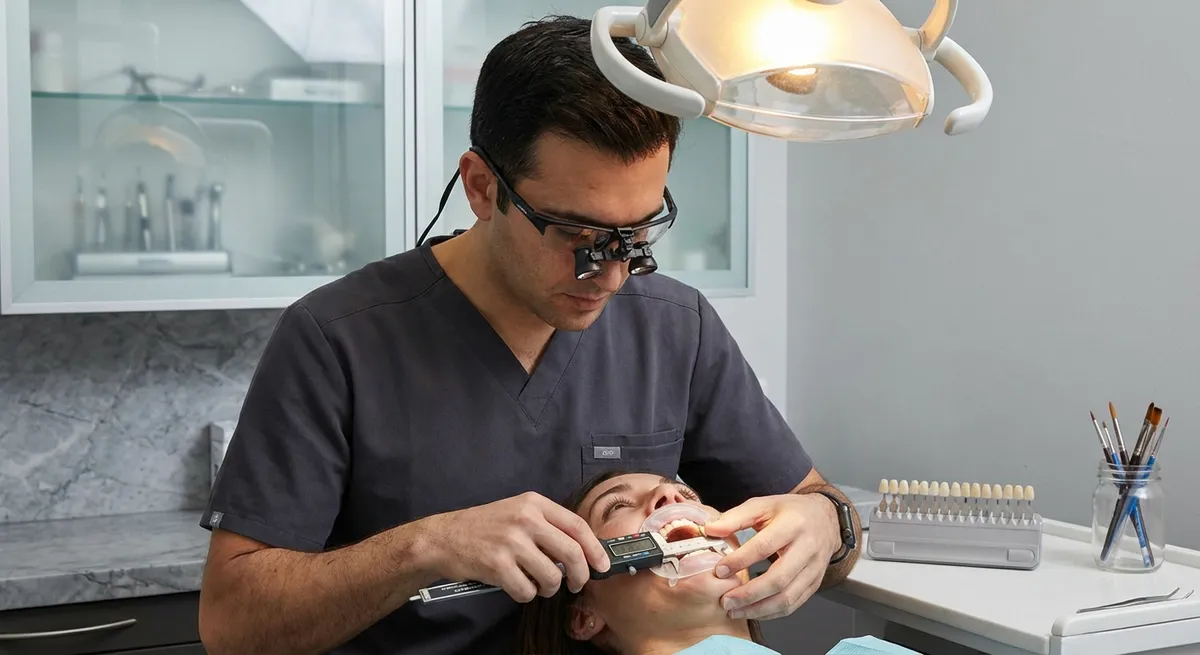
Shade selection, for instance, goes beyond choosing a bright white tab. Your dentist and ceramist may layer translucencies, slight opalescent effects, and gradations from the cervical (near the gumline) to the incisal edge to mimic the way light moves through natural enamel. Surface texture—subtle ridges, faint halos, or micro-texturing—can prevent porcelain from looking flat or artificial under direct lighting or flash photography.
Tooth shape is equally individualized. Slightly softened corners, modest asymmetries, and proportionate length-to-width ratios aligned with your lips and facial muscles mean that veneers, crowns, or bonding blend seamlessly with the rest of your features. Every procedure, from recontouring a single incisor to restoring an entire arch, is filtered through this personalized aesthetic lens.
Exclusive Insight #1: In top-tier practices, ceramists often request professional photographs and detailed notes about your personality, profession, and style aesthetic to guide their design choices. The lab work becomes as tailored as a custom suit, not an off-the-rack garment.
Procedural Sequencing: The Quiet Strategy Behind Flawless Outcomes
In a sophisticated smile makeover, procedures are not performed in isolation. They are intentionally sequenced so that each phase optimizes the next, both biologically and aesthetically.
Nearly every comprehensive case begins with stabilization: addressing decay, gum inflammation, and bite discrepancies. Whitening is typically completed before any anterior (front) restorations are finalized, ensuring new porcelain or bonding can be matched to a stable, well-established shade rather than chasing an evolving color.
Orthodontics—often with discreet clear aligners—may be integrated not merely to “straighten teeth,” but to position them ideally for minimal-prep veneers or conservative restorations. This can allow the dentist to remove less natural enamel and rely more on alignment than heavy drilling.
For implant-based solutions, bone and soft tissue are managed first. Temporary restorations are used strategically to guide gum contours around implants and crowns, creating an elegant, symmetrical frame before the final prosthetics are delivered.
Exclusive Insight #2: Highly curated treatment plans may intentionally extend over several months, not due to delays, but to allow bone, gums, and bite to adapt—protecting both comfort and longevity of the final cosmetic work.
Comfort as a Design Principle: Anesthetic, Sedation, and Recovery Refinement
In elevated settings, comfort isn’t a courtesy; it is carefully engineered into every procedural step. Modern anesthetics, needle techniques, and sedation options are selected to align with your tolerance, schedule, and even your professional obligations.
Dentists may use topical anesthetic gels, ultra-fine needles, warming devices, and buffered anesthetics to minimize injection discomfort. For more extensive procedures—multiple crowns, implant placements, or full-arch reconstructions—oral or IV sedation can create a placid, time-compressed experience where several steps are completed in a single visit.
Technology also streamlines post-procedure recovery. Precise tooth preparation and conservative tissue management generally mean less swelling, reduced sensitivity, and fewer emergency visits. Clear, tailored aftercare—prescription-strength desensitizing products, custom trays for fluoride or medicated gels, and schedule-aware pain management—allows patients to return quickly to public-facing roles without visible compromise.
Exclusive Insight #3: Leading practices frequently schedule major procedures early in the week or before long weekends, strategically aligning with your calendar so any transient post-treatment sensitivity occurs off-stage rather than on-camera or in critical meetings.
The Laboratory Partnership: Artisans Behind the Clinical Performance
When discussing veneers, crowns, bridges, or implant prosthetics, patients often hear about “the lab” as if it were a generic outsourcing step. In reality, the quality and philosophy of the dental laboratory dramatically shape the final result.
Elite cosmetic dentists often collaborate with boutique labs or individual master ceramists who specialize in high-end aesthetic work. These artisans may hand-layer porcelain, meticulously adjust translucency, and refine surface features under varying light conditions to simulate how your smile will appear in daylight, indoors, and on screen.
Close dentist–lab communication—via shared digital cases, shade photos, and real-time feedback—ensures that minor nuances, such as the luminosity of the central incisors or the subtle rotation of a lateral, are not lost in translation. For complex cases, you may even be invited for an in-lab shade and characterization session.
Exclusive Insight #4: In the most detail-driven cases, provisional (temporary) restorations serve as a test-drive, and the lab uses your real-world feedback—speech, lip dynamics, photography—to refine the final porcelain. The process is iterative, not one-and-done.
Longevity by Design: Maintenance Protocols Built Into the Procedure Plan
A refined smile makeover isn’t judged solely on how it looks the day it is completed, but on how it ages. Top clinicians design procedures with a maintenance horizon already in mind, anticipating how materials and biology will interact over years, not months.
Nightguards or occlusal splints are often non-negotiable for patients who clench or grind, safeguarding porcelain and composite work from micro-fractures and wear. Custom hygiene intervals—every three to four months instead of every six—may be recommended, especially for patients with a history of gum issues, implants, or extensive restorative work.
Your dentist may specify non-abrasive toothpaste, professional-grade whitening maintenance, and strict guidelines about over-the-counter whitening products to prevent uneven fading. Regular bite evaluations ensure that as teeth shift subtly with age, restorations continue to function harmoniously with your jaw joints and muscles.
Exclusive Insight #5: Many high-end practices treat your post-makeover maintenance like a membership: priority hygiene scheduling, periodic photo documentation, and ongoing refinement (such as subtle recontouring or polish) to keep your smile consistently “editorial-ready.”
Conclusion
Behind every polished, natural-looking smile makeover is a carefully orchestrated sequence of dental procedures—diagnosis, digital planning, meticulous preparation, laboratory artistry, and long-term maintenance. When approached with this level of precision, cosmetic dentistry transcends superficial enhancement and becomes a sophisticated collaboration between science, craftsmanship, and personal style.
For the patient who expects more than a generic result, understanding these layers of practice transforms you from a passive recipient into an informed partner—ensuring that the investment you make in your smile is as enduring, nuanced, and elevated as the life you lead.
Sources
- [American Dental Association – Cosmetic Dentistry Overview](https://www.mouthhealthy.org/all-topics-a-z/cosmetic-dentistry) – General overview of common cosmetic procedures and their purposes
- [Cleveland Clinic – Dental Veneers: Procedure and Risks](https://my.clevelandclinic.org/health/treatments/24953-dental-veneers) – Detailed explanation of veneer treatment, indications, and care
- [Mayo Clinic – Dental Implants](https://www.mayoclinic.org/tests-procedures/dental-implants/about/pac-20384622) – Comprehensive guide to implant procedures, planning, and outcomes
- [Harvard School of Dental Medicine – Digital Dentistry and CAD/CAM](https://hsdm.harvard.edu/news/digital-dentistry-and-cadcam-technology) – Discussion of how digital tools are reshaping restorative and cosmetic dentistry
- [National Institutes of Health (NIH) – Esthetic Dentistry and Smile Design](https://www.ncbi.nlm.nih.gov/pmc/articles/PMC4432608/) – Research-based review of aesthetic principles and techniques in modern smile design
Key Takeaway
The most important thing to remember from this article is that this information can change how you think about Dental Procedures.