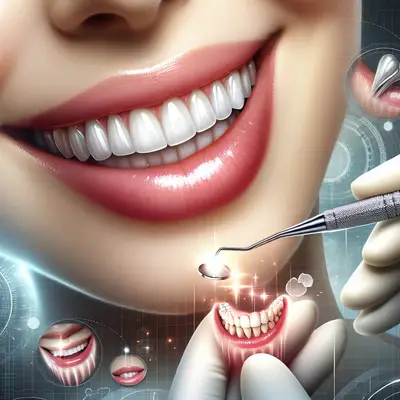
A truly elevated smile does not shout; it whispers. In refined circles, cosmetic dentistry has evolved from obvious “before-and-after” transformations into something far more nuanced—a form of modern polishing that enhances what is already there, preserves what is healthy, and aligns your appearance with your lifestyle, not just your reflection. For discerning patients, the goal is no longer a generic Hollywood grin, but a bespoke smile that feels authentic in motion, under natural light, and in every setting from boardroom to black-tie.
Below are five exclusive, often unspoken insights that sophisticated smile makeover seekers quietly factor into their decisions—long before they ever sit in the dental chair.
1. The Most Beautiful Smiles Start With Restraint, Not Reinvention
For patients accustomed to excellence—whether in tailoring, interiors, or skincare—the same principle applies to their teeth: the most beautiful work is nearly impossible to detect.
Advanced cosmetic dentists increasingly practice what could be called “aesthetic minimalism.” Rather than defaulting to aggressive reshaping, they combine conservative treatments—precision whitening, microscopic contouring, ultra-thin veneers, and additive bonding—to preserve as much natural tooth structure as possible.
The artistry lies in what they choose not to do. Instead of erasing every perceived “imperfection,” they often retain a hint of natural asymmetry, a subtle texture, or a unique incisal edge that makes your smile distinctly yours. These calibrated choices are what prevent a high-end smile from looking “done” in photographs or in person.
For the patient, this means asking not only, “What can we improve?” but also, “What is worth protecting?” A thoughtful cosmetic plan is as much a curation as it is a correction.
2. Light Behavior Matters More Than Tooth Color Alone
Most people describe their dream smile in terms of shade: “whiter,” “brighter,” “not too white.” Yet the most refined dental work is planned around how teeth interact with light, not just how they appear on a color chart.
Natural enamel is slightly translucent, with internal depth and very fine surface texture that scatter and reflect light in complex ways. High-caliber ceramic materials now allow master technicians to replicate these layers—subtle opacity at the core, faint translucency at the edges, barely-there surface irregularities—so that restorations respond to daylight, indoor lighting, and flash photography like natural teeth.
Two important, often overlooked considerations:
- Surface gloss vs. texture: Over-polished, glassy veneers may look impressive under clinic lights but can appear artificial in real life. Microscopically textured surfaces create softer, more believable reflections.
- Harmony with skin tone and lip color: The ideal shade is not the whitest; it is the most harmonious with your complexion, lip pigment, and even your typical makeup or grooming style. A sophisticated dentist will evaluate your smile under varied lighting and with full-face photos, not just with your mouth isolated.
The result is a smile that does not merely look white, but looks luminous—with a quality of light that reads as natural at every angle.
3. Your Smile Is a Strategic Part of Your Personal Brand
For high-performing professionals, a smile makeover is rarely just about aesthetics. It is about congruence—aligning how you look with how you operate: competent, composed, and quietly assured.
Subtle changes to tooth proportions and positioning can influence how others subconsciously read your expressions:
- Slightly longer central incisors can soften an overly serious expression, lending approachability without diminishing authority.
- Correcting asymmetries or midline discrepancies can reduce the visual “noise” that draws attention away from your eyes.
- Refining worn edges and correcting minor crowding can make the lower third of the face appear more balanced and energetic, especially on video calls and in photographs.
A sophisticated consultation will explore not only “what bothers you” but also how you use your smile professionally: Do you present often on stage or camera? Do you lead negotiations? Are you frequently photographed at events? This context informs whether the ideal outcome is soft and inviting, sharper and more defined, or deliberately neutral and composed.
In essence, modern cosmetic dentistry can be seen as a form of personal brand refinement—subtle, strategic, and very deliberately aligned with how you move through the world.
4. True Excellence Relies on a Team You Rarely See
Patients often focus on the visible talent—the cosmetic dentist—without realizing that many of the most exquisite smiles are the product of a quietly orchestrated team.
Behind every refined result is typically a network that may include:
- A master ceramist: The artisan who hand-layers porcelain, sculpts micro-texture, and calibrates translucency and shade to your unique features. Their signature is visible in every reflection on your front teeth.
- Aesthetic-focused orthodontist or clear aligner specialist: Subtle pre-alignment can minimize tooth reduction, allow thinner veneers, and ensure your bite is healthy enough to protect your investment.
- Periodontist (gum specialist): Elegant gum contours and discreet management of a “gummy smile” are often the difference between a good result and a truly outstanding one.
- Photography and digital smile design experts: High-resolution imaging, digital simulations, and “test-drive” provisionals allow you to experience and refine your new smile before finalizing it.
For the patient, this means the right question is not just, “How many veneers have you done?” but also, “Who is your ceramist?” and “What specialists do you collaborate with for complex aesthetic cases?” Exceptional outcomes rarely happen in isolation.
5. The Most Refined Smiles Age Gracefully, Not Just Impress Immediately
An elegant smile makeover is designed not only for the unveiling, but for the years that follow. This long-term thinking separates premium cosmetic work from quick, transactional dentistry.
A future-focused plan considers:
- Tooth wear and function: Subtle signs—chipped edges, flattened cusps, hairline fractures—may reveal clenching or grinding. Addressing this with bite adjustments, night guards, or orthodontic refinement protects both existing teeth and any new restorations.
- Gum stability over time: Beautiful veneers lose impact if gums recede unpredictably. Careful margin placement, conservative preparation, and periodontal health planning all contribute to a stable, seamless gum line.
- Material choice and lifestyle fit: For patients who travel frequently, drink coffee or red wine, or are constantly on camera, material selection and maintenance planning (polishing protocols, whitening schedules, night guards) should be tailored to real life, not an idealized one.
- Plan B and revisions: Even with the best care, restorations may need updating after many years. A sophisticated provider anticipates this, using techniques that preserve tooth structure and make any future revisions more straightforward and conservative.
The result is a smile that does not peak in the first six months, but continues to feel appropriate, balanced, and authentic a decade later—developing character rather than fatigue.
Conclusion
Cosmetic dentistry, at its highest level, is not an exercise in perfectionism but in precision. It respects natural anatomy, anticipates how teeth will interact with light, aligns aesthetics with your professional and personal identity, and is supported by a discreet team of specialists and artisans. Above all, it looks beyond the dramatic reveal and plans for how your smile will live, work, and age with you.
For those seeking more than a quick cosmetic upgrade, the most rewarding approach is to treat your smile as you would any significant, visible investment: with thoughtful strategy, elevated craftsmanship, and a preference for quiet luxury over obvious change.
Sources
- [American Academy of Cosmetic Dentistry – What Is Cosmetic Dentistry?](https://www.aacd.com/index.php?module=cms&page=621) – Overview of cosmetic procedures, training, and aesthetic principles
- [Mayo Clinic – Dental Veneers](https://www.mayoclinic.org/tests-procedures/dental-veneer/about/pac-20385180) – Evidence-based explanation of veneer indications, risks, and longevity
- [Columbia University College of Dental Medicine – Esthetic Dentistry](https://www.dental.columbia.edu/patient-care/treatments/esthetic-dentistry) – Academic perspective on aesthetic treatment planning and multidisciplinary care
- [National Institutes of Health (NIH) – Optical Properties of Dental Ceramics](https://www.ncbi.nlm.nih.gov/pmc/articles/PMC4380305/) – Research on translucency, light interaction, and natural-looking restorations
- [American Dental Association – Bruxism (Teeth Grinding)](https://www.mouthhealthy.org/all-topics-a-z/bruxism) – Clinical information on tooth wear, bite issues, and protective strategies for long-term results
Key Takeaway
The most important thing to remember from this article is that this information can change how you think about Cosmetic Dentistry.