A truly elevated smile never shouts for attention—it simply belongs. For those accustomed to bespoke tailoring, private ateliers, and curated experiences, a dental makeover is not about chasing trends or obvious “done” results. It is about precision, restraint, and a level of customization that feels as natural as your own skin. In modern smile design, luxury reveals itself in the details no one can quite name, but everyone can sense.
Below, we explore how refined smile design has evolved into a quiet art form—with five exclusive insights that those seeking an exceptional, camera-ready (yet whisper-soft) transformation will appreciate.
The New Language of Smile Aesthetics
Today’s premium smile design moves far beyond “white and straight.” The most respected cosmetic dentists now think in terms of facial architecture, light behavior, and emotional expression. A successful result must align with your bone structure, your natural lip dynamics, and even your preferred aesthetic vocabulary—whether that’s classic, minimalist, or subtly glamorous.
Instead of a one-size-fits-all template, advanced practitioners start by decoding how your smile behaves in motion. They analyze how high your lip lifts when you laugh, how your teeth show in profile, and how your smile interacts with the width of your cheekbones and the length of your face. The objective is not perfection in isolation, but coherence: teeth, lips, gums, and facial contours working in unison, so the overall impression feels polished, not “cosmetic.”
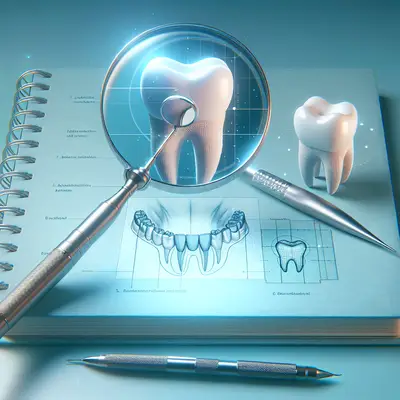
This is where digital smile design and high-resolution imaging come into play. With sophisticated software and detailed photography, your dentist can create a smile blueprint that anticipates how changes to tooth length, width, and contour will alter your entire expression—not just in still images, but in real life.
Five Exclusive Insights for the High-Expectation Smile Seeker
For discerning patients, the difference between a “nice” result and an extraordinary one lies in nuances that most people never see—but always feel. These five insights shape the way top-tier practitioners approach a modern smile makeover.
1. Your Incisal Edges Are Your Signature
The incisal edges—the biting edges of your front teeth—quietly dictate the mood of your smile. Slightly rounded corners tend to read as soft and youthful; more squared or linear edges suggest confidence and structure. The subtleties of how these edges follow your lower lip line can instantly elevate or cheapen the entire look.
In high-level smile design, incisal edge position is calibrated in tenths of a millimeter. Too long, and the teeth dominate the lower face; too short, and the smile loses vitality. The goal is to create an elegant “smile arc,” where the edges of your upper teeth echo the curve of your lower lip—an effect that photographs beautifully and reads as naturally harmonious. This single detail can be the difference between an obvious veneer case and a smile that simply feels instinctively right.
2. Translucency and Texture Trump Color Alone
Many people ask for “whiter teeth,” but premium smile design treats shade as only one variable in a much richer visual equation. True-looking enamel has depth: a subtle gradient from more opaque near the gumline to slightly more translucent at the edges, with microscopic texture that diffuses light rather than reflecting it like plastic.
Master ceramists now build veneers and crowns in multiple layers, adding faint halos, glass-like translucency, and ultra-fine surface texture that mimic natural enamel under varying light sources—daylight, evening interiors, flash photography. This attention to optical behavior is crucial; an overly uniform, high-value white may look acceptable under operatory lights but appear harsh, flat, or “fake” in real life. Those who value discretion generally gravitate toward nuanced, softly luminous shades rather than maximal brightness.
3. Gum Architecture Is Your Unseen Luxury Detail
Many smile makeovers fail not because of the teeth, but because of the gums. Excessive gum display, uneven contours, or inflamed tissue quietly undermine even the most beautiful restorations. In a genuinely refined case, your clinician considers your gingival architecture as carefully as your tooth design.
Laser contouring, minor periodontal surgery, or orthodontic adjustment can reshape the frame around your teeth so the gumline is symmetrical, balanced, and tailored to your lip line. The objective is not to erase every hint of gum, but to ensure that what shows is intentional and healthy. Well-designed gum architecture makes teeth appear longer, slimmer, and more proportionate—an understated refinement that registers as “beautiful” even if no one can pinpoint why.
4. Dynamic Symmetry Matters More Than Mathematical Perfection
Classical dental textbooks often emphasize rigid proportions—like the “golden ratio”—but real human beauty is less about static symmetry and more about dynamic balance. When you speak, laugh, or smile subtly, the left and right sides of your face rarely behave identically, and that slight asymmetry is precisely what makes you look human and compelling.
Rather than chasing absolute mirror-image perfection, leading cosmetic dentists aim for “dynamic symmetry”: a balance that looks harmonious in motion and from multiple angles. A veneer on one side might be shaped slightly differently from its counterpart to compensate for a natural lip asymmetry or cheek fullness, so that the final impression is balanced when you are animated. This philosophy respects the fact that you are not a still photograph but a person in constant micro-movement.
5. Longevity Is the New Status Symbol
The most luxurious smile is not the one that looks spectacular in week one; it is the one that still looks quietly flawless in year ten. Durability has become a new marker of sophistication, and that longevity is determined as much by planning and oral health as by the materials used.
Bite analysis, airway evaluation, and assessment of parafunctional habits (like clenching and grinding) now sit at the center of high-level smile design. Premium ceramics, adhesive protocols, and customized night guards are anchored in a bigger question: how will this smile age with you? A meticulously planned case will maintain color, integrity, and fit across years of use, with minimal need for touch-ups. In this sense, choosing a considered, biologically respectful approach is less about vanity and more about long-term investment—akin to commissioning a bespoke garment that is meant to be worn and admired for years, not seasons.
The Experience Behind a Truly Bespoke Smile
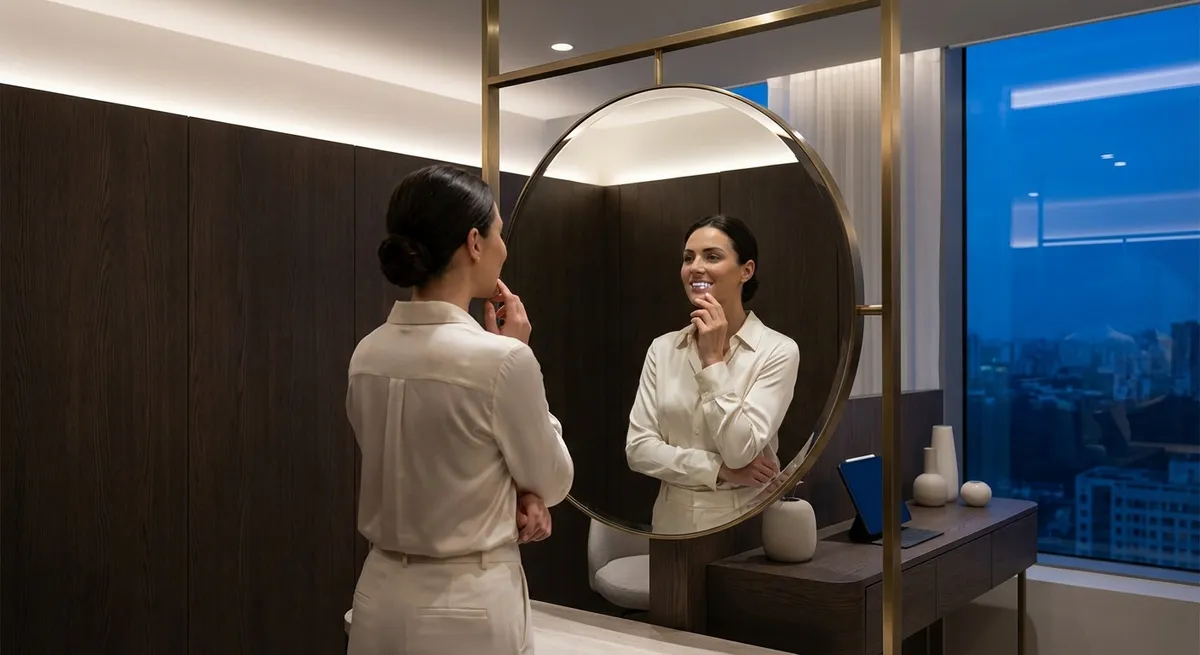
Elevated smile design is as much about process as outcome. The journey typically begins with in-depth consultation, photography, and sometimes 3D scans. Your dentist may create a digital mock-up or a physical “test drive” that allows you to experience a proposed design directly in your mouth before any definitive changes are made.
This collaborative refinement period—often involving multiple short visits—is where your personal aesthetic is translated into dental form. Subtle questions matter: How much tooth do you want to see when your lips are at rest? Do you prefer a more classic or more contemporary shape? Are you comfortable with a brighter shade, or do you favor something indistinguishable from natural enamel?
Materials and techniques are selected accordingly: ultrathin porcelain veneers, minimal-preparation restorations, or a blend of orthodontics, whitening, and conservative bonding. In higher-end practices, the same master ceramist may handcraft all restorations, ensuring consistent tone and texture. The final result should not feel like a new identity imposed upon you, but an elevated version of the expression you already own.
Conclusion
In the realm of contemporary smile design, luxury is defined by what you do not see: the hundred micro-decisions behind each millimeter of tooth length, each curve of enamel, each contour of gum. For the discreet perfectionist, the ultimate compliment is not “nice veneers” but “you look incredibly well.”
By prioritizing incisal edge design, natural translucency, gum architecture, dynamic balance, and long-term durability, a modern cosmetic dentist can craft a smile that aligns with the rest of your life: tailored, intentional, and quietly extraordinary.
Sources
- American Academy of Cosmetic Dentistry (AACD) – Smile Design Principles - Overview of key aesthetic principles and modern approaches to cosmetic smile planning
- Journal of Esthetic and Restorative Dentistry – Facial and Dental Aesthetics - Peer-reviewed research on smile design, proportions, and optical properties of restorations
- Mayo Clinic – Veneers - Clinical explanation of veneer procedures, indications, and considerations for long-term success
- Harvard School of Dental Medicine – Esthetic Dentistry Continuing Education - Educational offerings reflecting current standards and advanced techniques in esthetic and restorative dentistry
- National Institute of Dental and Craniofacial Research (NIDCR) - Authoritative information on oral health, periodontal health, and factors affecting the longevity of dental treatments
Key Takeaway
The most important thing to remember from this article is that this information can change how you think about Smile Design.