A beautiful smile is no longer a generic template of perfect white teeth; it is a curated expression of identity. Today’s most discerning patients are not chasing “Hollywood white” or uniform veneers—they are seeking something far more nuanced: a smile that looks inevitable on their face, as if it could never have been any other way. This is the promise of advanced smile design when it’s approached as both science and artistry.
Below, we explore how refined smile design really works—focusing on five exclusive, often-overlooked insights that those considering a high‑end dental makeover will truly appreciate.
Beyond Symmetry: Designing for Facial Flow, Not Just Straight Teeth
Traditional cosmetic dentistry often celebrates symmetry and straightness as the ultimate objectives. While these are essential foundations, modern smile design goes further, considering the flow of the entire face.
A sophisticated smile designer will study how your lips move when you speak, the way your cheeks lift when you laugh, and the natural balance between your eyes, nose, and chin. Instead of forcing absolute symmetry, they consider harmonious asymmetry: tiny, deliberate variations in tooth shape, edge length, or contour that echo the natural irregularities of a real, unaltered smile.
This concept of facial flow influences:
- Tooth proportion: The height-to-width ratio of each tooth relative to the face, not just to neighboring teeth.
- Smile arc: The curve formed by the edges of your upper teeth relative to the curve of your lower lip.
- Incisal edge position: How far the front teeth are visible at rest and in full smile, which subtly influences perceived age and vitality.
The result is a smile that doesn’t appear “done,” but instead feels organically integrated—your own features, meticulously elevated.
The Palette of Enamel: Customized Color Is More Than Just “Shade”
Most people think of tooth color as a single number on a shade tab. In high-end smile design, this is only the beginning. Natural enamel is layered, translucent, and intricate—it carries depth, warmth, and micro-variations that change under different lighting conditions.
In a premium makeover, the color conversation becomes almost sartorial:
- Base tone: Whether your smile should lean cooler (slightly bluish or neutral) or warmer (subtle amber or honeyed undertones), based on your skin tone and eye color.
- Translucency and halo: The degree of translucency at the edges of the teeth, and whether a soft “halo” effect is introduced to mimic youthful enamel.
- Characterization: Subtle internal effects that make porcelain restorations appear like real teeth—delicate white opacities, faint vertical striations, or minimal staining at the margins when appropriate.
- Brightness vs. believability: An elevated smile is luminous, but never artificial. The goal is to look radiant in natural daylight and studio lighting, without that overly luminous, reflective “veneer glare.”
For patients, this means a color journey that feels closer to commissioning a couture garment than selecting a paint swatch: layered decisions, guided by an expert eye, that result in a shade uniquely yours.
The Power of Micro-Texture: Why the Finest Results Are Seen Up Close
What separates a beautiful smile that passes in photographs from one that stands up under the closest scrutiny is often invisible at first glance: surface texture.
Natural teeth are not perfectly smooth. They display faint ridges, delicate undulations, and microscopic irregularities that catch and scatter light. In top-tier smile design, ceramists and dentists intentionally recreate:
- Perikymata: Fine horizontal lines that give enamel its soft, natural luster.
- Lobes and valleys: Gentle contours in the front teeth that make them look alive rather than flat.
- Gloss gradation: Higher polish on certain surfaces and gentler lustre elsewhere, avoiding an overly uniform, plastic sheen.
This micro-texture is especially important for those constantly in front of cameras or under harsh lighting. Under 4K video or professional flash, overly polished, flat veneers betray themselves immediately. A meticulously textured smile, by contrast, looks natural from across the room and under cinema-close zoom.
For the patient, it’s the difference between “nice teeth” and a smile that invites no questions—only admiration.
Functional Elegance: How Bite Design Protects Your Investment
A truly elevated smile makeover does not sacrifice function for aesthetics. The most beautiful veneers or crowns will not remain flawless if your bite is poorly balanced, your jaw joints are strained, or your teeth are subjected to excessive micro-trauma over time.
Sophisticated smile design quietly incorporates advanced functional planning:
- Occlusal analysis: Digital or analog assessment of how your upper and lower teeth contact in motion—when you chew, speak, and swallow—not just when you bite down.
- Joint and muscle health: Evaluation of the temporomandibular joints (TMJ) and facial muscles to ensure your new smile does not exacerbate underlying tension, clenching, or grinding.
- Protective guidance: Shaping certain teeth to guide jaw movements in a way that protects the more delicate edges of your restorations during lateral or protrusive movements.
- Night protection strategies: Custom night guards or bite splints, tailored to your new occlusion, to preserve the integrity and polish of your restorations.
When function is refined alongside form, the smile ages gracefully: less chipping, fewer fractures, and far fewer “emergency” visits. True luxury in smile design is not only how it looks on day one, but how quietly it endures over the years.
Digital Vision, Human Judgment: The Subtle Balance Behind Exceptional Results
Digital smile design technologies—3D scanning, facially driven design software, and high-resolution imaging—have transformed what is possible in modern cosmetic dentistry. Yet the finest outcomes emerge where technology and human artistry meet, not where software alone leads the way.
In a premium process, these tools serve as instruments in the hands of a discerning clinician:
- 3D facial scans allow the dentist to preview how different tooth lengths, widths, and shapes will coexist with your lips, facial expression, and profile.
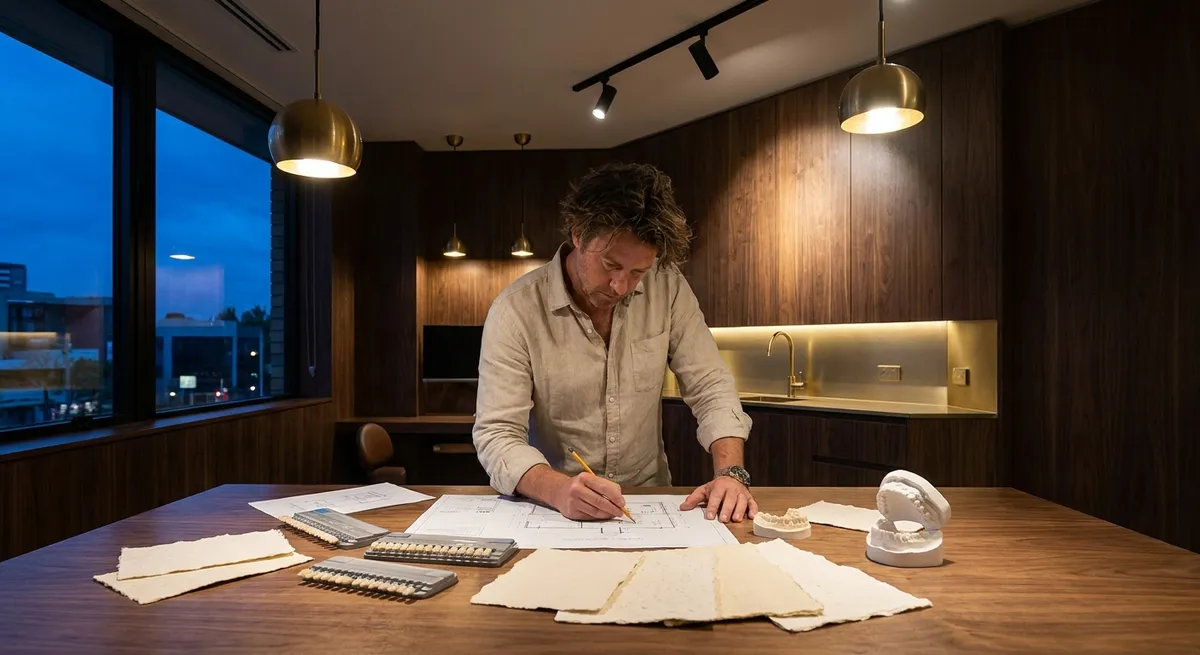
- Digital wax-ups and mockups let you “test-drive” a proposed design—sometimes even wearing temporary versions in daily life before finalizing the plan.
- Video-based assessment provides insight into dynamic movement: how the smile behaves in real speech, laughter, and natural conversation, not just static photos.
But crucially, the final decisions are filtered through human judgment—an understanding of culture, subtle beauty cues, and your personal aesthetic preferences. The most exclusive smile designs are not simply “perfect according to software”; they are appropriate for you, your lifestyle, your profession, and the image you wish to convey.
This blend of precise digital planning and curated, human-led refinement is where a smile transcends dentistry to become a personal hallmark.
Conclusion
A truly bespoke smile is never accidental, and it is certainly never generic. It emerges from a disciplined interplay of anatomy, aesthetics, technology, and craft—where every decision, from shade temperature to micro-texture and functional bite design, is considered with intention.
For individuals exploring a high-end makeover, the most meaningful question to ask is not simply, “Can you make my teeth look better?” but rather, “How will you design my smile to belong to my face, my life, and my future?” When your clinician can articulate the nuances explored above—facial flow, enamel palette, texture, function, and the interplay of digital tools and human artistry—you are likely in the hands of a true smile designer, not just a provider of cosmetic procedures.
A refined smile does more than transform your appearance. At its best, it quietly aligns how you look with how you wish to be seen—elevated, effortless, and unmistakably yourself.
Sources
- American Academy of Cosmetic Dentistry – What Is Cosmetic Dentistry? – Overview of modern cosmetic techniques and principles used in smile design.
- Journal of Prosthodontic Research – The role of tooth shape and proportions in smile esthetics – Peer‑reviewed discussion of tooth proportion, facial harmony, and esthetic guidelines.
- National Institutes of Health (NIH) – Smile Esthetics and Its Components – Research-based breakdown of factors like symmetry, smile arc, and tooth display in perceived attractiveness.
- Mayo Clinic – TMJ Disorders – Authoritative explanation of temporomandibular joint issues relevant to functional aspects of smile design.
- Harvard School of Dental Medicine – Digital Dentistry and Its Future – Insight into how digital tools are reshaping individualized treatment planning in dentistry.
Key Takeaway
The most important thing to remember from this article is that this information can change how you think about Smile Design.