A refined smile is rarely an accident. For those accustomed to tailoring every element of their appearance—from bespoke suiting to curated skincare—cosmetic dentistry has become less about “fixing teeth” and more about orchestrating a considered, long-term aesthetic. This is not the realm of quick, flashy transformations; it is a space where nuance, restraint, and technical excellence define the outcome.
What follows is a deeper exploration of cosmetic dentistry for patients who expect their smile to be as thoughtfully crafted as the rest of their personal brand—along with five exclusive insights that quietly separate an adequate result from an exceptional one.
Beyond Perfect: Designing a Smile That Looks Lived-In, Not Manufactured
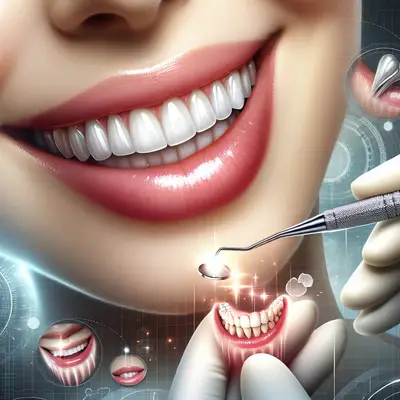
In high-end cosmetic dentistry, the objective is no longer a row of identically white, perfectly straight teeth. Perfection, in its literal sense, often looks artificial. The more sophisticated aim is a smile that appears naturally harmonious with your features, lifestyle, and age.
A discerning cosmetic dentist will study facial symmetry, lip dynamics, gum display, and even your natural resting expression. They may deliberately introduce micro-asymmetries—slight variation in tooth length, delicate texture on the front surfaces, or a gentle gradation in brightness from the front teeth to the premolars—to avoid the overly uniform “piano key” effect. The result is a smile that feels coherent with your bone structure and complexion, rather than a conspicuous upgrade.
The most successful makeovers are the ones that acquaintances notice as “You look incredible—did you do something different?” rather than “You had your teeth done.”
The New Benchmark: Texture, Translucency, and the Language of Light
Modern cosmetic dentistry has evolved far beyond “shade selection.” For patients seeking a truly elevated result, three dimensions have become critical: texture, translucency, and the way a tooth interacts with light.
Natural teeth are not uniformly glossy. They have faint vertical ridges, subtle surface undulations, and areas where light diffuses more softly. High-end ceramics can reproduce this with remarkable precision—creating the illusion of vitality rather than a flat, opaque sheet of white. Similarly, translucency at the incisal edge (the biting edge of the front teeth) is key: too opaque, and the teeth look bulky and artificial; too translucent, and they can appear gray under certain lighting.
An experienced cosmetic dentist will study how your teeth look in daylight, soft indoor lighting, and camera flash. This multi-environment approach ensures that your veneers or restorations photograph beautifully without looking overly reflective or “fake” in person. In effect, your smile is calibrated not just for the mirror, but for real life and high-resolution imagery alike.
Exclusive Insight #1: Your Smile Has a “Viewing Distance”
One of the quiet truths in advanced cosmetic dentistry is that your smile is evaluated at multiple distances: across a dinner table, in conversation range, and at camera-close distance. Each demands a different level of detail.
At a distance, the overall silhouette and tooth alignment dominate. Closer in, minor rotations, the shape of the incisal edges, and how the upper and lower teeth meet become apparent. Extremely close (in photos or on video), micro-textures, transitions between tooth and gum, and shade variations start to matter.
Elite practitioners design in layers—first resolving the macro aesthetics (straightness, symmetry, proportion), then refining the micro-details only visible up close. This is why preview tools like digital smile design and high-resolution temporaries are so important: they allow you to evaluate your future smile in real-world distances and scenarios before anything permanent is placed.
Exclusive Insight #2: Gum Architecture Is the Silent Luxury Detail
Teeth get most of the attention, but gums frame the entire composition. Overgrown, uneven, or receding gums can undermine even exquisitely crafted veneers. In the premium cosmetic space, “pink aesthetics” (the appearance of gums) are treated with the same intentionality as the teeth themselves.
Gum contouring, crown lengthening, or minimally invasive periodontal procedures can subtly recalibrate the line of your smile, ensuring that each tooth appears properly proportioned. For patients with a “gummy smile,” adjusting the amount of gum that shows when they laugh or speak can dramatically shift the perception of their smile without aggressive dental work.
The highest level of care often involves close collaboration between a cosmetic dentist and a periodontal specialist, orchestrating both white (teeth) and pink (gums) aesthetics into a single, coherent design.
Exclusive Insight #3: The Best Smiles Are Built to Age Gracefully
A truly premium smile makeover is not designed for a single moment in time, but for the way your face and lifestyle will evolve over the next decade and beyond. Your facial volume, lip support, bite forces, and daily habits (from nutrition to athletics) all influence how restorations will age.
Forward-thinking cosmetic dentists will consider:
- How your lip line may change over time and whether slightly longer or shorter teeth will still look natural later.
- Whether materials with higher strength and wear resistance are appropriate given your bite pattern or any history of grinding.
- Shade selection that respects your current complexion while allowing for subtle shifts in skin tone or lip color preferences over the years.
- A maintenance plan that includes professional cleanings tailored to ceramic or composite work, polishing routines, and the occasional re-glossing of surfaces to preserve luster.
The result is a smile that doesn’t just look exquisite when it is first revealed, but continues to feel current and well-integrated as you move through life.
Exclusive Insight #4: Biocompatibility and Material Selection Matter More Than You Think
For patients accustomed to scrutinizing ingredient lists in skincare or opting for hypoallergenic fabrics, the same degree of discernment should apply to dental materials. While all materials used in regulated practices must meet safety standards, there are meaningful differences in biocompatibility, longevity, and aesthetics.
High-quality porcelain systems, zirconia, and next-generation ceramic composites each have distinct strengths in terms of translucency, strength, and how they interact with surrounding tissues. Some patients may be more comfortable with metal-free restorations, especially in visible zones, to reduce the risk of gray shadows at the gum line or hypersensitivity to certain alloys.
A sophisticated cosmetic dentist doesn’t simply default to a single material; they curate a material strategy for your mouth, matching each tooth and zone to the most appropriate option. This might mean one ceramic system for front teeth where aesthetics dominate, and another for back teeth where strength and durability are paramount.
Exclusive Insight #5: A Truly Customized Smile Requires Your Active Collaboration
The most successful cosmetic transformations are not “done to you”; they are developed with you. Patients accustomed to tailoring garments or customizing skincare understand that subtle feedback can elevate a result from excellent to extraordinary.
During planning, expect to be invited into the process:
- Reviewing digital mock-ups or wax models that represent potential outcomes
- Wearing provisional (temporary) versions of your new smile and noting how they feel in speech, eating, and everyday social interaction
- Providing nuanced feedback—perhaps a preference for slightly softer corners on the front teeth, a fraction less length, or a gently reduced brightness to match your understated aesthetic
A dentist operating at a premium level welcomes this collaboration. When you bring your taste, lifestyle, and visual preferences into the discussion, and the clinician brings technical mastery, you arrive at a smile that feels unmistakably—and comfortably—yours.
The Invisible Standard: Experience, Technology, and Discretion
For the aesthetic-conscious patient, the true luxury in cosmetic dentistry often lies in what is never seen: the hours of planning behind the scenes, the meticulous coordination between lab technicians and dentist, and the deliberate use of technology only when it elevates the final result.
Digital scanners replace traditional impressions for comfort and precision; high-magnification loupes and microscopes enable micro-adjustments; advanced imaging helps model how changes in tooth position or length will affect facial support. Yet the technology remains backstage—the visible outcome is simply a smile that appears effortlessly right.
Discretion is also paramount. Many high-end practices are designed to be calm, low-profile spaces with tailored scheduling, minimal waiting room time, and a team trained not just in clinical excellence, but in service that feels aligned with clients accustomed to elevated experiences in other domains of their lives.
Conclusion
A sophisticated cosmetic makeover is less about transformation for transformation’s sake and more about alignment—between your teeth, your face, your personality, and your standards. It is an exercise in quiet refinement, where texture, light, gum architecture, material choice, and long-term aging are all carefully considered.
For the discerning patient, the true value lies in outcomes that don’t loudly announce themselves, yet subtly enhance every interaction, every photograph, and every moment you choose to smile. When executed with intention and collaboration, cosmetic dentistry becomes not a procedure, but a finely tuned expression of who you are—and how you choose to be seen.
Sources
- [American Academy of Cosmetic Dentistry – What Is Cosmetic Dentistry?](https://www.aacd.com/whatiscosmeticdentistry) - Overview of modern cosmetic dentistry procedures and aesthetic principles
- [Mayo Clinic – Veneers](https://www.mayoclinic.org/tests-procedures/dental-veneer/about/pac-20385120) - Clinical explanation of dental veneers, indications, and considerations
- [Harvard Health Publishing – Oral Health: A Window to Your Overall Health](https://www.health.harvard.edu/topics/oral-health) - Discusses the broader health implications of oral care and dental decisions
- [Columbia University College of Dental Medicine – Periodontal Aesthetics](https://www.columbia.edu/cu/dental/dept-divisions/perio.html) - Information on gum health and periodontal procedures relevant to “pink aesthetics”
- [National Library of Medicine (NIH) – Dental Ceramics: A Review](https://www.ncbi.nlm.nih.gov/pmc/articles/PMC4432608/) - Research-focused review of ceramic materials used in aesthetic dentistry and their properties
Key Takeaway
The most important thing to remember from this article is that this information can change how you think about Cosmetic Dentistry.