In an age of filters and fleeting trends, the most compelling aesthetic investment remains disarmingly analog: your smile. Cosmetic dentistry, done well, is less about chasing an ideal and more about commissioning a piece of living craftsmanship—one that moves with you, ages with you, and feels utterly your own. This is not the territory of one-size-fits-all veneers or over-bleached enamel, but of measured decisions, microscopic refinements, and results that whisper “impeccable” rather than shout “altered.”
Below are five exclusive, often-overlooked insights that people seeking a truly elevated dental makeover quietly prioritize—long before they sit in the chair.
Beyond “White”: Curating Your Personal Shade Palette
In premium cosmetic dentistry, “white” is not a goal; it is a spectrum. The most sophisticated smiles rarely rely on the brightest possible shade. Instead, they are composed through a nuanced palette that respects skin tone, lip color, sclera (whites of the eyes), and even how you are typically lit—office fluorescents, warm interiors, or camera flashes.
High-level practitioners often:
- Evaluate tooth shade under multiple lighting conditions to avoid an artificial “glow” in photos or evening settings.
- Incorporate subtle translucency and gradation from the neck of the tooth to the edge, mimicking natural enamel rather than creating a flat, opaque surface.
- Consider your wardrobe and cosmetic habits—someone who favors bold lip colors or black-tie dressing may require a different brightness balance from someone who gravitates toward neutrals.
- Aim for harmony with facial undertones: cooler complexions usually suit cooler, slightly bluish whites; warmer complexions often look more refined with a softer, cream-toned shade.
The result is not simply “whiter teeth,” but a shade composition that feels intentional, camera-ready, and convincingly natural in every environment.
Micro-Symmetry: Why the Most Beautiful Smiles Are Not Perfect
Contrary to mass-market assumptions, perfection is often the quickest way to an artificial-looking smile. The most sought-after cosmetic dentists are quietly obsessed with micro-asymmetry—tiny, deliberate irregularities that signal authenticity and vitality.
Rather than creating identical, mirror-image teeth, they may:
- Make one lateral incisor a fraction of a millimeter shorter or slightly varied in contour to avoid a “piano key” effect.
- Preserve or subtly recreate microscopic surface textures—those faint vertical lines and tiny undulations that occur on youthful, untouched enamel.
- Fine-tune the incisal edges (the biting edges of front teeth) so they follow the natural curvature of your lower lip when you smile, rather than aligning them in a rigid straight line.
- Calibrate the gum line to look balanced when you speak and laugh, not just when you’re posing in a dental chair.
These nuances are almost imperceptible in isolation, yet together they create the difference between a smile that looks “done” and a smile that looks undeniably beautiful—but impossible to quite explain.
The Quiet Power of Function: Bite Engineering for Long-Term Elegance
A premium cosmetic result is not just about how your teeth look when you leave the office; it is about how they behave over the next decade. Behind every enduring smile makeover is an exercise in engineering: your bite.
High-level cosmetic planning typically includes:
- A detailed assessment of how your upper and lower teeth meet in motion, not just at rest—especially during chewing, speaking, and clenching.
- Identification of micro-traumas: teeth that take too much force, subtle grinding patterns (bruxism), or TMJ (jaw joint) stress that could chip, crack, or discolor restorations over time.
- Integration of occlusal guards (custom night guards) or adjustments to tooth length and shape to distribute forces more evenly.
- Consideration of airway and facial support—subtle changes in tooth position can influence lip support, facial thirds, and even how relaxed your lower face appears at rest.
The outcome is a smile that is not only visually exquisite but structurally intelligent. The real luxury is not having to constantly repair or “touch up” rushed cosmetic work that never respected function in the first place.
Material Matters: Elevating Results Through Strategic Selection
In a refined cosmetic treatment plan, the choice of materials is as deliberate as the design itself. Not all ceramics, composites, and bonding agents are created equal—and they age differently under coffee, red wine, or fluorescent office lighting.
Discerning patients often ask not just what will be used, but why:
- High-quality porcelain systems can replicate depth, translucency, and natural light refraction better than more opaque, budget options.
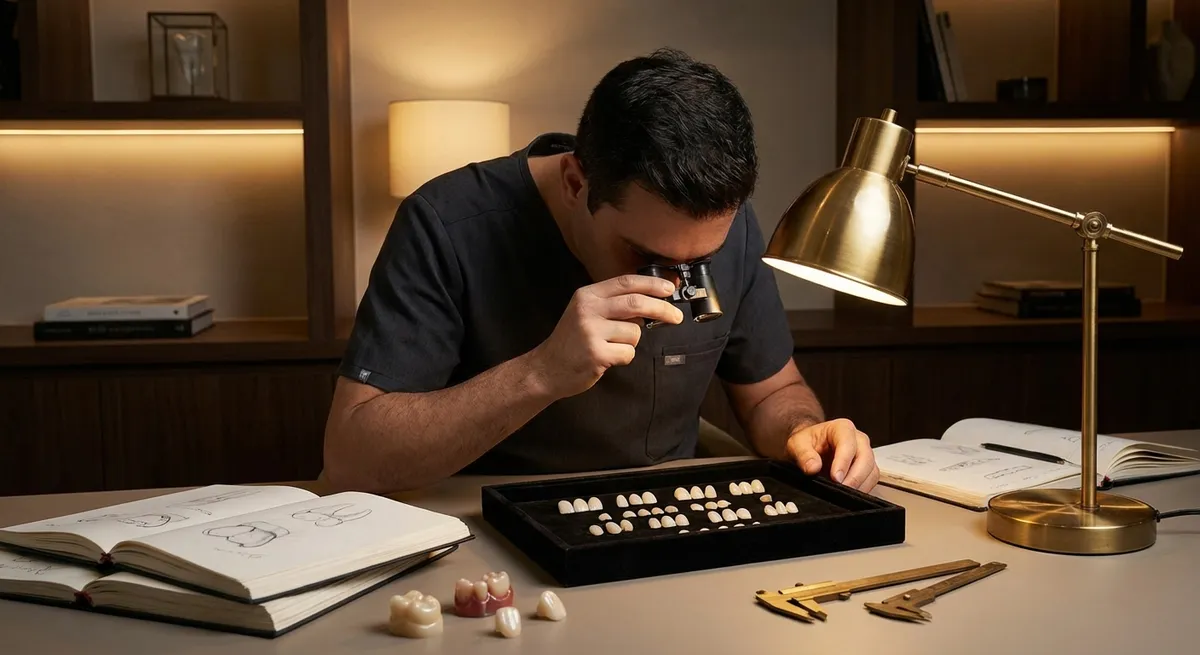
- Carefully layered ceramics—rather than single-shade blocks—allow your dentist and ceramist to build in subtle halo effects and internal color variations that mimic untouched enamel.
- Modern composite resins, in the right hands, can deliver conservative, elegant enhancements for smaller corrections—ideal for those who prefer minimal intervention while still demanding impeccable aesthetics.
- The glaze, polish, and finishing protocols determine how stain-resistant and lifelike the final result will appear, especially under high-definition cameras.
Understanding the material conversation transforms you from a passive patient into an informed curator of your own outcome—choosing not just “veneers,” but the level of craftsmanship you are commissioning.
Lifestyle Mapping: Designing a Smile Around How You Actually Live
The most sophisticated smile makeovers anticipate your life, not just your photos. Before finalizing any design, elevated practitioners increasingly “map” the smile to your daily reality.
This can include:
- Professional presence: Executives, on-camera professionals, and public-facing individuals may benefit from designs that read as “polished but natural,” strategically calibrated for frequent video calls, stage lighting, or high-resolution photography.
- Athletic or high-stress lifestyles: Those who grind or clench under pressure may need reinforced designs, protective appliances, or more conservative reshaping to preserve both aesthetics and structure.
- Travel and scheduling: Patients who regularly travel internationally often prioritize treatment plans that minimize chair time, schedule phases intelligently, and ensure maintenance can be coordinated even across cities.
- Personal style: A minimalist, low-key aesthetic might call for ultra-subtle alignment and shade refinement, while someone with a strong fashion profile may lean into slightly bolder contours and higher brightness—still elegant, but with intentional presence.
When your lifestyle is part of the planning process, the result is a smile that integrates seamlessly into who you are and how you move through the world—an aesthetic asset that feels like an extension of your personal brand, not an overlay.
Conclusion
A truly bespoke smile is not a product; it is a collaboration. It lives at the intersection of art, engineering, and an almost couture-level understanding of your face, habits, and aspirations. Cosmetic dentistry at this level is less about transformation for its own sake and more about refinement—quiet adjustments that bring your features into dialogue, clarify your presence, and stand up gracefully to time, cameras, and real life.
For those seeking more than a quick fix, the real luxury lies in these subtleties: shade as palette, symmetry as artful imperfection, bite as architecture, materials as medium, and lifestyle as blueprint. When each is considered with care, the result is not simply “a better smile,” but an unmistakably yours smile—crafted, not manufactured.
Sources
- American Academy of Cosmetic Dentistry (AACD) – What Is Cosmetic Dentistry? – Overview of cosmetic procedures, materials, and standards used by accredited cosmetic dentists.
- Mayo Clinic – Dental Veneers – Explains veneer indications, materials, risks, and long-term considerations.
- Cleveland Clinic – Malocclusion (Bad Bite) – Details how bite alignment affects function, comfort, and dental longevity.
- National Institutes of Health (NIH) – Esthetic Dental Materials Review – Research-based discussion of modern restorative materials and their esthetic properties.
- Harvard School of Dental Medicine – Esthetics in Dentistry Overview – Academic perspective on esthetic principles and the integration of form, function, and facial harmony.
Key Takeaway
The most important thing to remember from this article is that this information can change how you think about Cosmetic Dentistry.