A refined smile is no longer about chasing a generic ideal; it is about curating a look that feels effortlessly, unmistakably you. In contemporary smile design, dentistry has moved closer to haute couture than mass production—measured, tailored, and grounded in nuance. For discerning patients, the goal is not simply “perfect teeth,” but a subtly orchestrated harmony of proportion, personality, and longevity.
Below, we explore how true smile design operates behind the scenes, and share five exclusive insights that those considering a dental makeover rarely hear during a standard consultation—yet quietly define exceptional results.
Moving Beyond “Perfect Teeth” to Facial Harmony
In advanced smile design, the teeth are never treated in isolation. Your smile is an architectural element within the larger “façade” of your face—framed by lips, balanced by the jawline, softened by the cheeks, and animated by your unique expressions. Sophisticated clinicians begin by assessing facial thirds (upper, middle, lower), midline alignment, smile width, and how much tooth and gum show at rest and during full laughter. The objective is not to impose a textbook template, but to enhance natural character.
For example, a very broad, Hollywood-style arch may overpower a narrow face, while overly square central incisors can appear harsh on delicate features. Conversely, slightly rounded edges and carefully calibrated translucency can flatter softer facial contours and more refined bone structure. Exceptional smile design interprets your facial proportions the way a master tailor reads your posture and build, adjusting length, volume, and form to enhance your existing assets rather than erase them.
Insight 1: Your “Smile Signature” Is Hidden in Micro-Details
Most patients focus on color and straightness, but the most luxurious smiles are defined by micro-details that are almost imperceptible—yet instantly “read” as natural and elegant. These include the degree of incisal translucency at the edges of the front teeth, the subtle texture of the enamel, and the gentle undulation of the incisal line (the contour formed by the edges of your upper front teeth). Skilled cosmetic dentists will even study old photographs of you to preserve recognisable traits.
One exclusive consideration is the “smile signature”: a collection of tiny design choices that reflect your personality and lifestyle. A sharper, more angular morphology can feel authoritative and modern; softer curves communicate approachability and warmth. Slight asymmetry in length or edge contour, when intentionally designed, can keep a smile from appearing “veneered” or artificial. Patients who value discretion often opt for a finely tuned smile signature that looks as though they were simply born with extraordinary genetics, not a treatment plan.
Insight 2: Lip Dynamics Are as Important as Tooth Shape
The most refined smiles are designed in motion, not just on a static impression tray. Advanced practitioners analyze “lip dynamics”—how your lips move when you speak, smile subtly, or laugh fully. This dynamic mapping reveals where the teeth appear, where they disappear, and how much gum is revealed at each expression level. A smile that looks pristine in a mirror can feel tight, overexposed, or oddly absent in real life if lip dynamics were not part of the planning.
For example, someone with a high smile line (who shows a lot of gum) may benefit from a meticulously balanced combination of orthodontics, crown lengthening, or even minimally invasive gum contouring to refine the tooth-to-gum ratio. Someone with a low smile line may need a slightly brighter shade than they initially consider, to ensure the teeth don’t vanish into shadow under the upper lip. The interplay between lip volume, movement, and tooth length subtly dictates how “present” or understated your smile appears in different social settings—critical for those who live much of their lives in conversation, presentations, or media.
Insight 3: Color Is Not About Whiteness, It’s About Optical Depth
While whitening is often treated as a simple commodity, luxury smile design approaches tooth color as optical design. Teeth are not flat white surfaces; they are layered structures with varying translucency, opalescence, and internal character. Overly opaque, monotone veneers or crowns can photograph well under studio lighting yet look lifeless or artificial in daylight.
A more exclusive approach uses a nuanced layering of ceramics to mimic nature: slightly warmer necks near the gums, gentle halos at the incisal edges, and minimal, tasteful internal characterization. Shade selection is made with your skin tone, eye color, and even your typical lighting environments in mind—office, outdoor, evening events. The result is not “the whitest” smile, but a luminous, dimensional one that feels refined up close, not just filtered in photos. Patients who understand this distinction often request a shade that is bright yet believable, prioritizing depth and vibrancy over a stark, monochrome white.
Insight 4: Your Bite Is the Quiet Guardian of Long-Term Beauty
Many people imagine cosmetic dentistry as purely aesthetic, but your occlusion—how your teeth meet when you bite—is the quiet guardian of whether that beauty will last. Even the most exquisite ceramic work will chip, crack, or wear prematurely if the bite is unbalanced or if underlying issues like bruxism (clenching and grinding) are ignored.
Elite smile designers collaborate with occlusion-focused specialists or use detailed digital bite analysis to identify high-contact points and destructive movements. Adjustments might be so subtle they’re almost invisible, yet they dramatically influence comfort and longevity. Night guards, minor orthodontic refinements, or selective reshaping of enamel may be recommended not as afterthoughts but as integral parts of the makeover. Those who prioritize a truly premium result understand that the investment is not only in how the smile looks at delivery, but in how stable, comfortable, and intact it will remain ten or fifteen years from now.
Insight 5: Digital Smile Design Is a Tool, Not the Vision
Digital smile design systems—where your future smile is virtually mapped and previewed—are transforming patient experience. They allow you to “test drive” a new look using photos, 3D scans, and trial mock-ups. Yet while digital tools are powerful, the most exceptional outcomes come from the vision of the clinician and the artistry of the ceramist, not from software alone.
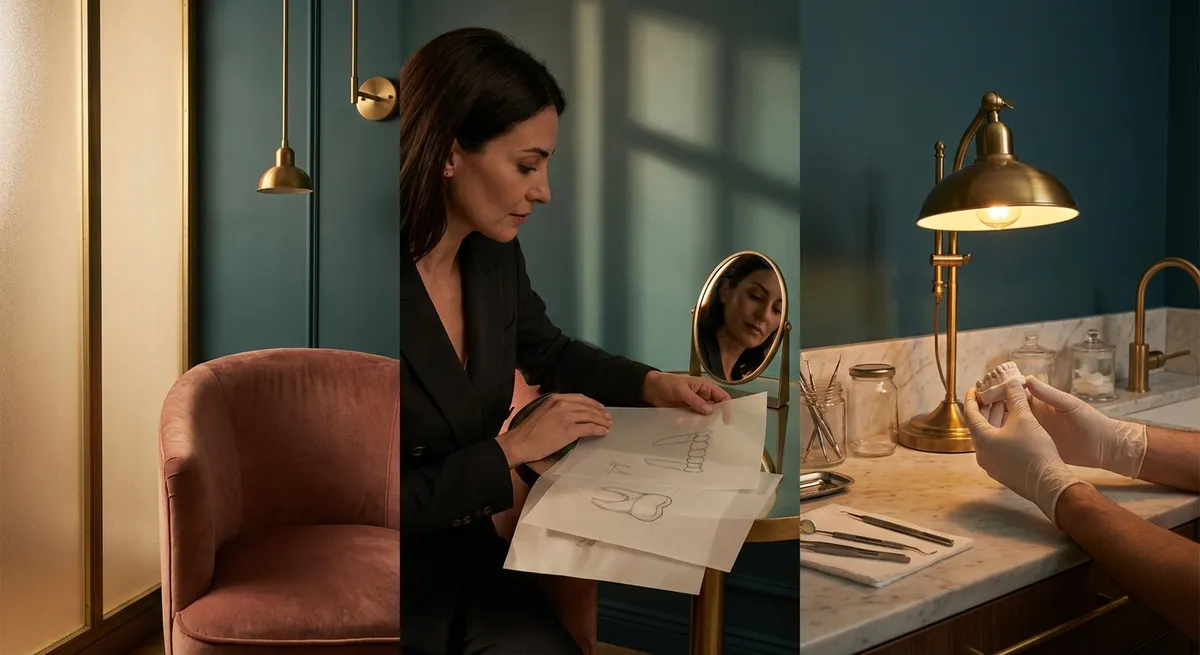
The exclusive advantage lies in how these tools are used. A sophisticated team will integrate digital planning with physical prototypes (such as temporary veneers) that you can wear, evaluate, and refine. They will observe how you feel and behave with this interim smile: Do you speak comfortably? Does it feel like an elevated version of you, or like someone else’s teeth? Adjustments can be made at this stage—subtle shortening, contour softening, shade refinements—before any definitive work is completed. This iterative, couture-like process is what distinguishes a merely attractive result from a deeply personal one that you recognize as your own.
Insight 6: The Most Luxurious Smiles Are Quietly Low-Maintenance
Paradoxically, a truly luxurious smile often feels “easy” once complete. While the planning and execution may be highly complex, the outcome should integrate seamlessly into your daily rituals. Thoughtful material selection—high-strength ceramics, well-contoured margins, meticulously polished surfaces—can make hygiene more efficient and reduce plaque accumulation. Properly shaped contact points help floss glide smoothly, and precise margins reduce food trapping and staining.
For individuals with demanding schedules, this quiet practicality is not a minor detail; it is central to the value of the makeover. The best clinicians also curate a maintenance plan that aligns with your lifestyle: professional cleanings at an appropriate cadence, occlusal guards if needed, and periodic photographic reviews to track subtle changes over time. Your role becomes less about constant vigilance and more about simple, elegant consistency—brushing, interdental cleaning, and honoring a tailored recall schedule that protects your investment.
Conclusion
A smile makeover at its highest level is not a commodity, but a collaboration. It lives at the intersection of facial analysis, material science, digital innovation, and aesthetic intuition. For those seeking more than a generic “before and after,” understanding the subtleties—your smile signature, lip dynamics, nuanced color, functional bite, and thoughtful use of digital tools—can mean the difference between a pretty smile and a profoundly authentic one.
When you sit down with a prospective provider, bring these insights into the conversation. Ask how they address facial harmony, how they protect your bite, how they involve you in design iterations, and how they plan for both beauty and longevity. The most refined results are not louder; they are simply truer—so attuned to you that others cannot quite explain why you look so composed, so rested, so confidently yourself.
Sources
- American Academy of Cosmetic Dentistry – What Is Cosmetic Dentistry? – Overview of cosmetic dentistry principles, including modern approaches to smile design
- Mayo Clinic – Cosmetic Dental Procedures – General explanations of aesthetic dental procedures and considerations
- Columbia University College of Dental Medicine – Occlusion and Bite Problems – Educational resource on how occlusion and bite relationships affect dental health and restorations
- Journal of Esthetic and Restorative Dentistry – Digital Smile Design in Interdisciplinary Dentistry – Research-based discussion of digital smile design as part of comprehensive treatment planning
- Harvard School of Dental Medicine – Esthetic Dentistry and Smile Design (Continuing Education) – Professional-level overview of concepts in esthetic dentistry and facially driven smile design
Key Takeaway
The most important thing to remember from this article is that this information can change how you think about Smile Design.