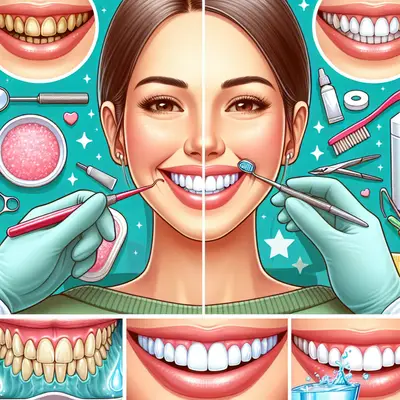
The most memorable smiles rarely announce themselves with excess. They are composed, luminous, and quietly assured—anchored not in dramatic procedures, but in the disciplined elegance of oral health done exceptionally well. For those considering a dental makeover, the real transformation begins long before the chair and continues long after the final polish. Think of oral health not as maintenance, but as a personal ritual of refinement—where every deliberate choice subtly elevates your future smile.
Designing a Smile-Friendly Lifestyle, Not Just a Routine
A remarkable smile is not the byproduct of a single product or appointment; it is the outcome of a lifestyle curated around protection, consistency, and restraint.
Instead of thinking in terms of “brushing and flossing,” consider your day as a series of micro-moments that either preserve or erode your investment. Sipping coffee over hours instead of in one sitting, spacing acidic beverages away from brushing, and choosing snacks that cleanse rather than cling to enamel all influence how long your restored smile remains pristine.
A smile-friendly lifestyle also means aligning your habits with your aesthetic ambitions. If you are planning veneers, aligners, or whitening, the months leading up to treatment are critical. This is when your gums should be at peak health, plaque and calculus under control, and enamel protected rather than stressed. Patients who treat this pre-makeover phase as “training” for their future smile tend to see smoother procedures, faster healing, and more stable long-term results.
Your home becomes part of the design studio: a soft-bristled brush, a high-quality electric toothbrush head replaced on schedule, an alcohol-free mouthrinse, and interdental tools tailored by your dentist. The refinement lies not in having more products, but in curating precisely the right ones—and using them with unwavering consistency.
Exclusive Insight 1: Gum Contours Quietly Dictate the Aesthetic
Most people seeking a dental makeover focus on teeth—shade, shape, alignment. Yet the true frame of a high-end smile makeover is the gingival architecture: the line, symmetry, and subtle curvature of the gums.
Overgrown or uneven gingiva can make even perfectly designed teeth appear short, crowded, or asymmetrical. Mild inflammation can add puffiness that blurs contours in photos, while gum recession can expose root surfaces, disrupt proportions, and age the smile visually.
Before any cosmetic work, elite providers typically evaluate:
- Symmetry of gum levels above each tooth
- The “smile line” of the gums compared to the lips
- Areas where inflammation or overgrowth could distort planned restorations
- Subtle recession that might worsen under stress or orthodontic movement
Refining oral health to a high standard—meticulous plaque control, regular professional cleanings, and precise management of any early gum disease—creates a stable, elegant gingival frame. In some cases, a minor reshaping procedure or soft-tissue refinement provides more visual impact than any change to the teeth themselves.
For those planning veneers or crowns, your gum contours are not a secondary detail; they are the foundation line on which the entire aesthetic is built.
Exclusive Insight 2: Enamel Texture Matters as Much as Tooth Color
A premium smile is not defined by how white your teeth are, but how naturally they handle light. This is where enamel texture becomes a quiet yet powerful differentiator.
Teeth that have been over-whitened, over-polished, or aggressively treated can lose the microscopic surface texture that gives natural teeth their depth and vitality. When this texture is flattened, light reflects in a way that can look overly artificial—especially in high-definition photos or under strong lighting.
Patients seeking a refined makeover should understand:
- Gentle whitening protocols preserve enamel integrity better than rapid, aggressive regimens.
- Frequent use of highly abrasive whitening pastes can erode surface texture over time.
- Polishing techniques at the dentist can be customized to maintain enamel micro-texture rather than obliterate it.
- High-end restorations (veneers, crowns) are crafted with deliberate surface characterization to mimic natural tooth texture.
Oral health habits that respect enamel—such as avoiding over-brushing with hard bristles, using low-abrasion toothpastes, and spacing whitening treatments appropriately—directly influence how natural and sophisticated your final smile will appear. The goal is not a flat, uniform white, but a luminous surface that responds to light the way youthful teeth do.
Exclusive Insight 3: Microscopic Inflammation, Visible Impact
Bleeding when flossing or brushing is often dismissed as “normal,” but for a discerning smile makeover candidate, even low-grade gingival inflammation is unacceptable background noise.
Microscopic inflammation may not be visibly obvious in casual conversation, yet:
- It can subtly swell the gumline, altering tooth proportions in photos.
- It increases the risk of dark triangles or uneven tissue response after orthodontics or restorative work.
- It may contribute to bad breath that undermines even the most pristine aesthetics.
- It signals a bacterial environment that is less than ideal for bonding, healing, or complex procedures.
Well before any cosmetic treatment, a deliberately structured inflammation-reduction phase can be invaluable. This often includes:
- Professional cleaning with meticulous subgingival debridement
- Customized home care tools (e.g., water flossers, interdental brushes) tailored to your anatomy
- A short course of targeted antimicrobial rinses if recommended by your provider
- Focused attention to technique—angle, pressure, and sequence of brushing/flossing, rather than mere frequency
The most elevated smile results emerge when the “canvas” of the gingival tissues is calm, uniform, and impeccably healthy. Silent inflammation is the enemy of precision; resolving it is a mark of a truly curated oral health routine.
Exclusive Insight 4: Bite Harmony as the Guardian of Long-Term Beauty
Bite is often perceived as a functional concern—chewing, comfort, jaw alignment. Yet for the patient seeking a high-level aesthetic outcome, occlusion (how your teeth meet) is one of the most significant protectors of your investment.
A bite that is slightly off can:
- Cause micro-fractures in enamel or porcelain over time
- Accelerate edge wear on front teeth, slowly eroding their youthful length
- Lead to chipping of veneers or bonding in specific high-stress zones
- Create facial muscle tension that subtly changes your smile’s ease and expression
Elite cosmetic dentistry rarely considers appearance in isolation. A detailed occlusal analysis may be recommended before or after aesthetic work to ensure:
- Front teeth are not bearing forces they were not designed to absorb
- Back teeth are supporting the bite symmetrically
- Jaw function is smooth, without chronic clenching or grinding going unaddressed
From an oral health perspective, this is where nightguards, bite adjustments, or even thoughtfully sequenced orthodontics play a crucial role. Protecting your teeth from undue mechanical stress is as integral to your oral health as brushing and flossing—and it is essential to preserving the crisp lines and proportions of a premium smile makeover for years, not just months.
Exclusive Insight 5: Saliva and Hydration—The Invisible Luxury of a Resilient Smile
In a sophisticated smile conversation, saliva rarely receives the attention it deserves. Yet for long-term oral health and aesthetic stability, it acts as a silent luxury—buffering acids, delivering minerals, and washing away debris.
Low or compromised saliva flow can:
- Increase the risk of decay around margins of veneers, crowns, and fillings
- Make teeth appear duller due to mineral loss and surface roughness
- Promote plaque accumulation and staining, shortening the time between professional cleanings
- Heighten sensitivity that can limit whitening or other cosmetic procedures
Factors such as certain medications, frequent air travel, high caffeine intake, and chronic mouth breathing can all diminish saliva flow. A refined oral health plan addresses this invisibly but deliberately:
- Prioritizing hydration as part of aesthetic care, not just general wellness
- Incorporating sugar-free xylitol mints or gums to stimulate salivary flow when appropriate
- Using saliva-supporting products (like specialized rinses or gels) for those with persistent dryness
- Adjusting diet patterns—minimizing constant snacking and acidic beverages that challenge enamel without adequate recovery time
For the patient who invests in high-caliber dental work, protecting the oral environment with optimal saliva support is non-negotiable. It is the unseen infrastructure that keeps the smile polished, resilient, and camera-ready with minimal intervention.
Weaving Oral Health Into the Architecture of a Signature Smile
True smile refinement is not an on/off event—it is a continuum. The patients who achieve the most elevated, natural, and enduring transformations understand that oral health is not the backstage crew; it is part of the main performance.
Before your makeover, oral health shapes the quality of your “canvas”—gum health, enamel integrity, bite balance, and microbial environment. During treatment, it influences how well your teeth respond, how predictably they heal, and how precisely your dentist can execute. Afterward, it becomes the daily ritual that protects every millimeter of carefully planned contour and every nuance of surface texture.
When oral health is treated as a cultivated ritual rather than a checklist, the result is not just a whiter or straighter smile—it is a composed, enduring expression of personal care and discernment. The kind of smile that feels as considered as a bespoke garment and as effortless as good posture.
Sources
- American Dental Association – Oral Health Topics – Clinical overviews on gum disease, enamel, dry mouth, and whitening safety
- National Institute of Dental and Craniofacial Research – Periodontal Disease – Evidence-based information on gum inflammation and its impact on oral health
- [Mayo Clinic – Dry Mouth (Xerostomia)]https://www.mayoclinic.org/diseases-conditions/dry-mouth/symptoms-causes/syc-20356048) – Detailed discussion of saliva, medication effects, and protective strategies
- Harvard School of Dental Medicine – Occlusion and TMD Overview – Insight into bite function, jaw health, and their role in dental stability
- Cleveland Clinic – Teeth Whitening: What to Know – Guidance on whitening safety, enamel protection, and realistic expectations
Key Takeaway
The most important thing to remember from this article is that this information can change how you think about Oral Health.