A refined smile is no longer defined solely by straight, white teeth; it is curated, much like a bespoke wardrobe or an art collection. Modern smile design considers proportion, personality, lifestyle, and even how you move through social and professional spaces. For discerning patients, the goal is not a generic “perfect” smile, but a signature look that feels quietly luxurious and entirely authentic.
In this guide, we’ll explore how contemporary smile design has evolved beyond simple aesthetics, and share five exclusive insights that sophisticated patients often only discover once they’re deep into the process.
Beyond Symmetry: Designing for Character, Not Perfection
Classic cosmetic dentistry often chased symmetry as the ultimate goal. Today’s elevated approach understands that character—those subtle irregularities that make your smile identifiable—is part of what makes it beautiful.
A highly skilled cosmetic dentist will evaluate not only your facial proportions, but also your natural asymmetries: a slightly higher lip line on one side, a dominant eye, a subtle tilt of the head in photos. Instead of “correcting” everything into clinical symmetry, they may purposefully preserve (or even enhance) certain nuances that feel like you.
For example, a minutely shorter lateral incisor or a barely perceptible rotation can soften an otherwise rigidly symmetrical smile, lending it authenticity. Think of it as the dental equivalent of a perfectly tailored suit with an intentionally relaxed detail—effortlessly polished, never overworked.
This is the first exclusive insight: the most sophisticated smiles are not flawless; they are thoughtfully imperfect.
Smile Design as Lifestyle Curation, Not Just a Procedure
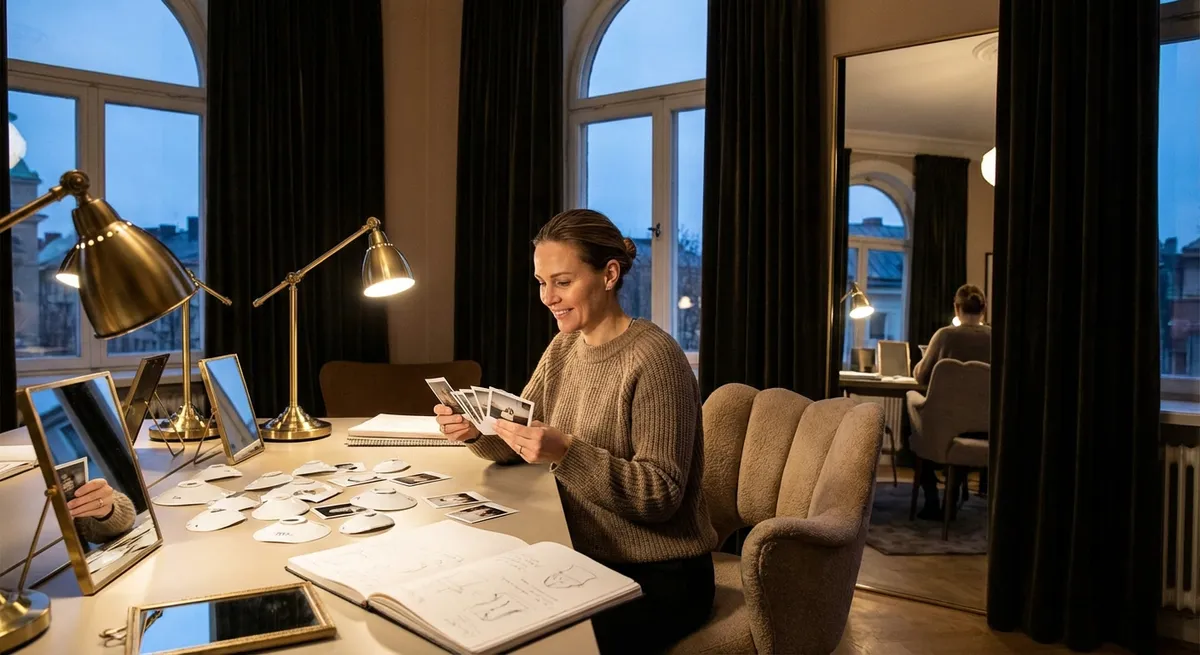
A smile makeover used to be planned almost exclusively around dental and facial features. A modern, premium approach integrates something more subtle: the life you actually live.
A detail-oriented smile designer will consider:
- How often you are photographed—socially, professionally, or on stage
- Whether you drink espresso, red wine, or green juice daily
- Your travel schedule and ability to attend maintenance appointments
- Your on-camera presence if you work in media, law, hospitality, or leadership roles
- Your personal style—minimalist, bold, classic, or avant-garde
These lifestyle variables affect not just the choice of materials (for instance, ultra-translucent ceramics vs. slightly more stain-resistant options), but also the shade selection and polish level. A hyper-bright, “celebrity white” may suit a high-visibility on-camera life, but feel incongruent in more understated, heritage-driven professional settings.
This is the second exclusive insight: a truly elevated smile design is curated around your life, not merely your teeth.
The Underrated Power of Micro-Texture and Light
To the untrained eye, “veneers are veneers.” But to a meticulous cosmetic dentist and master ceramist, the surface of each tooth is a tiny canvas.
Natural enamel has micro-texture—minute ridges, faint vertical lines, areas of subtle translucency—that interact with light in complex ways. When these details are replicated with care, your smile looks naturally luminous rather than artificially glossy.
A refined smile design may include:
- Slightly more texture on the central incisors for a youthful, vital look
- Softer texture and slightly increased translucency towards the edges of the teeth
- Selective gloss levels to avoid a “plastic” shine under flash photography
- Layered ceramics that allow light to pass through, not just bounce off
The difference is most obvious in photographs and video: over-polished, flat veneers can look almost reflective; textured, layered ceramics appear alive.
This is the third exclusive insight: micro-texture and light play are often the hidden ingredients that separate a luxury result from an obvious cosmetic one.
The Quiet Influence of Phonetics and Facial Animation
A beautifully designed smile that changes how you speak is not a luxury outcome—it is a compromise. High-level smile design goes beyond aesthetics to consider phonetics and animation.
Your dentist should evaluate:
- How your lips move when you say “F” and “V” sounds (which rely on incisor position)
- The way your tongue touches your teeth for “S,” “T,” and “D” sounds
- How far you naturally reveal your teeth when you talk, laugh, or listen
- Whether you tend to clench or press your lips together in concentration
Subtle adjustments in tooth length, inclination, and contour can preserve your natural speech patterns while subtly enhancing clarity. For those who present, negotiate, teach, or perform, this is non-negotiable.
Equally important is how your smile behaves in motion. A design that looks perfect in a static digital mock-up might feel overly exposed or forced when you speak. That is why many sophisticated clinicians now evaluate full-face video, not just still photographs, when planning.
This is the fourth exclusive insight: the best smile designs are engineered for how you sound and move, not just how you look in a single photograph.
Time as a Design Element: Planning How Your Smile Will Age
Luxury design—whether in architecture, leather goods, or fine jewelry—anticipates how a piece will age. A curated smile should be no different.
A thoughtful clinician will quietly plan:
- How your gum line may change over the next decade
- The long-term stability of your bite and jaw joints
- How whitening, maintenance, or refinements will fit into your routine
- Whether to choose a slightly softer, more timeless shade rather than a fleeting trend
For example, selecting a shade that harmonizes with the whites of your eyes and your natural skin undertone tends to age more gracefully than chasing the brightest possible white. Similarly, designing a bite that protects both natural teeth and restorations reduces the risk of chipping and repairs.
Some practices even design a “maintenance roadmap” from the outset, mapping out professional cleanings, occasional polishing, protective night guards, and periodic photography to monitor long-term stability.
This is the fifth exclusive insight: in high-level smile design, time is treated as a material—something to shape, anticipate, and respect.
Conclusion
A curated smile is not a quick cosmetic upgrade; it is a considered, collaborative design process that touches identity, lifestyle, and long-term wellbeing. For the discerning patient, the true luxury lies not only in the final result, but in the refinement of the journey: the attention to nuance, the respect for individuality, and the quiet confidence that comes from a smile that feels wholly, unmistakably yours.
When selecting a clinician for your smile makeover, look beyond before-and-after photos. Ask how they approach asymmetry, lifestyle, micro-texture, phonetics, and long-term aging. Those conversations reveal whether you are about to purchase a procedure—or commission a piece of living, wearable design.
Sources
- American Academy of Cosmetic Dentistry (AACD) – Smile Design Principles - Discusses modern cosmetic dentistry considerations and aesthetic planning
- Mayo Clinic – Dental Veneers Overview - Explains what veneers are, indications, and considerations for treatment
- Columbia University College of Dental Medicine – Smile Design & Esthetics - Outlines how academic centers approach esthetic and functional smile planning
- Journal of Esthetic and Restorative Dentistry – Role of Texture and Translucency in Esthetic Restorations - Provides research-based insight into surface characterization and light interaction
- National Institutes of Health (NIH) – Occlusion, Function, and Esthetics - Reviews how bite, function, and long-term stability intersect with esthetic outcomes
Key Takeaway
The most important thing to remember from this article is that this information can change how you think about Smile Design.