A refined smile is no longer a loud declaration; it is a quiet signature—considered, curated, and expertly executed. For those contemplating a dental makeover, the conversation has evolved far beyond “before and after.” Today’s discerning patient is not simply choosing treatments; they are composing an aesthetic narrative aligned with their lifestyle, professional presence, and long-term wellbeing.
This is where dental procedures, thoughtfully combined, move from clinical necessity to intentional design. Below, we explore how to approach that journey with the same discernment you’d apply to tailoring, skincare, or interior design—plus five exclusive insights that elevate a makeover from routine to remarkable.
From Single Procedure to Curated Treatment Plan
The era of one-off treatments is quietly giving way to orchestrated care. Rather than chasing isolated concerns—one veneer here, one whitening session there—the most successful makeovers are built upon a cohesive, staged plan.
A curated treatment plan starts with a deep diagnostic phase: high-resolution imaging, periodontal evaluation, bite analysis, and photographic records from multiple angles. This is not about upselling; it is about seeing the entire “canvas” of the face and understanding how teeth, gums, lips, and even facial musculature interact.
When your dentist works this way, veneers are no longer just cosmetic shells; they become strategic tools in managing proportions, masking minor misalignments, and harmonizing with the eyes and cheekbones. Orthodontics, even in subtle clear aligner form, might be employed not as a dramatic straightening measure but as a quiet way to create space, protect enamel, and improve bite function before any cosmetic work is placed.
The result is a smile that looks like you—just more composed, more intentional, and more enduring.
Beyond “White”: Shade, Texture, and Luminosity
A sophisticated smile makeover resists the temptation of uniform, hyper-white teeth. The most natural, elevated results are achieved through nuance: shade gradients, micro-texture, and controlled translucency.
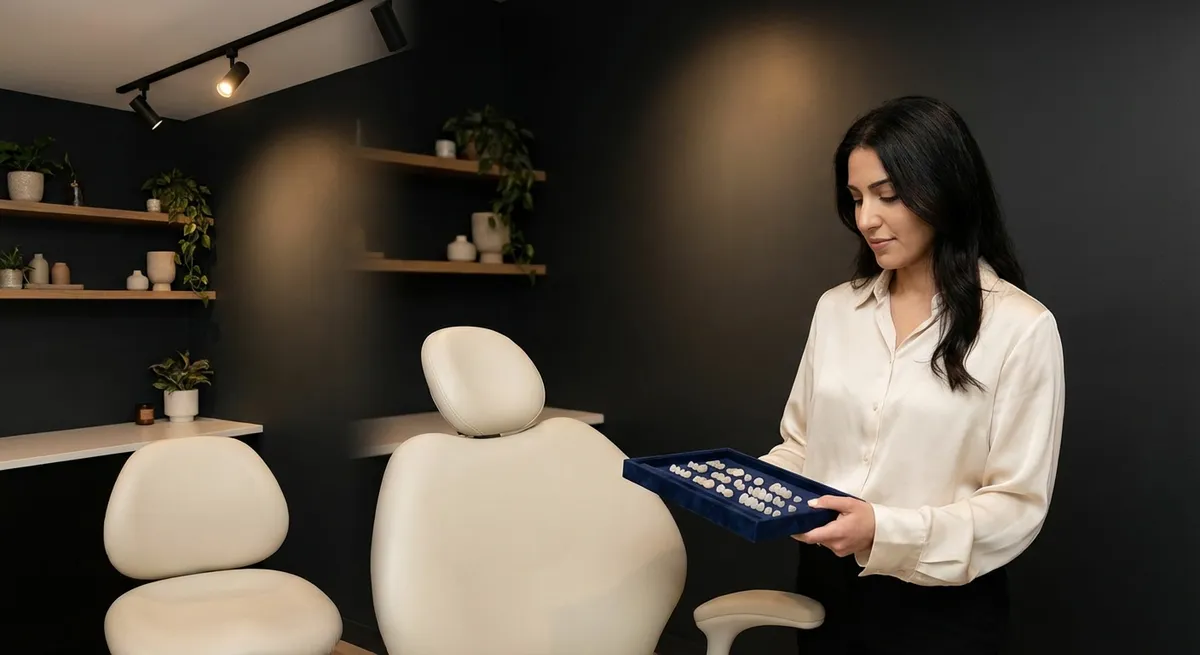
Your dentist has access to extensive shade guides, but the artistry lies in deviating from “one shade fits all.” Central incisors may be a touch brighter; lateral incisors and canines can be softened slightly to avoid the “piano key” effect. Micro-textures—those delicate vertical grooves and subtle irregularities—help restorations catch and diffuse light more like natural enamel.
Modern materials such as high-quality porcelain and advanced ceramics allow for layered translucency. Instead of flat opacity, your restorations can be designed to exhibit an internal glow that mimics real enamel and dentin. This matters especially in photographs and under varied lighting—fluorescent office settings, evening event lighting, or natural daylight.
When your dentist and laboratory technician work together as aesthetic partners, even the tiniest refinements in shade and surface detail contribute to a smile that reads as authentically yours, not “just had work done.”
Five Exclusive Insights for the Discerning Smile Makeover Patient
These are the details rarely discussed in standard consultations, yet they often define the difference between a passable outcome and an exquisite one.
1. The Trial Smile Is Your Best Insurance
Before final veneers, crowns, or significant reshaping, ask about a “mock-up” or provisional phase. Using temporary materials, your dentist can sculpt the intended shape, length, and contour directly onto your existing teeth or into temporary restorations.
This “trial smile” allows you to test-drive aesthetics and function in real life: speaking on calls, smiling in photos, eating, and observing how your lips move over your teeth. Any refinements—shortening a tooth, softening an angle, adjusting symmetry—are made here, not after permanent ceramics are placed. This step protects both your investment and your peace of mind.
2. Your Lip Movement Is as Important as Your Tooth Shape
Many patients focus solely on teeth in static photos, but smiles live in motion. An elevated makeover considers the dynamic relationship between lips and teeth: how much gum shows when you laugh, whether upper teeth disappear when you speak, and how much of the lower teeth is visible at rest.
Subtle adjustments in tooth length, inclination, and edge contour can soften a “gummy” appearance or prevent a smile from looking collapsed with age. In some cases, minimally invasive gum recontouring or orthodontic correction is recommended not for aesthetics alone, but to improve how the smile animates in real time.
3. Bite Harmony Protects Beauty
A beautiful restoration that does not respect your bite is an expensive, fragile ornament. When forces are uneven—due to clenching, grinding (bruxism), or a misaligned bite—ceramic can chip, fracture, or cause sensitivity.
Sophisticated smile planning includes occlusal analysis: evaluating how your upper and lower teeth meet, slide, and distribute pressure. Nightguards, minor orthodontic corrections, or selective reshaping of certain contact points can be incorporated into your plan to protect both natural enamel and new restorations. Quiet beauty is best served by engineering that is equally thoughtful.
4. Texture Matters More Than You Think in Photographs
People often fixate on tooth color for photos, yet it is surface texture and contour that make a smile photograph beautifully from every angle. Overly flat, over-polished teeth can reflect light in a way that looks artificial, especially under flash or studio lighting.
Ask your dentist and lab to preserve or replicate subtle surface character: gentle undulations, natural luster rather than mirror gloss, and slightly varied reflection points from tooth to tooth. These details soften the smile on camera and in person, making it blend seamlessly with the skin’s natural texture and your overall facial aesthetic.
5. Maintenance Is a Lifestyle, Not an Afterthought
An exquisite smile makeover is not a one-time event; it is an ongoing collaboration. Professional cleanings tailored to your specific restorations, periodic polishing with non-abrasive pastes, calibrated at-home care, and intermittent bite assessments help maintain both the color and integrity of your investment.
Think of it as you would luxury skincare or a bespoke garment: routine, measured attention preserves the original intent. Using pH-neutral, non-whitening toothpaste for ceramic restorations, wearing a custom nightguard if recommended, and scheduling regular photography or digital scans to track changes over time are all part of the quiet maintenance protocol for a truly enduring result.
The Role of Technology in a Refined Dental Makeover
Modern digital tools enable an elevated level of precision and personalization. Intraoral scanners replace many traditional molds with accurate, comfortable scans. Digital smile design software can simulate potential results by mapping tooth proportions to facial features, giving you a more concrete visual of treatment outcomes.
Computer-aided design and manufacturing (CAD/CAM) systems allow dental laboratories to fabricate restorations with ultra-fine tolerances, improving fit and reducing the need for aggressive tooth reduction. Cone-beam CT imaging, when appropriate, can inform implant positioning, bone assessment, and even airway considerations, particularly in more complex cases.
Yet the most premium experiences balance technology with human artistry. A master ceramist can customize stain, translucency, and edge characterization in ways that no automated process fully replicates. The best results emerge when technology performs the precision work, and trained eyes and hands refine each detail to suit your individual features.
Selecting a Clinician for a Truly Premium Result
Not all cosmetic or restorative dentistry is created equal. When considering a makeover, look beyond generic labels and marketing terms. Examine a dentist’s portfolio of real cases: consistent photographic documentation, close-ups of ceramic work, and examples of subtle, not just dramatic, transformations.
Ask about collaboration with high-end laboratories, advanced training in cosmetic or restorative disciplines, and their philosophy on minimally invasive dentistry. An excellent practitioner will prioritize preserving healthy tooth structure, explain phased options instead of pushing maximal intervention, and discuss longevity and maintenance with as much enthusiasm as the initial transformation.
Equally revealing is how much time they invest in consultation: do they ask about your lifestyle, profession, and image preferences? Do they study your smile in motion, not just in static images? A curated smile is a shared project; your input should shape the artistic direction.
Conclusion
A sophisticated smile makeover is not defined by the number of procedures, but by the quality of decisions behind each one. When your treatment is curated rather than rushed, your dentist acts less as a technician and more as an aesthetic advisor—balancing structure, function, and beauty with long-term wisdom.
Through deliberate planning, nuanced use of materials, and an appreciation for how your smile lives in motion, dental procedures become an extension of personal style and self-respect. The result is not a new identity, but a more resolved expression of the one you already possess—quietly elevated, impeccably considered, and built to endure.
Sources
- American Academy of Cosmetic Dentistry – Cosmetic Dentistry Procedures – Overview of cosmetic dental treatments and considerations for aesthetic planning
- Mayo Clinic – Veneers: What to Expect – Explains veneer procedure steps, risks, and maintenance
- Cleveland Clinic – Dental Crowns and Bridges – Details on restorative options and how they support function and aesthetics
- National Institute of Dental and Craniofacial Research – Oral Health Topics – Evidence-based information on oral health, bite issues, and long-term care
- Harvard Health Publishing – Bruxism and Your Bite – Insight into how grinding and bite problems affect teeth and restorations
Key Takeaway
The most important thing to remember from this article is that this information can change how you think about Dental Procedures.