In the world of elevated aesthetics, a beautiful smile is no longer a happy accident—it is a considered decision. Today’s cosmetic dentistry is less about obvious perfection and more about curating a look that feels innately yours: balanced, timeless, and quietly confident. For those contemplating a high-end smile transformation, the most valuable advantage is not simply access to advanced procedures, but access to insight—understanding the nuances that separate a pleasant result from a truly exceptional one.
This guide reveals five exclusive, often overlooked considerations that discerning patients quietly rely on when planning a sophisticated smile makeover.
Beyond “Perfect”: Designing for Character, Not Uniformity
The era of identikit, overly white veneers is fading. In refined cosmetic dentistry, the goal is not generic perfection but curated character—an elevated version of your natural smile that respects your facial proportions, personality, and lifestyle.
A skilled cosmetic dentist will assess far more than your teeth: they study lip dynamics, midline alignment, gum display when you speak and laugh, and how your smile appears from multiple angles, including in motion. Instead of rigidly symmetrical teeth, they may incorporate micro-asymmetries—subtle variations in length or contour—to reflect how natural dentition looks in real life. The result is a smile that is aesthetically harmonious without appearing “done.”
For patients in executive or public-facing roles, this nuance matters. A smile that looks natural in high-definition video, flash photography, and candid conversation requires attention to tiny details: translucency at the incisal edges, slight surface texture, and carefully chosen shades that look luminous under varied lighting rather than starkly white.
The Power of Shade Nuance: Why One “White” Is Never Enough
To the untrained eye, white is white. To a sophisticated cosmetic dentist and ceramist, shade selection is a language of its own. Rather than selecting a single color from a shade guide, artisans often layer multiple porcelains or resins to mimic the depth of natural enamel.
A refined smile makeover typically incorporates:
- Subtle translucency at the edges of the teeth to avoid a flat, opaque appearance
- Slight warmth at the neck of the tooth near the gumline to mirror natural dentin
- Soft gradation from cervical to incisal (gumline to edge) for depth and realism
- Micro-gloss variation so teeth do not reflect light like plastic
In many luxury cases, the brightest “Hollywood white” is intentionally avoided. Instead, a curated shade—often one to two levels brighter than your natural dentition—creates a refreshed, well-rested effect that reads as “healthy” rather than “artificial.” The key is how the shade interacts with your skin tone, lip color, and even your typical wardrobe palette. Under the guidance of an experienced cosmetic dentist, shade selection becomes a design decision, not an afterthought.
Gum Architecture: The Silent Frame of a High-End Smile
Teeth tend to get all the attention, but the gums are the frame that either elevates or detracts from your final result. The most exquisite veneers or aligner outcomes can look surprisingly ordinary if the gingival contour is uneven, bulky, or inflamed.
At the premium level, cosmetic treatment planning often includes:
- Gum recontouring or crown lengthening to correct a “gummy smile” or uneven gingival heights
- Management of inflammation before any esthetic work, ensuring healthy, pink gum tissue that enhances luminosity
- Consideration of smile line and lip mobility, particularly for patients whose gums are visible when laughing or speaking animatedly
When gum architecture is properly addressed, the entire smile appears more refined, even if tooth changes are relatively conservative. This is where collaboration matters: periodontists and cosmetic dentists working in tandem can achieve results that feel balanced and biomimetic, not simply “fixed.”
Durability as Luxury: Planning for Longevity, Not Just the Reveal
True luxury in cosmetic dentistry is not only in the immediate transformation but in the way the smile ages over time. Well-executed veneers, implants, or bonding should be designed to withstand function, not just photography.
Sophisticated treatment planning explores:
- Occlusal analysis (how your teeth meet) to prevent chipping, cracking, or uneven wear of restorations
- Nightguard therapy, particularly for those who clench or grind, to protect porcelain and natural enamel
- Material selection—for example, high-strength glass ceramics or modern zirconia hybrids that balance strength with translucency
- Strategic compromise, such as opting for a combination of orthodontic movement and minimal enamel removal, to preserve the underlying tooth structure
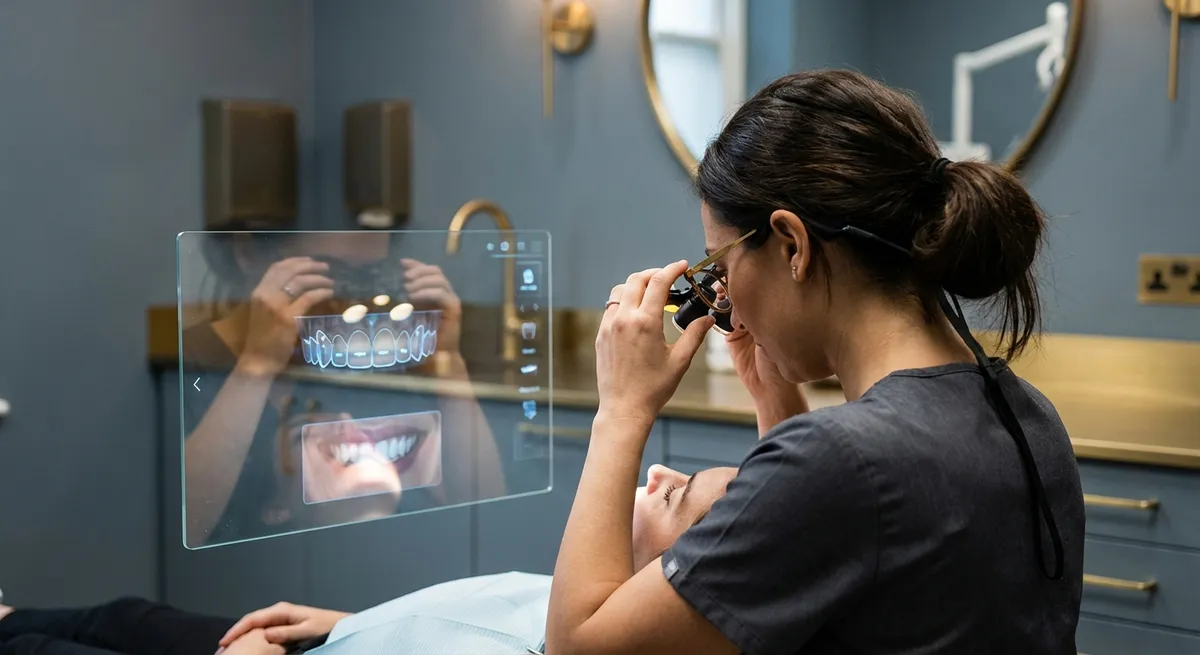
Longevity is also linked to maintenance. Premium practices typically design a bespoke follow-up plan: regular professional cleanings tailored to cosmetic restorations, non-abrasive polishing techniques, and periodic photography or scans to track subtle changes over time. A luxury smile is managed, not merely installed.
The Art of Subtle Staging: Phasing Treatment with Intention
For many discerning patients, the most elegant transformations are the least obvious to outsiders—gradual refinements that unfold over months rather than a dramatic, overnight reveal. Strategic staging not only preserves discretion but often leads to better clinical outcomes.
Thoughtful phasing may include:
- Aligners or orthodontics first, to position teeth so that later veneers or bonding can be more conservative
- Trial smiles or provisional restorations, allowing you to “test drive” length, shape, and shade in real life before committing
- Soft-tissue adjustments prior to final restorations, so the gumline is stable and predictable
- Adjunctive aesthetic enhancements, such as lip support, facial proportions, or bite harmony, addressed in tandem rather than as isolated procedures
This refined, phased approach also respects your schedule, travel, and public commitments. A smile that evolves quietly over several carefully curated appointments aligns more naturally with a lifestyle in which discretion and control are paramount.
Conclusion
Cosmetic dentistry at its most sophisticated is not a catalogue of procedures—it is a design discipline, a collaboration between clinical precision and aesthetic sensitivity. The most successful smile makeovers honor who you are, not who a trend suggests you should be. By looking beyond the obvious—embracing nuanced shade selection, gum architecture, long-term durability, and intentionally staged treatment—you move from a generic “before and after” to something far more enduring: a curated smile that feels both elevated and unmistakably your own.
For those considering a transformation, the true luxury lies in the details you do not immediately see—but you certainly feel every time you step into a room and simply, effortlessly, smile.
Sources
- American Academy of Cosmetic Dentistry – What Is Cosmetic Dentistry? – Overview of cosmetic procedures, materials, and aesthetic considerations from a leading professional organization.
- Mayo Clinic – Dental Veneers – Explains indications, risks, and long-term considerations for veneers.
- National Institute of Dental and Craniofacial Research – Periodontal (Gum) Disease – Details the importance of healthy gums and their role in oral and aesthetic outcomes.
- Cleveland Clinic – Occlusion: How Your Teeth Fit Together – Discusses bite alignment and its impact on function and restoration longevity.
- Harvard School of Dental Medicine – Digital Dentistry and Esthetics – Explores modern digital tools and planning methods that enhance precision and aesthetic results.
Key Takeaway
The most important thing to remember from this article is that this information can change how you think about Cosmetic Dentistry.