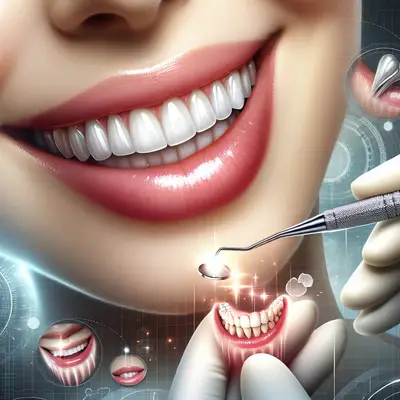
Cosmetic dentistry has quietly evolved from bright-white veneers and dramatic “before and after” photos into something far more nuanced: the subtle refinement of your natural features. For discerning patients, the modern smile makeover is less about reinvention and more about curation—aligning teeth, lips, and facial structure into a cohesive, elegant whole. Beneath the surface, however, lies an intricate choreography of materials, digital planning, and clinical judgment that most people never see.
Below are five exclusive, often-overlooked insights that sophisticated patients appreciate when approaching a transformative dental makeover.
1. Micro-Aesthetics Matter More Than a “Perfect” White
Many people arrive at a cosmetic consultation asking for “white and straight.” Experienced cosmetic dentists, however, rarely chase a single shade of uniform white. Instead, they work with micro-aesthetics—the ultra-fine details that make a smile look naturally elevated rather than artificially enhanced.
These include the delicate translucency at the edges of the front teeth, the almost imperceptible texture on the enamel surface, and the way light refracts across the tooth body. Subtle gradations in color from gumline to edge, slight asymmetries between right and left, and the interplay between tooth width and height all influence whether your new smile reads as authentically “you” or unmistakably “done.”
Refined cosmetic dentistry also considers your natural skin tone, the whites of your eyes, and even how you dress. A cooler, high-value white may look breathtaking on camera but jarring in person if it clashes with your complexion. The most sophisticated result is not the whitest smile in the room—it is the one that feels harmoniously integrated into your overall presence.
2. The Lip–Tooth Dialogue: Your Smile Is Not Just Your Teeth
Advanced cosmetic planning starts long before anyone touches a tooth. One of the most critical—and frequently under-discussed—elements is the lip–tooth relationship: how your lips frame your teeth at rest, when you speak, and when you smile.
A premium cosmetic evaluation examines:
- How much tooth shows when your lips are relaxed
- Whether your gum line gently follows your upper lip or remains hidden
- The symmetry and curvature of your smile line relative to your lower lip
- How teeth appear in motion during conversation, not just in posed photographs
For patients, this means a more cinematic approach to planning. Your dentist may record short videos, observe you smiling spontaneously, and assess how your lips move over your teeth during normal speech. Treatment decisions—orthodontic movement, crown lengthening, gum contouring, or minimally invasive bonding—are then made to support this dynamic harmony.
The result is a smile that looks composed, not contrived, whether you are mid-laughter at dinner or speaking under bright lights. When the lips and teeth are designed as a unified aesthetic system, the overall impression is subtly elevated rather than overtly “cosmetic.”
3. The Invisible Architecture: Why Your Bite Dictates Longevity
High-end cosmetic care looks beyond surface beauty to the architecture of your bite (occlusion). This is where many quick-fix makeovers quietly fail. Beautiful ceramics placed on a compromised bite will inevitably chip, crack, or cause muscle strain and jaw discomfort.
Sophisticated planning evaluates:
- How your upper and lower teeth meet in different functional movements
- Whether existing wear patterns are aesthetic issues or signs of underlying instability
- The role of parafunctional habits, like clenching and grinding
- Jaw joint health and muscle balance before any definitive cosmetic work
In some cases, this means staged care: short-term orthodontics to reposition teeth before veneers, bite equilibration to refine contacts, or occlusal splints to protect your investment. For the discerning patient, this may initially feel like a slower path—but it is the difference between a temporary “photo-ready” outcome and a structurally sound, enduring result.
Cosmetic dentistry performed on a stable, well-balanced bite ages more gracefully, feels more comfortable, and requires fewer emergency “repairs.” Longevity becomes part of the luxury.
4. Material Selection as a Design Language, Not a Technical Detail
To many patients, “porcelain” is simply porcelain. In reality, material selection is its own quiet design language—one that influences how your teeth look, feel, and perform under daily use.
Modern ceramics and composites vary in:
- Translucency: High-translucency materials mimic youthful enamel; more opaque ceramics can help mask deep discoloration.
- Strength vs. refinement: Some materials are incredibly strong but visually dense; others are more delicate yet exquisitely lifelike.
- Polish and texture retention: Premium surfaces maintain their luster and resist staining over years, not just months.
A sophisticated clinician will choose different materials for different regions: perhaps ultra-translucent ceramics in the most visible zone, and more reinforced options where bite forces are highest. They may combine minimal-prep veneers, additive bonding, and selective whitening rather than defaulting to a single solution for every visible tooth.
For the patient, understanding this conversation shifts the experience. You are no longer choosing a “procedure”; you are curating a palette of materials, each selected to complement a specific function and aesthetic role in your mouth. The end result feels less like a treatment and more like a commissioned piece of functional art.
5. Test-Driving Your Smile: The Power of Prototypes and Subtle Iteration
One of the most underappreciated luxuries in cosmetic dentistry is the ability to test-drive your future smile. This can be done digitally on a screen, physically with a mock-up placed over your existing teeth, or with provisional restorations worn for days or weeks.
In a premium setting, the prototype phase is not a formality; it is a critical design step. During this stage, you can:
- Experience how your new tooth lengths affect speech and comfort
- Evaluate whether the shapes and proportions align with your personality and style
- Provide nuanced feedback: “a touch shorter,” “slightly softer corners,” “less brightness”
- See how the design behaves in your real life—under office lighting, on camera, in natural light
The most polished smiles rarely emerge from a single appointment; they are refined through gentle iteration. Adjustments made at the provisional stage can be translated with precision into the final ceramic work, minimizing irreversible changes and maximizing your confidence in the outcome.
For patients accustomed to bespoke tailoring or custom design in other areas of life, this phase feels familiar—and essential. Your smile, like a well-fitted suit or meticulously crafted piece of jewelry, should be refined until it feels unequivocally yours.
Conclusion
Today’s cosmetic dentistry transcends the traditional notion of a “makeover.” It is a composed, deeply considered process that respects biology, honors individuality, and leverages technology in service of subtlety rather than spectacle. When micro-aesthetics, lip dynamics, bite stability, material selection, and prototype-based refinement are all part of the conversation, the result is not simply a beautiful smile—it is a quietly persuasive expression of self.
For the patient seeking an elevated, enduring transformation, the most powerful choice is not just where you go, but how you participate: asking about bite analysis, provisional design, materials, and long-term maintenance. In the right hands, with the right questions, your smile becomes more than an enhancement. It becomes a calibrated signature of who you are.
Sources
- American Academy of Cosmetic Dentistry – What Is Cosmetic Dentistry? – Overview of cosmetic procedures, materials, and aesthetic considerations
- Mayo Clinic – Veneers – Medical guidance on indications, process, risks, and maintenance of veneers
- Cleveland Clinic – Malocclusion (Misaligned Bite) – Explains how bite issues affect function, comfort, and dental longevity
- Journal of Esthetic and Restorative Dentistry – Digital Smile Design Concepts – Peer-reviewed research on digital planning and aesthetic smile workflows
- Harvard School of Dental Medicine – Restorative and Aesthetic Dentistry – Academic perspective on restorative materials, function, and aesthetics
Key Takeaway
The most important thing to remember from this article is that this information can change how you think about Cosmetic Dentistry.