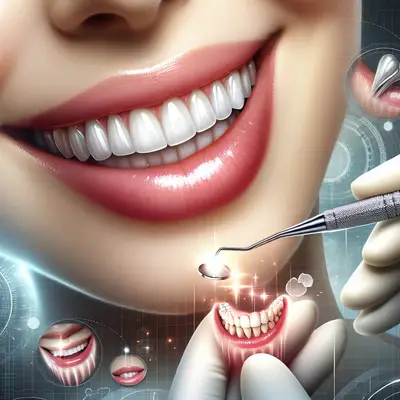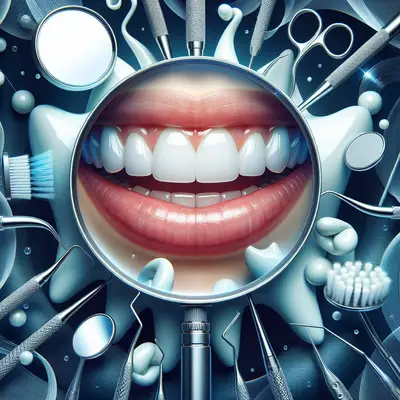
A truly elevated smile is never accidental. It is the outcome of meticulous planning, nuanced technical skill, and an almost couture-level approach to aesthetics. For those considering a cosmetic transformation, the difference between “nicely done” and “undeniably exquisite” is found in the details no one else notices—but you feel every day. This is where modern cosmetic dentistry transcends simple enhancement and becomes a deeply considered refinement of how you present yourself to the world.
Redefining “Natural”: Why Luxury Smiles Avoid the Template Look
In premium cosmetic dentistry, “natural” does not mean generic. It means harmonized—tailored to your facial architecture, personal style, and even your typical expressions.
Rather than starting with a stock set of proportions, high-caliber clinicians evaluate the entire lower third of the face: lip posture at rest, how much tooth shows when you speak, how your smile moves in profile, and how light interacts with the enamel. A refined result respects micro-asymmetries; the central incisors may be subtly more dominant, lateral incisors a touch softer, and canines delicately contoured to avoid an overdone, “veneered” look.
The objective is not to create a “perfect” Hollywood formula, but to achieve a balance that feels like an elevated version of you. When people comment that you look rested, polished, or somehow “sharper” without knowing exactly why, that is the mark of a successfully bespoke smile.
Material Matters: The Quiet Luxury of Advanced Ceramics
For discerning patients, material selection is where quiet luxury in dentistry becomes tangible. Today’s high-end smiles rarely rely on a single ceramic for every tooth. Instead, different materials may be chosen for different zones of the smile, depending on strength, translucency, and how light is meant to reflect.
Ultra-translucent lithium disilicate, for instance, can emulate the delicate light diffusion of natural enamel on front teeth, while zirconia-based ceramics may be used in areas requiring greater structural support. Custom staining and layering techniques allow a ceramist to introduce barely perceptible gradations in color from the gum line to the edge of the tooth, mimicking the way youthful teeth naturally appear more translucent at the tips.
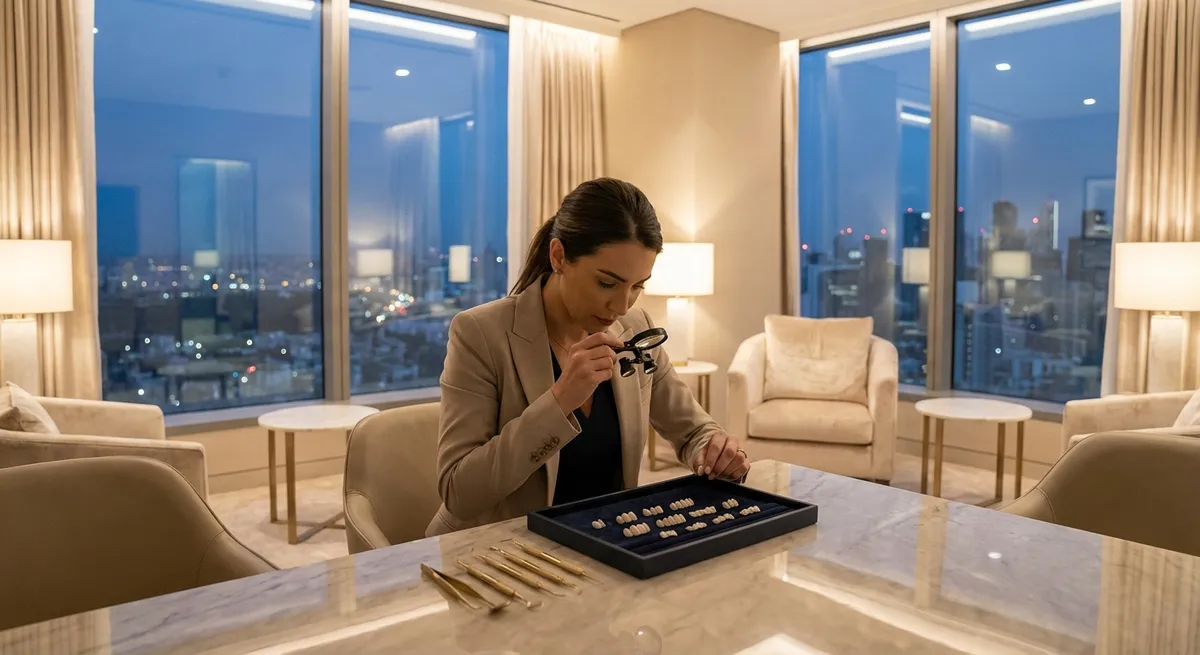
The most exceptional results come from collaborative relationships between clinician and master ceramist. Photography, video, and shade mapping are exchanged repeatedly, and restorations may be adjusted multiple times before final bonding. This depth of craftsmanship is what transforms veneers and crowns from “dental work” into refined, enduring pieces of facial design.
Beyond the Single Snapshot: Designing for Movement, Not Just Photos
Most patients evaluate smiles in photographs; elite clinicians design them for motion. A stationary selfie cannot reveal how your teeth look when you pronounce “F,” “S,” or “V,” how your smile expands during genuine laughter, or how your upper lip rises when you speak rapidly. These nuances matter when investing in a high-level makeover.
Video analysis has become a hallmark of premium care. Short clips of natural conversation, laughing, and reading aloud allow the dental team to study tooth visibility, speech patterns, and functional dynamics. They assess whether the edges of the front teeth align correctly with your lower lip when you smile, or whether length and proportion need to be refined to avoid a “heavy” look during speaking.
This motion-based planning reduces the risk of a smile that photographs well but feels unnatural in real life—too long, too “fixed,” or prone to minor lisping. It ensures the final result is as compelling in casual conversation as it is in a formal portrait.
Five Exclusive Insights You Rarely Hear About Cosmetic Makeovers
For those considering a sophisticated transformation, these lesser-known insights can significantly elevate your outcome:
Your Gumline Is Part of the Aesthetic Design, Not Background Detail
Premium cosmetic cases almost always involve a careful review of the gingival architecture. Even one uneven gum contour can make otherwise beautiful veneers appear off-balance. Subtle laser or surgical reshaping can lengthen short teeth, equalize symmetry, and create the elegant, scalloped frame that high-end smiles share—without looking “done.”
Trial Smiles Are Your Best Insurance Against Regret
A top-tier provider will rarely move straight from planning to permanent ceramics. Instead, they will place meticulously shaped temporaries—your “trial smile”—that simulate the final length, shape, and proportions. You wear them in real life, speak, eat, and see yourself in different lighting. Any discomfort, aesthetic hesitation, or speech change can be corrected at this stage, before committing to the finished restorations.
Bite Refinement Is as Critical as Color
Many patients fixate on whiteness, yet longevity and comfort hinge on occlusion—the way upper and lower teeth meet. An unrefined bite can lead to micro-fractures, chipping, jaw fatigue, and even headaches. In elevated cosmetic dentistry, subtle bite adjustments are performed over multiple visits, often with digital bite analysis, to ensure your new smile feels effortless and stable in function, not just beautiful in the mirror.
Facial Aging Should Be Part of the Plan, Not an Afterthought
A thoughtfully designed smile anticipates how your face will age. As we mature, the upper lip tends to lengthen and cover more of the upper teeth. A slightly more visible incisal edge (the biting edge of the front teeth) can help maintain a youthful smile line over time. The goal is not to chase youth, but to design in a way that will continue to look proportionate and refined a decade from now.
Your Lifestyle Deserves Equal Weight in the Design Process
The most successful smile makeovers respect how you actually live. If you travel frequently, a regimen and material choice that minimizes maintenance is vital. If you are on camera often, color calibration with your usual lighting and makeup preferences becomes crucial. If you are highly active or clench under stress, protective strategies—such as custom night guards and more resilient materials—should be included from the outset.
These considerations separate a merely attractive result from a strategically designed, long-lasting one tailored to your real life, not just your consultation photos.
The Subtle Power of Shade: From “White” to Authentically Luminous
True luxury in cosmetic dentistry rarely means the brightest possible shade. Instead, it favors luminosity over stark whiteness. A monochrome, ultra-opaque white can look flat and artificial, particularly in natural lighting or close conversation.
Elevated shade selection focuses on:
- Translucency gradients from gum to edge, replicating natural enamel depth.
- Warm vs. cool tones that harmonize with your skin undertone and eye color.
- Micro-characterizations—barely visible internal halos, delicate opalescence, and soft incisal translucency that give teeth vitality rather than a “painted” look.
A sophisticated practitioner will often step you down from the whitest option to a shade that complements your overall coloring and lifestyle. The result is a smile that draws admiration without announcing its own enhancement.
Strategic Sequencing: Why the Best Results Are Rarely Rushed
Refined results depend as much on pacing as on technique. High-end cosmetic dentistry typically unfolds over a thoughtfully sequenced timeline, rather than a single whirlwind visit.
Initial appointments may include comprehensive imaging (photographs, digital scans, x-rays), periodontal assessment, and sometimes orthodontic or aligner planning to position the teeth ideally before any veneers or crowns are considered. Whitening, if needed, is usually completed first so that any restorations can be matched to the new baseline shade.
Only once the foundation—gum health, alignment, bite—is stable does the aesthetic phase begin. This patience reduces the need for revision work and supports restorations that age gracefully. For the patient, it feels less like a rushed procedure and more like a curated journey, with each step building deliberately toward the final reveal.
Conclusion
A truly elevated cosmetic transformation is never just about “fixing teeth.” It is an orchestrated refinement of proportion, color, movement, and long-term function, executed with an attention to detail more akin to haute tailoring than standard clinical work. When material selection, gum architecture, motion-based planning, bite design, and future aging are all thoughtfully woven into your treatment, the result is not only beautiful—it is quietly, confidently enduring.
For those seeking more than a quick improvement, this level of intentionality is where cosmetic dentistry becomes an investment in how you occupy every room, every photograph, and every conversation. The most luxurious smiles are not the loudest; they are the ones that feel utterly, unmistakably like you—only exquisitely refined.
Sources
- American Academy of Cosmetic Dentistry – About Cosmetic Dentistry – Overview of cosmetic dentistry principles and treatment considerations
- Mayo Clinic – Dental Veneers – Clinical explanation of veneers, indications, and risks
- Cleveland Clinic – Dental Crowns: Purpose, Procedure, Complications – Details on crown materials, function, and durability
- National Institute of Dental and Craniofacial Research (NIDCR) – Information on tooth wear and functional considerations in restorative work
- Harvard School of Dental Medicine – Continuing Education: Esthetic Dentistry – Highlights of advanced concepts and education in esthetic and restorative dentistry
Key Takeaway
The most important thing to remember from this article is that this information can change how you think about Cosmetic Dentistry.