A beautifully executed smile makeover is less about “perfect teeth” and more about a quiet harmony between face, personality, and lifestyle. The most successful results don’t shout; they whisper—of health, confidence, and considered choices. Before you commit to a dental transformation, it is worth understanding the nuanced decisions that separate a generic cosmetic outcome from a truly bespoke smile design.
1. Your Smile Has a “Face Signature” — Not a Template
Sophisticated smile design begins well before any tooth is touched. It starts with a careful reading of your face.
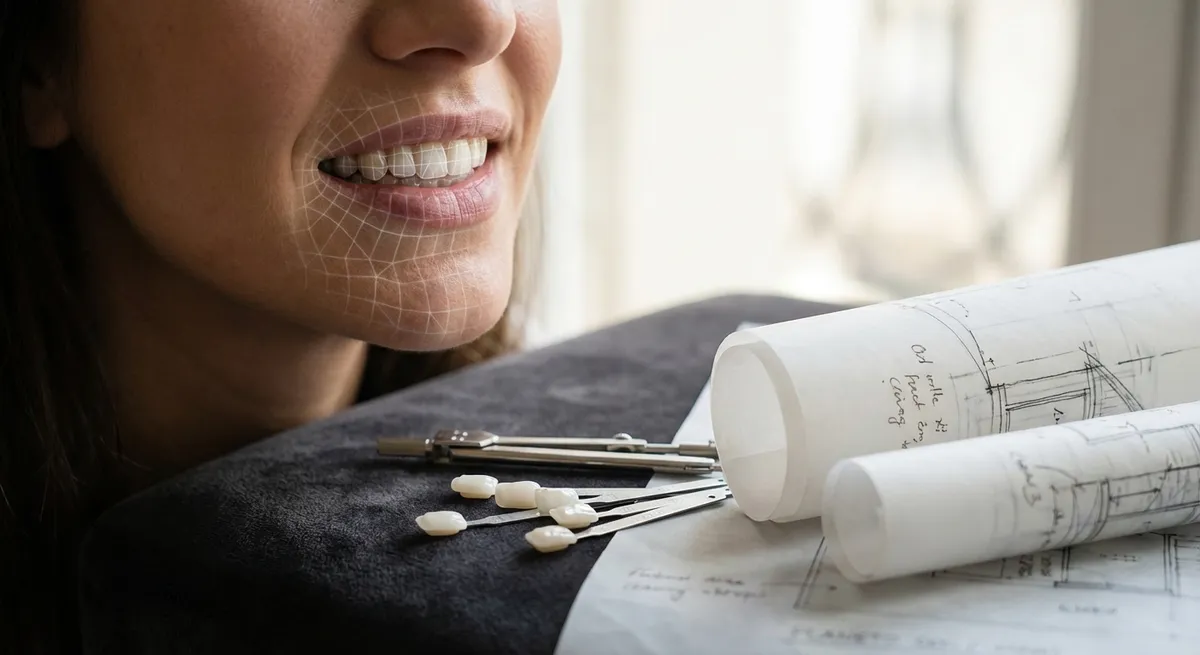
A skilled cosmetic dentist evaluates facial thirds, lip dynamics, midline symmetry, and how your teeth appear when you speak, not just when you pose. Your eye shape, cheekbones, and even your resting expression influence the ideal tooth length, width, and contour. A longer, more angular tooth form may flatter a strong jawline, while softer, rounded edges can balance delicate features.
This “face signature” approach stands in contrast to one-size-fits-all smiles. Two people can bring in the same celebrity reference photo and leave with entirely different design plans because the objective isn’t imitation; it’s coherence. When your new smile looks “right” even in candid photos, it is usually because the design respects facial proportions and not just dental ideals.
An advanced practice may also use high-resolution photographs, facial scanning, and video of you speaking and laughing to understand how your features move. The result is a smile calibrated not for a single still image, but for real life and real conversations.
2. The Micro-Details of Tooth Shape Quietly Signal Personality
Beyond color and straightness, tooth morphology—shape, edge texture, and surface character—subtly communicates who you are.
Natural teeth are rarely perfectly flat or uniform. They often have tiny, irregular incisal edges, delicate surface ripples, and nuanced transitions of translucency. These are not flaws; they are visual cues of authenticity and youthfulness. An overly polished, uniformly opaque smile can look artificial because it erases these micro-details.
During design, your dentist can intentionally tune these elements:
- Edge character: Crisp, straight edges project a more formal, assertive presence. Slightly softened, irregular edges convey ease and approachability.
- Corner shaping (embrasures): More open, sculpted spaces between the tips of front teeth can create a playful, youthful feel. Tighter, more uniform corners suggest a restrained, classic aesthetic.
- Surface texture: Micro-texturing reflects light in a way similar to natural enamel. Ultra-smooth ceramic may appear too flat in certain lighting and photographs.
An elevated smile design consultation should include a conversation not only about what looks beautiful, but how you want your smile to “introduce” you: poised and polished, soft and inviting, quietly powerful, or somewhere in between.
3. Color Is a Gradient, Not a Single Shade
In refined cosmetic dentistry, color is never just “whiter versus darker.” Natural teeth display subtle gradients: slightly warmer near the gumline, progressively lighter and more translucent toward the edges. Capturing this layered complexity is often what separates a high-end result from a uniform, opaque “veneered” look.
A thoughtful color strategy considers:
- Skin tone and undertone: Cool, blue-based whites may clash with warmer complexions, while softly neutral shades can harmonize beautifully with golden or olive skin.
- Eye color and brightness: A slight echo between the whites of the eyes and tooth value (lightness) tends to feel balanced and believable.
- Lip color and volume: Fuller lips can frame brighter shades more elegantly, while thinner lips often look more refined with slightly softer whites.
Modern ceramics and composite materials allow for multi-layered restorations where the ceramist can design translucency at the edges, gentle warmth near the gums, and delicate internal shading. These minute adjustments ensure that, in natural daylight and under flash photography, your smile remains luminous rather than glaring.
When you review color options, ask to see your proposed shade in different lighting conditions—daylight, indoor warm light, and camera flash—so your choice is tested in the environments where you actually live.
4. Function and Comfort Are the Hidden Luxury
The most luxurious smiles are not just beautiful; they are effortless to live with. True refinement in smile design means that your teeth not only look exquisite, but also function correctly when you chew, speak, and sleep.
A careful dentist will evaluate:
- Bite alignment (occlusion): Even minor discrepancies can lead to sensitivity, chipping of restorations, jaw tension, and headaches over time. Thoughtful design redistributes forces so your teeth and joints share the workload comfortably.
- Speech and phonetics: The length and position of your front teeth influence how you pronounce certain sounds (“s,” “f,” “v”). Trial restorations or digital mock-ups can be used to test speech before finalizing the design.
- Jaw joints and muscles: If you clench or grind, your treatment plan may incorporate protective elements such as a night guard, reinforced ceramics, or adjustments to tooth shape to mitigate stress.
Temporary restorations (prototypes) are often a hallmark of careful treatment. They serve as a “dress rehearsal,” allowing you to experience the proposed length, shape, and bite of your future smile in daily life. Any minor discomfort or functional issues discovered during this phase can be corrected before your definitive restorations are created.
This functional precision is not merely technical; it is a form of comfort-focused luxury, ensuring that your new smile feels as natural as it looks.
5. A Thoughtful Aftercare Ritual Protects Your Investment
An exceptional smile design is an investment of time, expertise, and artistry. Preserving that result requires more than a standard oral care routine. A tailored aftercare strategy respects both the materials used and your individual risk factors.
Key considerations typically include:
- Customized home care tools: Ultra-soft brushes, specific floss or interdental options, and pH-balanced toothpastes can protect both natural tooth structure and ceramic surfaces.
- Nuanced whitening maintenance: If whitening is part of your plan, it should be calibrated so as not to create stark contrast between natural teeth and restorations over time. Your dentist may suggest controlled, periodic touch-ups rather than aggressive at-home treatments.
- Lifestyle adjustments: Frequent acidic drinks, certain highly pigmented foods, and smoking can slowly dull or compromise both teeth and restorations. Your dentist can help you identify realistic modifications that protect your smile without feeling restrictive.
- Regular professional visits: Not all polishing pastes or techniques are appropriate for ceramic or composite work. An office experienced in cosmetic maintenance will select instruments and methods that clean thoroughly without scratching or dulling surfaces.
The most successful makeovers are approached as a long-term collaboration: your dentist provides initial design and precision execution, and you maintain that work through consistent, informed care. This partnership ensures that your smile ages gracefully rather than dramatically changing a few years after treatment.
Conclusion
A distinguished smile design is never accidental. It is the culmination of facial analysis, micro-level aesthetic decisions, rigorous functional planning, material mastery, and a tailored maintenance strategy. When these elements align, the result is a smile that does not simply look “done,” but feels inevitable—an elegant extension of who you already are.
Before you move forward with a makeover, invite these deeper conversations with your dentist. Ask how they interpret your facial signature, how they think about tooth character, color gradients, bite comfort, and long-term preservation. The answers will reveal whether you are about to receive a standard cosmetic upgrade—or a genuinely considered, enduring refinement of your smile.
Sources
- American Academy of Cosmetic Dentistry – What Is Cosmetic Dentistry? – Overview of cosmetic procedures and key concepts used in modern smile design
- Journal of Prosthetic Dentistry – The role of facial analysis in esthetic dentistry – Discusses how facial proportions and analysis guide aesthetic treatment planning
- Mayo Clinic – Dental Veneers – Explains indications, procedure details, and considerations for veneer-based smile makeovers
- Columbia University College of Dental Medicine – Occlusion and Temporomandibular Disorders – Outlines the importance of bite and jaw health in dental treatment planning
- National Institutes of Health (NIH) – Color and Aesthetics in Dentistry – Reviews dental color science, shade selection, and factors influencing esthetic outcomes
Key Takeaway
The most important thing to remember from this article is that this information can change how you think about Smile Design.