A truly elevated smile makeover is not about looking “done.” It is about appearing effortlessly composed in every photograph, every meeting, every fleeting glance. Cosmetic dentistry has become the quiet architect of this impression—merging clinical precision with aesthetic intuition. Yet what separates a pleasant result from a remarkable one lies in a series of nuanced decisions most patients never see, but always feel.
Below are five exclusive, under-discussed insights that discerning patients appreciate when they are curating a smile that must perform beautifully in real life and on camera.
1. Why Your Smile Needs Its Own “Lighting Design”
In high-end cosmetic dentistry, the conversation often begins not with color, but with light behavior. The most sophisticated veneers and restorations are designed to manage light the way a cinematographer shapes a scene: controlling reflection, diffusion, and depth.
Natural enamel is not a flat shade of white; it is a layered, translucent structure that refracts and scatters light. When a restoration is too opaque, it photographs harshly—bright, but lifeless—especially under flash or strong daylight. Conversely, restorations that are overly translucent may show underlying tooth discoloration or look gray in low light.
An experienced cosmetic dentist will:
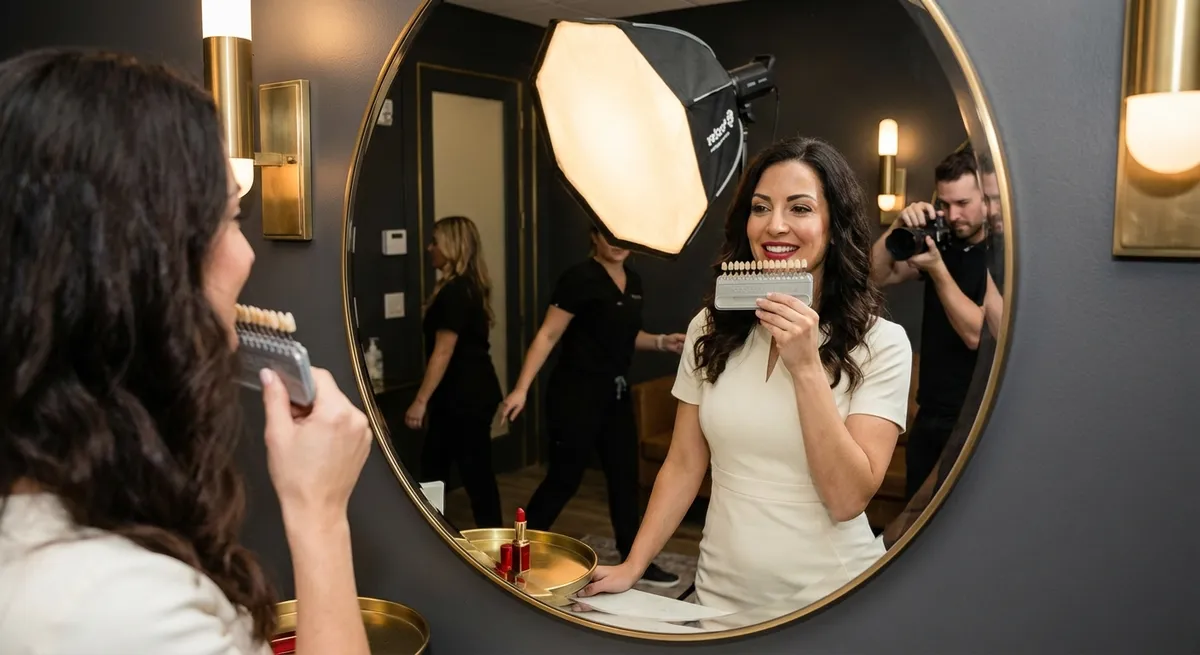
- Evaluate how your teeth appear in varied lighting: office, daylight, warm indoor tones, and camera flash.
- Select ceramics with tailored translucency and internal character (subtle halos, gradations, and micro-texture).
- Adjust surface gloss levels so teeth do not appear “wet” or overly reflective on camera.
The result is a smile that reads as naturally luminous instead of artificially bright—quietly elegant in person, yet reliably photogenic in every lighting environment.
2. The Power of Micro-Symmetry Over Perfect Symmetry
Premium cosmetic dentistry rarely aims for mathematical perfection. Instead, it chases micro-symmetry: a balance so subtly orchestrated that the smile feels harmonious rather than engineered.
Human faces are asymmetrical. If teeth are made perfectly identical side-to-side, they can create an uncanny effect, particularly in high-resolution photos and video. The most refined smile designs will:
- Reserve near-perfect symmetry for the two central incisors—the visual anchor of the smile.
- Introduce slight, intentional variations in length, edge contour, or reflective areas in the neighboring teeth.
- Consider how teeth move with your lips and cheeks during speech, not just in a still “selfie smile.”
These tiny deviations—barely noticeable individually—blend into a cohesive, believable expression of you. The effect is not “a set of veneers” but a naturally elevated version of your own dental architecture.
3. The Role of Your Lip Line as the “Frame” of the Makeover
A luxury painting is always considered with its frame; the same is true of an exceptional smile. Your lips are not merely a backdrop—they are the frame that either amplifies or diminishes the artistry of the teeth.
A sophisticated assessment will examine:
- Resting position: How much tooth is visible when your face is at rest (often 1–3 mm in youthful smiles).
- Smile arc: The curvature of the upper teeth compared to the inner curve of the lower lip when you smile fully.
- Lip mobility: How far your upper lip rises and whether you show gum tissue, tooth length, or both.
- Vertical proportions: The balance among your forehead, mid-face, and lower third of the face.
For some patients, a “perfect” tooth shape on a model or a chart may be entirely wrong for their lip dynamics. The dentist may adjust length, contour, and even the angle of the incisal edges to ensure that the teeth follow the curvature of the lip line in motion.
In higher-level cases, collaboration with aesthetic medicine (for example, subtle lip refinement with injectables) can help fine-tune the frame without overwhelming it. The aim is not a trend-driven “fuller lip,” but a lip line that allows the smile to present itself in the most flattering, balanced way.
4. Texture, Age, and the Art of Looking Naturally Ageless
One of the clearest distinctions between mid-level and high-level cosmetic work is surface texture. Teeth with zero texture and a high-gloss finish may seem desirable at first glance, but they often read as artificial and can inadvertently age the face by creating a mismatch with skin, lips, and eyes.
Natural younger teeth typically show:
- Very fine vertical ridges (perikymata) that catch light softly.
- Slight irregularities at the biting edge, not a ruler-straight line.
- A delicate gradient in translucency from gumline to edge.
As we age, enamel wears, and these features soften. A premium smile makeover takes this into account rather than defaulting to a “one-age-fits-all” look. For a 30-year-old executive, a hint of youthful texture may be ideal; for a 55-year-old client seeking a refined but age-appropriate transformation, the dentist might design smoother surfaces with more subtle edges.
The goal: a smile that looks “timeless” rather than “suddenly new.” People notice that you look rested, polished, and subtly rejuvenated—but they cannot pinpoint which detail changed.
5. The Hidden Strategy: Future-Proofing Your Smile Investment
For patients investing in a high-caliber smile makeover, longevity is non-negotiable. Future-proofing goes far beyond simply choosing a durable ceramic; it’s an entire strategic plan for how your teeth will age with you.
A discerning cosmetic dentist will quietly consider:
- Bite dynamics (occlusion): How your upper and lower teeth meet in motion, not just when closed. Poorly planned veneers in a compromised bite can chip or crack prematurely.
- Parafunctional habits: Night grinding, clenching, or nail-biting may require protective nightguards and specific material choices.
- Gum architecture: Healthy, stable gums are the frame for your restorations; any periodontal issues must be addressed before cosmetic work.
- Lifestyle and staining exposure: Coffee, tea, red wine, or smoking influence whether the dentist chooses slightly warmer shades, specific glazing techniques, or maintenance protocols.
A refined plan will also map out a “maintenance roadmap” from the start: professional cleanings tailored to your restorations, whitening for any natural teeth that remain visible, and periodic evaluations for micro-wear.
This anticipatory approach ensures your smile does not merely look extraordinary on the day of placement—it remains coherent, balanced, and elegant five, ten, and fifteen years later, aging gracefully with the rest of your features.
Conclusion
Cosmetic dentistry, at its highest level, is less about a set of white teeth and more about orchestrating an entire visual narrative: how your smile behaves in light, moves with your lips, harmonizes with your facial structure, and endures over time. The finest results are not loud; they are meticulously considered and almost impossible to separate from your natural identity.
When you approach a smile makeover as a curated collaboration—prioritizing micro-symmetry over perfection, texture over gloss, and long-term strategy over quick wins—you step into a category of results that feel inherently premium: not because they shout, but because they quietly, consistently, and confidently belong to you.
Sources
- American Academy of Cosmetic Dentistry – Smile Design Principles – Overview of foundational concepts in aesthetic smile planning and tooth proportion.
- Mayo Clinic – Veneers: Procedures and Considerations – Clinical explanation of veneer treatment, benefits, and risks.
- Harvard School of Dental Medicine – Esthetic Dentistry and Occlusion – Institutional site with information on advanced dental education and the role of occlusion in restorative work.
- American Dental Association – Esthetic Dentistry Resources – Professional guidance on esthetic treatments, materials, and patient considerations.
- National Institutes of Health (NIH) – Optical Properties of Dental Ceramics – Research article detailing how translucency and light interaction affect the appearance of ceramic restorations.
Key Takeaway
The most important thing to remember from this article is that this information can change how you think about Cosmetic Dentistry.