A refined smile makeover is no longer about chasing perfection; it is about curating harmony—between teeth, face, lifestyle, and personal ethos. Today’s discerning patients are not simply asking, “Can you make my teeth whiter?” but, “Can you design a smile that feels authentically mine, ages beautifully, and respects my time?”
In the world of premium dentistry, procedures are no longer isolated events. They are orchestrated, sequenced, and calibrated to deliver a result that looks effortless, yet stands up to close scrutiny—from a camera lens, a boardroom, or a candlelit dinner. Below, we’ll explore how contemporary dental procedures are quietly evolving, and share five exclusive insights that sophisticated patients increasingly prioritize when planning a smile transformation.
From Single Treatment to Curated Treatment Pathway
Modern dental makeovers are rarely a single procedure; they are a considered progression. Composite bonding, whitening, orthodontics, veneers, gum contouring, and implant work can all be part of the same narrative—but the order, timing, and intensity of each step determine the outcome.
A meticulous dentist will often begin with foundational health: addressing gum inflammation, bite stability, and enamel integrity before touching anything aesthetic. This is not simply caution; it unlocks better longevity and more natural-looking results. Subtle orthodontic alignment with clear aligners, for instance, can reduce how much tooth structure needs to be altered later, preserving more of what nature provided. For the patient, this curated pathway feels less like “a lot of dentistry” and more like a composed evolution—each procedure chosen for impact, efficiency, and minimal disruption to daily life.
Precision Beyond the Smile Line: How Facial Context Shapes Every Procedure
Premium smile design does not stop at the lips. The most refined results consider the entire face—the way the lips move when you speak, the proportion of the upper and lower facial thirds, even how your teeth appear in relaxed, unposed expressions.
Today’s aesthetic-conscious dentists often integrate facial photography, video analysis, and in some practices, digital smile design software to map how proposed changes will interact with your features. The goal is not a generic “Hollywood” aesthetic, but a result that looks innately compatible with your bone structure, skin tone, and age. Adjustments as nuanced as slightly softening the edges of front teeth, tailoring translucency at the incisal edge, or refining the gingival line over one lateral incisor can dramatically elevate the perceived naturalness of veneers or crowns.
Advanced ceramics and modern bonding protocols allow these fine-tuned decisions to be executed with precision. The outcome is a smile that reads as elegant, believable, and unmistakably yours—even when the underlying dental work is extensive.
Exclusive Insight 1: The “Test-Drive Smile” Is the New Standard
One of the most quietly luxurious advancements in dental makeovers is the rise of the “test-drive smile”—a temporary, fully reversible preview of your anticipated result. Rather than relying on imagination or flat digital renderings, temporary mock-ups can be placed directly over your existing teeth, allowing you to see and feel proposed changes in real life.
This process may involve digital planning, then transferring that design into the mouth with provisional materials. You can assess how the length of incisors affects your speech, how the contours interact with your lips, and how the smile photographs in natural light. Adjustments—subtly shorter, slightly rounder, marginally brighter—can be made before a single permanent veneer is fabricated.
For those investing in a high-level makeover, this reduces anxiety and significantly increases satisfaction. You are not simply consenting to a procedure; you are collaborating on a design, fine-tuning it before it becomes part of your everyday presence.
Exclusive Insight 2: Bite Engineering Is the Silent Architect of Longevity
A beautifully crafted veneer or crown can fail prematurely if the bite—how your teeth meet and slide over one another—is not engineered correctly. This is an area where refined practices quietly distinguish themselves. Behind the scenes, your dentist may be analyzing wear patterns, jaw joint health (TMJ), muscle tenderness, and even your habitual posture to understand how forces are distributed.
Adjusting your bite is not about making your teeth touch “evenly.” It is about strategic load distribution so that your anterior teeth don’t chip, your posterior restorations don’t crack, and your jaw joints aren’t overloaded. For patients who clench, grind, or travel frequently across time zones (with resulting stress and sleep disruption), a carefully designed bite—often paired with a custom night guard—can be the difference between a makeover that looks flawless at year one and one that still looks impeccable at year ten.
Premium aesthetic work increasingly integrates micro-adjustments to the bite during and after treatment. You may not see those refinements, but you will experience them in comfort, stability, and the quiet confidence that your investment has been structurally protected.
Exclusive Insight 3: Micro-Detailing of Surfaces Is the New Signature of Naturalness
The most sophisticated dental work rarely announces itself. Instead of mirror-flat, overly reflective veneers, top-tier ceramists now create micro-texture, subtle variations in translucency, and carefully calibrated luster to mimic natural enamel.
These micro-details include:
- Faint vertical texture lines that catch light softly
- Slightly more translucency at the edges of front teeth
- Very gentle color gradation from gum line to incisal edge
- Thoughtful use of warmth or coolness to match skin and eye tones
The clinical procedures behind this are deeply technical, involving high-end ceramics, layered stains, and precise polishing protocols. For the patient, the benefit is aesthetic believability: your smile looks luminous, not synthetic; refreshed, not “done.” Under high-resolution cameras or in bright daylight, these nuances become the difference between a result that feels expensive and one that simply feels artificial.
Exclusive Insight 4: Strategic Minimalism—Doing Less to Achieve More
A growing hallmark of elevated dental care is the art of restraint. Instead of defaulting to full-arch veneers, many dentists now curate combinations: selective veneers in the most visible zone, minimal contouring of adjacent teeth, targeted whitening, and possibly brief clear aligner therapy to correct crowding.
The philosophy is minimal invasiveness with maximal visual payoff. By removing less enamel and preserving more natural tooth, you keep future options open and maintain better long-term oral health. From a procedural standpoint, this can also mean fewer injections, shorter chair time, and less post-operative sensitivity.
Patients accustomed to high-end fashion and design often recognize and appreciate this approach: craftsmanship that respects the original structure, enhances it quietly, and avoids unnecessary overhauls. The result is a smile that appears elevated rather than replaced.
Exclusive Insight 5: Recovery, Comfort, and Privacy Are Now Integral Parts of the Procedure
In a premium makeover setting, the experience does not end when you leave the chair. Recovery protocols have become increasingly refined and personalized. Practices may provide curated post-procedure kits with specific oral gels, desensitizing agents, analgesics, and ultra-soft toothbrushes, along with detailed instructions tailored to your exact treatment sequence.
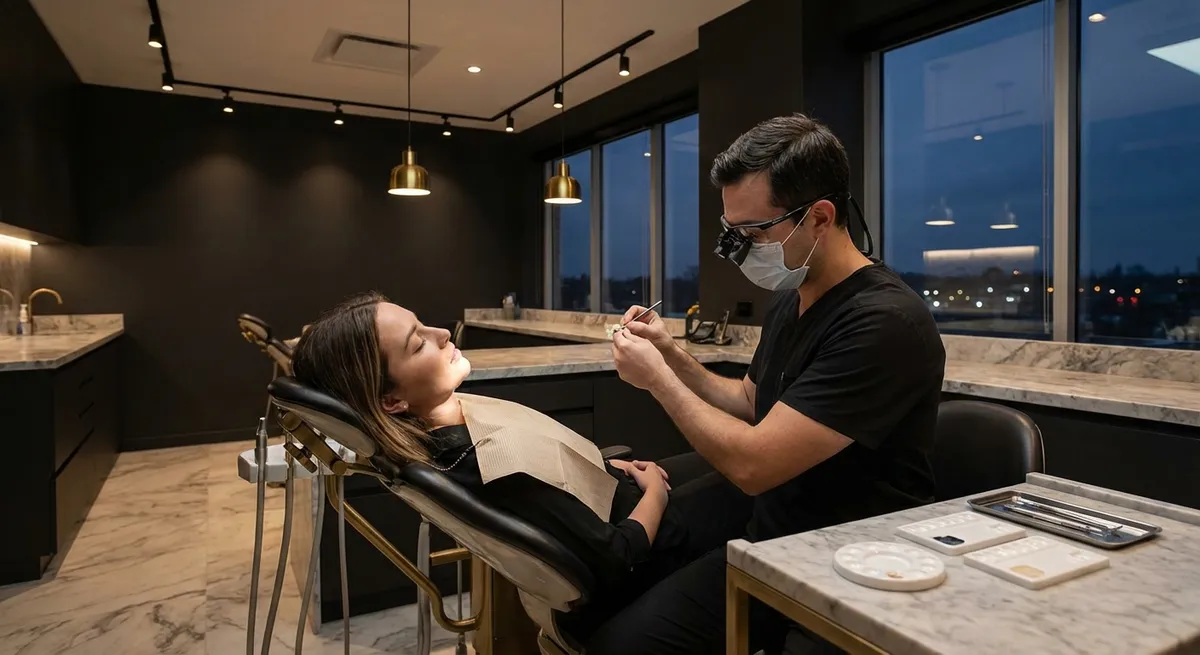
For patients with demanding schedules, appointments can be structured to minimize downtime: combining procedures strategically, scheduling extended single visits with sedation options, or arranging early-morning or discreet after-hours sessions. Some clinics also coordinate with your personal team—image consultants, photographers, or makeup artists—so that the new smile integrates seamlessly into upcoming professional or social commitments.
Even follow-up adjustments are often reframed as “finishing appointments,” where minor contouring, polishing, and bite refinements elevate the result from excellent to exceptional. This comprehensive approach to comfort and privacy reflects a broader shift: you are not just receiving dentistry, you are engaging in a highly curated, end-to-end experience.
How to Approach Your Own Smile Makeover Consultation
For those considering a dental makeover, approaching your consultation with the right questions can set the tone for a sophisticated, outcome-driven partnership. Consider discussing:
- How the practice sequences health, function, and aesthetics
- Whether a mock-up or “test-drive smile” is part of the planning
- How your bite will be evaluated and protected long-term
- What materials and surface detailing are used to ensure natural results
- How many stages are anticipated and how they align with your schedule
Request to see not only before-and-after photos, but also close-ups, side views, and follow-up images taken years later. Inquire about maintenance: professional cleanings, night guards, whitening touch-ups, and any expected future updates.
The most refined practices will welcome these questions. They signal that you are not looking for a quick fix, but for a considered, intelligently planned transformation that respects both aesthetics and longevity.
Conclusion
A modern smile makeover, executed at a high level, is an exercise in precision, nuance, and discretion. It moves beyond surface-level beauty to embrace facial harmony, bite engineering, material science, and a deeply personalized patient experience. The five insights above—the test-drive smile, engineered bite, micro-detailing, strategic minimalism, and elevated recovery—are quietly reshaping what “excellent dentistry” looks and feels like.
For individuals who see their smile as part of their personal brand, investing in this level of care is less about vanity and more about alignment: aligning appearance with identity, craftsmanship with expectations, and short-term results with long-term confidence. When done well, the dentistry becomes almost invisible; what remains is presence, poise, and an unmistakably elevated smile.
Sources
- [American Dental Association – Veneers](https://www.mouthhealthy.org/all-topics-a-z/veneers) – Overview of veneer procedures, indications, and considerations
- [Columbia University College of Dental Medicine – Esthetic Dentistry](https://www.dental.columbia.edu/patient-care/specialties/esthetic-dentistry) – Describes modern esthetic treatment planning and interdisciplinary approaches
- [Mayo Clinic – Dental Implants](https://www.mayoclinic.org/tests-procedures/dental-implant-surgery/about/pac-20384622) – Explains implant procedures, risks, and long-term outlook, relevant to comprehensive makeovers
- [Harvard School of Dental Medicine – Occlusion and TMD](https://hsdm.harvard.edu/temporomandibular-disorders) – Discusses bite-related issues and jaw joint health, underpinning the importance of bite engineering
- [Cleveland Clinic – Cosmetic Dentistry](https://my.clevelandclinic.org/health/treatments/22541-cosmetic-dentistry) – Broad overview of cosmetic procedures, materials, and patient expectations
Key Takeaway
The most important thing to remember from this article is that this information can change how you think about Dental Procedures.