A truly remarkable smile is rarely an accident. It is composed—quietly, meticulously—at the intersection of aesthetics, function, and personality. Modern smile design has evolved far beyond simple “before and after” transformations; it is now a nuanced discipline that treats your smile as an integral part of your identity, lifestyle, and long-term wellbeing. For patients accustomed to bespoke experiences in other areas of life, a refined approach to smile design offers something similar: tailored planning, elevated detail, and results that feel both effortless and inevitable.
Below, we explore how sophisticated smile design really works—and share five exclusive insights that discerning patients often discover only once they are already well into the process.
Rethinking Symmetry: Why the Best Smiles Aren’t Perfectly Even
The most captivating smiles are not mathematically perfect; they are aesthetically balanced. High-level smile design is less about forcing absolute symmetry and more about orchestrating proportion, line, and light so the face appears naturally harmonious.
Your dentist is not simply measuring teeth—they are reading your entire facial composition. The curvature of your lips at rest, the tilt of your head in conversation, the unique way one side of your mouth may rise slightly higher than the other: all of these influence which refinements will look authentic rather than overdone.
Subtle asymmetries—slightly varied incisal edges or minutely differentiated shapes between right and left teeth—can keep a smile from looking “veneered” or artificial. The key is controlled irregularity: respected enough to maintain character, refined enough to feel luxuriously polished. For patients who value subtlety, this distinction is everything.
The Quiet Power of Color Temperature, Texture, and Translucency
To the untrained eye, “white” is just white. In advanced smile design, color is treated with the same seriousness as a luxury interior or couture garment. Shade is only the beginning; the true sophistication lies in color temperature, translucency, and surface texture.
Cooler whites can feel crisp and modern but may appear stark against warm complexions. Warmer tones often flatter more skin types, particularly as patients age, creating an elegant, lived-in radiance rather than a “freshly done” look. Translucent incisal edges (the slightly see-through portion at the biting edge of teeth) can mimic the natural depth of youthful enamel—when used judiciously.
Surface texture is another underappreciated detail. Ultra-flat, glassy veneers may photograph well under strong lighting but can appear synthetic in daylight. Slight micro-texturing on the surface diffuses light more naturally, allowing your smile to catch and reflect illumination in a softer, more believable way. These nuances separate a competent smile makeover from a couture one.
Exclusive Insight #1: Your Smile Design Should Anticipate Aging
A refined smile isn’t just created for your face today; it is thoughtfully imagined for your face five, ten, even fifteen years from now. Aging affects everything around the teeth—lips, skin tone, volume loss in the mid-face—and elite smile designers quietly factor this into every decision.
Planning for aging may mean:
- Choosing a shade that will remain flattering as your skin tone subtly changes
- Avoiding overly long or dramatically youthful tooth shapes that may feel incongruent over time
- Preserving natural tooth structure wherever possible to maintain future options
- Designing a bite that protects against wear, fractures, and joint strain as habits and facial musculature evolve
The most successful smile designs mature gracefully rather than requiring frequent, disruptive overhauls. For patients who view aesthetics as a long-term investment strategy, this forward-thinking philosophy is non-negotiable.
Exclusive Insight #2: Lip Dynamics Are as Important as Tooth Shape
Traditional dentistry focuses almost exclusively on teeth. Elevated smile design views the lips as an equally vital part of the canvas. Your lips frame every aesthetic decision, and how they move in speech, laughter, and repose will dramatically affect the final impression.
A sophisticated clinician will often:
- Observe your smile at rest, in conversation, and during full laughter
- Assess how much gum shows in different expressions (and whether that can or should be modified)
- Consider how volume or shape changes in the lips—natural or via aesthetic treatments—may enhance or undermine the planned result
- Coordinate with trusted aesthetic practitioners (when appropriate) to ensure that any lip or perioral enhancements align with dental design rather than compete with it
Rather than treating dentistry and facial aesthetics as separate realms, a premier approach integrates them into one coherent visual strategy. The goal is a smile that looks uncannily “right” from every angle, not just in a staged photograph.
Exclusive Insight #3: Digital Design Is a Tool, Not the Final Verdict
Digital smile design software has transformed modern cosmetic dentistry, offering photorealistic previews, precise measurements, and powerful communication tools. However, the most refined results come from clinicians who treat these platforms as instruments—not dictators.
While digital models help you visualize proportion and alignment, they cannot fully anticipate the micro-movements of your lips, the warmth in your eyes when you smile, or the subtle asymmetry that gives your expression its charm. The artistry lies in knowing when to deviate slightly from the digital plan to accommodate these more human elements.
The most elevated practices often combine:
- Digital smile simulations for planning and patient collaboration
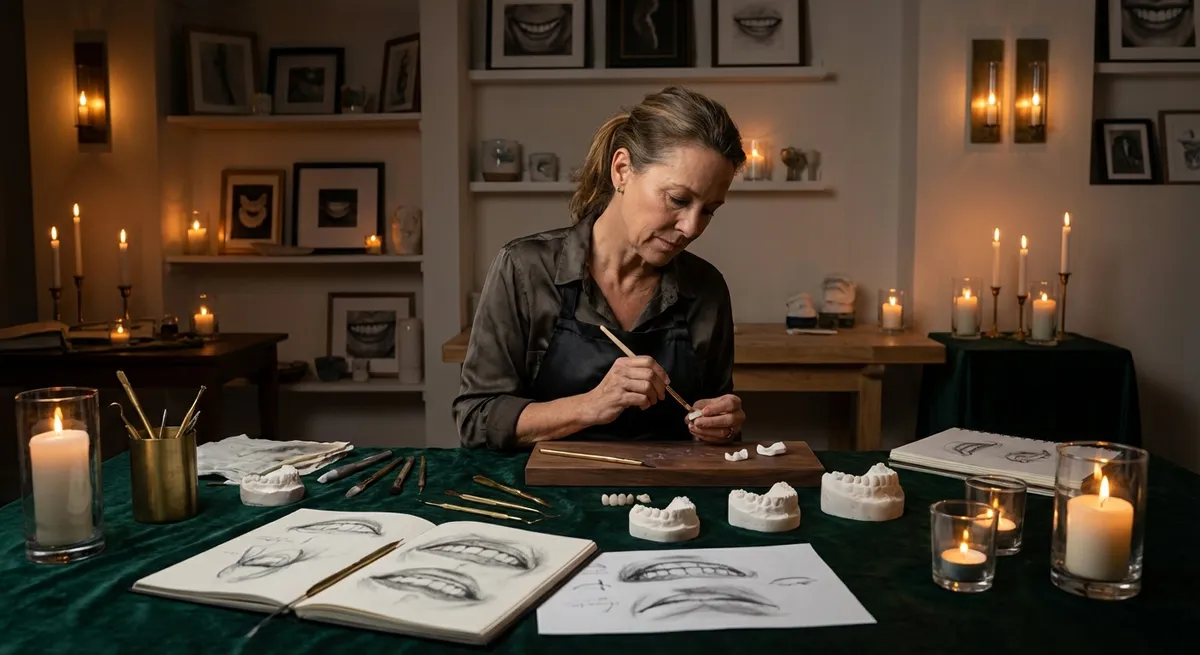
- Analogue mock-ups (such as temporary composites placed directly on the teeth) to test drive the aesthetics in real life
- High-resolution photography and video to examine your smile in motion
This layered approach ensures that your final result is not merely algorithmically ideal but experientially flawless—on camera, in candlelight, across a boardroom, or at a weekend brunch.
Exclusive Insight #4: Occlusion (Your Bite) Is the Silent Architect of Longevity
A beautiful smile that cannot withstand the forces of daily life is not truly luxurious—it is fragile. Occlusion, the way your upper and lower teeth meet, is the unseen architecture that determines whether your restorations will age elegantly or struggle under constant stress.
Sophisticated occlusal planning may include:
- Assessing and managing bruxism (clenching or grinding), which can fracture veneers and shorten tooth length
- Ensuring that forces are distributed evenly so no single tooth or restoration bears a disproportionate burden
- Adjusting the bite in harmony with jaw joints and musculature to avoid headaches, tension, or fatigue
- Recommending protective night guards or other discreet appliances when indicated
Patients often underestimate the importance of bite design because it is invisible—until something cracks, chips, or feels “off.” In high-level smile design, occlusion is treated as an integral part of beauty, not a separate technical issue. Stability is the ultimate luxury.
Exclusive Insight #5: True Customization Extends to Your Lifestyle
A truly bespoke smile is not only customized to your face; it is customized to your life. This goes far beyond scheduling convenience. It means your clinical team understands how you work, travel, dine, and unwind—and plans around those rhythms.
For example, a carefully considered plan might:
- Choose materials compatible with your dietary habits (for instance, frequent red wine or coffee consumption)
- Sequence appointments to align with travel, events, or demanding professional calendars
- Offer temporary aesthetic solutions that look polished if you have important engagements before final restorations are placed
- Provide maintenance protocols tailored to your reality, not a generic standard (from professional cleanings to carefully calibrated whitening)
Discerning patients appreciate when their dentist thinks beyond the operatory and into their world. Smile design, at its highest level, should feel like an extension of your existing standards in fashion, grooming, wellness, and hospitality.
Conclusion
A refined smile is more than a collection of straight, white teeth. It is a deliberate composition of symmetry and softness, color and texture, present-day radiance and future resilience. The most successful smile designs do not announce themselves; they simply make you look uncannily like the best version of yourself.
For those who seek not just cosmetic improvement but curated excellence, the path lies in partnering with a clinician who treats smile design as both science and art—someone who understands that the goal is not perfection, but a quiet, enduring harmony you can carry into every room you enter.
Sources
- [American Academy of Cosmetic Dentistry – Smile Design Principles](https://www.aacd.com/smiledesign) – Overview of how cosmetic dentists approach proportion, symmetry, and aesthetic planning
- [Mayo Clinic – Veneers: Risks and Considerations](https://www.mayoclinic.org/tests-procedures/dental-veneer/about/pac-20384980) – Evidence-based information on veneers, longevity, and what affects outcomes
- [Harvard School of Dental Medicine – Esthetic Dentistry and Smile Design](https://hsdm.harvard.edu/news/esthetic-dentistry) – Insight into advanced esthetic concepts and interdisciplinary care
- [National Institutes of Health (NIH) – Occlusion and Oral Health](https://www.ncbi.nlm.nih.gov/pmc/articles/PMC3669902/) – Research article on the role of occlusion in function, comfort, and long-term stability
- [Cleveland Clinic – Bruxism and Teeth Grinding](https://my.clevelandclinic.org/health/diseases/10955-bruxism) – Clinical explanation of grinding, its impact on teeth and restorations, and protective strategies
Key Takeaway
The most important thing to remember from this article is that this information can change how you think about Smile Design.