Every exceptional smile makeover doesn’t begin with veneers, aligners, or whitening trays. It begins long before that—at the microscopic level, where enamel crystals, gum fibers, and oral microbiomes quietly determine whether your investment in a more beautiful smile will age gracefully or unravel prematurely. For those who see their smile not as a trend, but as part of a long-term, curated aesthetic, oral health is not a chore; it’s the infrastructure.
This is oral care as craftsmanship: small, precise decisions that create the conditions for exquisite, enduring results. Below are five exclusive, under-discussed insights that matter profoundly if you’re considering a sophisticated dental transformation.
The Enamel Economy: How Tiny Daily Decisions Protect Big Investments
Enamel is often treated as a static surface—something you “clean” but don’t truly manage. In reality, it’s a living economy of loss and replenishment. Acids from food, drinks, and oral bacteria constantly dissolve mineral from enamel; saliva and fluoride strategically redeposit it. Every decision you make—from the frequency of sipping sparkling water to when you brush—shifts that balance.
For cosmetic work, this matters. Thinned or weakened enamel can limit how conservatively a clinician can shape your teeth for veneers or bonding. Over-bleached or eroded enamel can also influence color outcomes, making it harder to achieve uniform, natural shades. Thoughtful habits—waiting 30 minutes after acidic foods or drinks before brushing, using low-abrasion toothpaste, and favoring water between meals—quietly preserve enamel thickness and surface integrity. Over time, these habits expand the range of minimally invasive treatment options and help restorations look more luminous, not chalky or flat.
In sophisticated smile design, “preparing” for a makeover isn’t only about orthodontics or whitening; it’s about cultivating an enamel environment that allows your dentist to be conservative, precise, and artistic—rather than forced into compromise by past damage.
Gum Architecture: The Silent Designer of a Luxurious Smile Line
When people imagine a “perfect smile,” they usually think teeth. Dentists, however, often see gum architecture first: the height, contour, and symmetry of the tissue that frames each tooth. Healthy gum tissue is not simply pink; it is firm, finely textured, and evenly scalloped. These subtleties influence whether a finished smile looks naturally high-end or unintentionally artificial.
Inflamed or swollen gums can make teeth look short and bulky, distorting proportions and masking the elegance of even the most meticulously crafted veneers. Likewise, recession (gum shrinkage) can expose root surfaces, creating uneven tooth lengths and sensitivities that limit aesthetic options. A period of focused gum optimization—gentle but thorough brushing, precision flossing or interdental brushes, and possibly professional periodontal therapy—often precedes a premium makeover.
For patients who care about refined outcomes, this “gum sculpting phase” is not optional background work; it’s part of the aesthetic journey. Once inflammation is controlled, your dentist can perform delicate gum contouring, if needed, to align gum heights and complete the visual frame. The result is a smile that doesn’t simply show nice teeth, but one that reads as harmonious, balanced, and quietly luxurious.
The Microbiome Advantage: Curating a Mouth That Ages Gracefully
Elite skincare now routinely includes microbiome-friendly products; the same concept is reshaping modern oral health. Your mouth hosts a complex ecosystem of bacteria, fungi, and other microorganisms. When balanced, this microbiome helps protect your teeth and gums; when disrupted, it fuels decay, bad breath, and gum disease that can undermine the most carefully placed restorations.
For those investing in advanced dental treatments, supporting a healthy oral microbiome is a high-yield strategy. Excessive antibacterial mouthwash use, constant grazing on sugary snacks, or a dry mouth from medications can push your microbiome toward instability. By contrast, a nutrient-conscious diet, adequate hydration, and in some cases targeted oral probiotics may help maintain a more protective bacterial profile.
The result is not just fewer cavities. A stable microbiome supports calmer gums, less plaque accumulation around restorations, and a lower risk of implant or veneer complications. If you see your smile makeover as part of a broader wellness and longevity strategy, asking your dentist about microbiome-aware products and routines is an elegant way to align health and aesthetics.
Precision Between the Teeth: Interdental Care as a Luxury Detail
Most people brush. Far fewer truly manage the spaces between their teeth with the precision that high-level dentistry assumes. Yet this is where plaque, staining, and early gum disease tend to begin—especially around expensive restorations, bonding, and ceramic work.
Flossing is important, but it’s no longer the only gold standard. For many adults, especially those with slight spacing or restorations, interdental brushes or water flossers can be more effective and more comfortable. These tools reduce the biofilm that causes chronic low-grade inflammation—often visible as puffiness or slight redness—that can subtly cheapen the overall look of a smile, even if the teeth themselves are flawless.
Patients who commit to meticulous interdental care before and after cosmetic work often notice an elevated aesthetic: teeth appear brighter simply because plaque and micro-stains are less present along the edges, and gums contour more crisply around each tooth. In photographs and close conversation, this reads as “expensive” without being obvious—more polished, less processed.
Longevity as Luxury: Designing a Smile to Perform Over Decades
True luxury in cosmetic dentistry isn’t just the immediate reveal; it’s how the work performs in year ten, not just month ten. This is where oral health habits become strategic, not merely hygienic.
Diet plays a quiet but decisive role. Constant exposure to highly pigmented drinks (red wine, black tea, coffee) or very acidic beverages doesn’t just stain natural teeth; it can also roughen the surface of certain materials, making them more prone to discoloration and plaque. Adopting a few discreet rituals—rinsing with water after dark beverages, using a straw when appropriate, scheduling consistent professional cleanings—extends the “just done” freshness of your results.
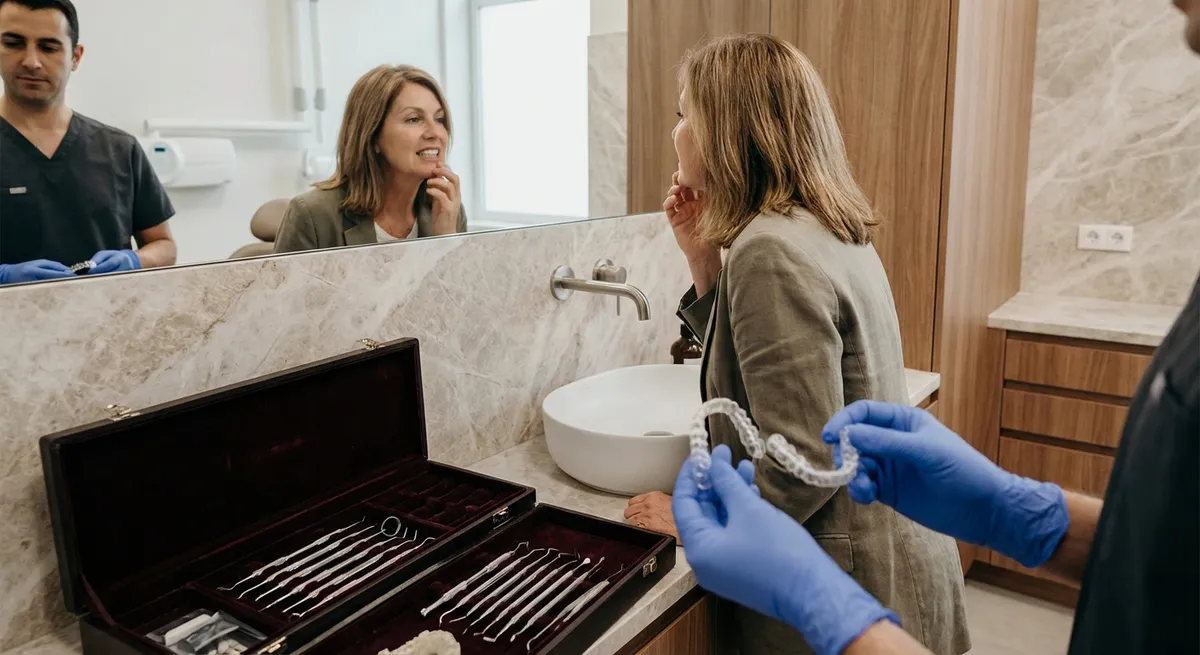
Equally important is how your teeth contact each other. Nighttime grinding or clenching can chip veneers, crack bonding, and stress implants. A custom night guard, carefully polished and precisely fitted, is not a crude piece of plastic; it’s a preservation device for both your natural teeth and your investment. Paired with thoughtful oral health maintenance, it turns your makeover from a project into a long-term, curated asset.
In refined dental care, longevity is the ultimate premium feature. When oral health is prioritized, your smile doesn’t simply look spectacular at the final appointment—it continues to look considered, intentional, and composed for years.
Conclusion
A sophisticated smile makeover is never just about what is added—ceramics, aligners, whitening—but about the invisible preparation that makes those additions look effortless and endure elegantly. Enamel resilience, gum architecture, microbiome balance, interdental precision, and long-term preservation all live under the umbrella of oral health, yet each has a direct aesthetic consequence.
For individuals who see their smile as part of a larger, curated identity, elevating oral health from routine to ritual is a defining shift. It transforms cosmetic dentistry from a one-time event into an ongoing collaboration between you, your clinician, and the microscopic world that quietly shapes every radiant, confident expression.
Sources
- [National Institute of Dental and Craniofacial Research – Oral Health Topics](https://www.nidcr.nih.gov/health-info) - Evidence-based overviews on enamel, gum disease, and overall oral health
- [American Dental Association – MouthHealthy](https://www.mouthhealthy.org/all-topics-a-z) - Consumer-focused guidance on brushing, interdental cleaning, fluoride, and diet
- [Colgate Oral Microbiome Resource](https://www.colgate.com/en-us/oral-health/oral-microbiome) - Accessible explanations of the oral microbiome and its role in health
- [Mayo Clinic – Gum Disease (Periodontitis)](https://www.mayoclinic.org/diseases-conditions/gingivitis/in-depth/periodontitis/art-20047475) - Clinical perspective on gum health and how inflammation affects teeth and restorations
- [Harvard School of Dental Medicine – Oral Health and Systemic Health](https://hsdm.harvard.edu/oral-health-and-overall-well-being) - Discusses the wider health implications of oral conditions and why prevention matters
Key Takeaway
The most important thing to remember from this article is that this information can change how you think about Oral Health.