A refined smile today is less about obvious perfection and more about considered precision. Behind every elevated result lies an orchestration of techniques, materials, and planning that most patients never see—but always feel. For those contemplating a dental makeover, understanding what truly distinguishes an exceptional outcome from an average one is the quiet advantage. This is not about chasing trend-driven aesthetics; it is about commissioning work that respects your facial architecture, your lifestyle, and your long-term oral health.
Below, we explore the landscape of contemporary dental procedures and reveal five exclusive insights that discerning patients increasingly expect from their clinicians—often before they even sit in the chair.
The Modern Smile Makeover Is Built on Foundational Health
Before veneers, whitening, or aligners are even considered, the most sophisticated practices begin with a meticulous assessment of oral health. Periodontal status, bite dynamics, enamel quality, and even salivary flow are studied with near-clinical obsession. The reason is simple: cosmetic excellence cannot coexist with biological instability.
A truly premium makeover almost always starts with conservative corrections—precision cleanings, gum therapy where needed, micro-restorations for early decay, and occlusal adjustments that rebalance the bite. When alignment issues are present, discreet orthodontic solutions (like clear aligners or lingual braces) may be recommended before any cosmetic layer is added. This “health-first” sequencing minimizes the risk of future fractures, gum recession, and chronic sensitivity, all of which can sabotage an otherwise beautiful result.
The takeaway: when a dentist insists on addressing gum health or bite issues before cosmetic work, this is not delay—it is future-proofing your investment. In the most elevated practices, longevity is part of the aesthetic.
Materials Have a Signature: Why Your Choice Matters
Not all veneers, crowns, or restorations are created equal—and the differences are rarely visible on a price list. High-end dental procedures rely on a nuanced understanding of materials science, matching ceramics and composites to each patient’s unique needs rather than defaulting to a single “house favorite.”
For example, ultra-translucent lithium disilicate ceramics can mimic natural enamel with remarkable delicacy, ideal for patients wanting a soft, luminous look. Zirconia, while more opaque, offers exceptional strength for back teeth or patients with heavy bite forces. Layered ceramics, hand-finished by a master ceramist, can reproduce natural internal nuances—gradients, halo effects, and micro-texture—that make restorations indistinguishable from untouched teeth.
Sophisticated patients now ask not only “What will it look like?” but “What is it made from, and why?” The material choice influences how light plays across the teeth in photographs, how restorations age over time, and how they interface with surrounding gum tissue. In premium dentistry, a veneer is not a generic shell; it is a material decision with aesthetic, functional, and biological consequences.
Procedure Planning Is Becoming Cinematic, Not Static
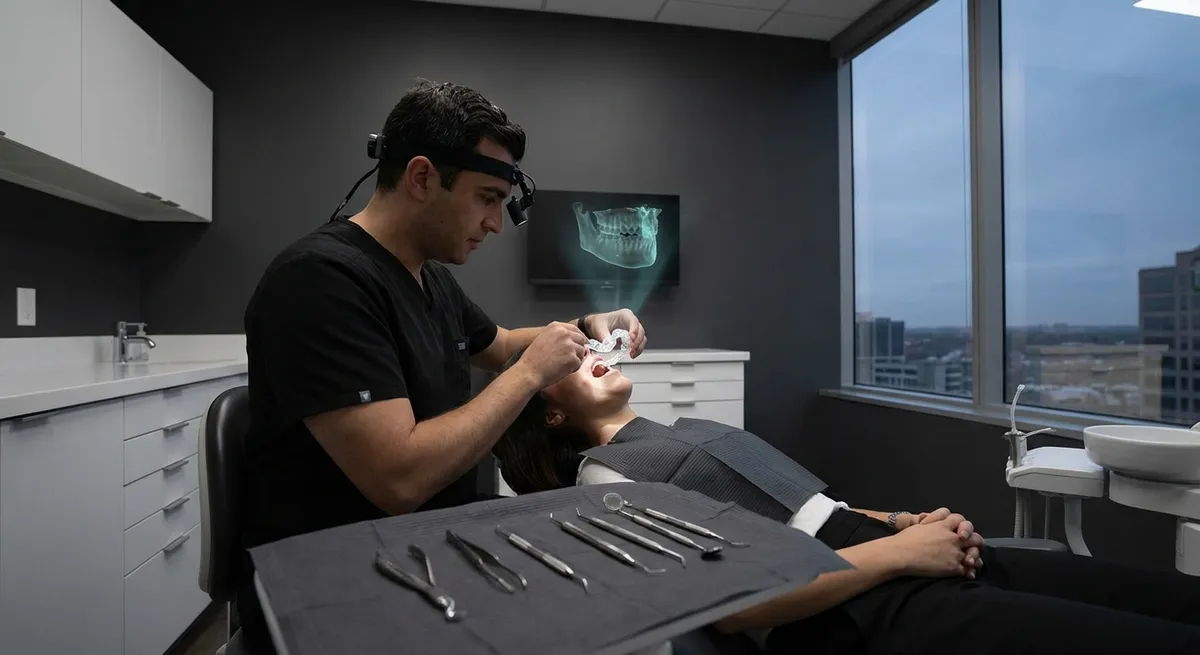
The era of vague “before and after” promises is being replaced by an almost cinematic planning process. With digital scanners, 3D imaging, and high-resolution photography, your mouth becomes a detailed dataset from which simulations and prototypes can be crafted with exceptional precision.
Rather than a single mock-up, elevated practices may present multiple “visual narratives” of your potential outcome—subtle vs. more transformative, slightly warmer vs. brighter tooth shades, gentle vs. more pronounced reshaping of tooth edges. Temporary prototypes can even be placed so you can live with a proposed design for days or weeks—speaking, smiling, and eating—before anything becomes permanent.
For patients seeking a dental makeover, this process is more than technical theatrics; it is psychological reassurance. You are not gambling on an unknown result; you are iterating towards it. The most refined outcomes emerge when the patient, dentist, and ceramist collaborate as though they are co-creating a bespoke piece of wearable design.
Five Exclusive Insights Discerning Patients Quietly Rely On
The difference between a standard makeover and a truly elevated outcome often lies in subtleties that are rarely advertised. These five insights are increasingly shaping the expectations of informed patients:
Micro-Asymmetry Looks More Natural Than Perfect Symmetry
Excessive uniformity—identical tooth lengths, hyper-straight incisal edges, overly consistent color—can make a smile look artificial, especially in high-resolution photography. Expert cosmetic dentists intentionally introduce micro-asymmetries: a slightly softer edge on one incisor, subtle variance in translucency, or minute differences in contour. These tiny irregularities echo nature and prevent the “done” look that sophisticated patients wish to avoid.
Gum Contours Are as Critical as Tooth Shape
Many patients focus solely on the teeth, but the gingival architecture frames every smile. Laser reshaping or surgical crown lengthening can harmonize gum lines, correct a “gummy” appearance, or balance right-left discrepancies. Even a beautifully crafted veneer will appear off if the gum line above it is irregular. Elite practices often bring periodontists into the planning stage, treating the gum line as an integral part of the design—not an afterthought.
Your Bite Dictates the Lifespan of Your Aesthetic Work
The most exquisite veneer will fail prematurely if the bite is not properly balanced. Microscopic interferences—where certain teeth hit earlier than others—can create crack lines, edge chipping, jaw tension, and headaches. Advanced teams use digital bite analysis and occlusal mapping to fine-tune contact points after cosmetic work. For patients who clench or grind, a custom night guard is not optional; it is protective armor for their investment.
Color Matching Is a Discipline, Not a Guess
Tooth shade is not “white” or “off-white”; it is a sophisticated interplay of hue, value, and chroma. Skin tone, lip color, age, and even how often you wear bold lipstick shades influence the most flattering tooth color for you. Top-tier dentists photograph teeth under different lighting conditions and sometimes involve the ceramist chairside to calibrate subtleties. The goal is not the brightest shade available—it is the most believable, flattering brightness for you.
Maintenance Protocols Are Part of the Procedure, Not Postscript
A refined smile is not finished on the day the veneers, crowns, or bonding are placed. Elite practices design maintenance protocols in tandem with the procedure plan: specific cleaning instruments safe for ceramics, recommended whitening touch-up schedules, recall intervals tailored to gum health, and clear guidance on what to avoid (such as certain abrasive toothpastes or whitening fads). Longevity is engineered through habit, not luck.
Integrating Technology Without Losing the Human Eye
Digital dentistry has transformed what is possible—yet the most beautiful work still bears the mark of the human eye. In leading clinics, scanners, CAD/CAM software, and 3D printers accelerate precision, but they do not replace the artisanry of the dentist and ceramist.
For instance, a digital design might outline an idealized tooth form; the ceramist then softens, textures, and tones that design by hand, guided by photographs and notes about your personality and preferences. Are you seeking a composed, understated presence or a slightly more dynamic, youthful energy in your smile? These nuances are not easily coded into software; they are interpreted and expressed by humans.
Premium outcomes often arise from teams where technology and craftsmanship coexist. Patients who appreciate this synergy understand that speed alone is not the benchmark of excellence. Same-day crowns and instant mock-ups are powerful tools—but in the most discerning hands, they are starting points, not shortcuts.
Choosing a Practice That Aligns with Refined Outcomes
For those considering a dental makeover, choosing the right clinician and practice is more important than the specific procedure menu. Look beyond marketing language and seek indicators of true refinement: a documented focus on periodontal and functional health, collaboration with experienced ceramists or in-house labs, and a willingness to spend time on diagnostics and planning.
During consultations, listen for questions that go beyond appearance: How do you use your teeth day-to-day? Do you clench under stress? How sensitive are your gums? What is your tolerance for multiple appointments vs. consolidated visits? These questions signal a team designing specifically for your life, not just for a single photograph.
Ask to see a variety of cases—subtle corrections as well as more dramatic transformations—and examine how the gums, bite, and overall facial harmony look, not only the teeth. A premium result should feel like it belongs to the face, not like it was simply added to it.
Conclusion
Modern dental procedures, when approached with rigor and artistry, offer far more than a brighter smile. They can refine facial balance, support long-term oral health, and quietly elevate how you move through the world. The true luxury lies not in conspicuous transformation, but in work so precisely considered that it feels inevitable—an outcome that looks as though it could always have been yours.
By understanding the depth of planning, material selection, bite analysis, and maintenance behind an exceptional result, you move from passive recipient to informed curator of your own smile. In that partnership, dental procedures become less of a treatment and more of a tailored investment in how you present yourself—confidently, and with intention.
Sources
- American Dental Association – Types of Dental Treatments - Overview of common dental procedures and what they address
- Mayo Clinic – Veneers, Crowns and Other Dental Restorations - Explains different restorative and cosmetic options and their uses
- Cleveland Clinic – Occlusion and Bite Problems - Details how bite issues affect oral health and dental work longevity
- Harvard School of Dental Medicine – Esthetic Dentistry and Materials - Discusses advances in aesthetic materials and techniques
- National Institute of Dental and Craniofacial Research (NIDCR) - Provides evidence-based information on tooth decay and the importance of foundational oral health
Key Takeaway
The most important thing to remember from this article is that this information can change how you think about Dental Procedures.