A truly refined smile is never accidental. It is the outcome of meticulous planning, advanced technology, and a philosophy that treats dentistry as both medical science and aesthetic craft. For those considering a dental makeover, the difference between “good” and “extraordinary” often lies in details that are rarely discussed in standard consultations.
This guide steps behind the scenes of premium dental procedures, revealing the subtle decisions, quiet innovations, and nuanced strategies that define a precision smile makeover—along with five exclusive insights that discerning patients genuinely value.
The New Language of Cosmetic Dentistry
Modern smile makeovers are less about dramatic alteration and more about calibrated refinement. The best clinicians are no longer asking, “How white can we go?” but rather, “How naturally luminous should this look in direct sunlight, candlelight, and photographs?”
Every feature is now evaluated in a broader context: how your teeth interact with your skin tone, lip volume, facial symmetry, even the way you speak and laugh. Sophisticated practices use high-resolution photography, video recordings, and digital simulations to analyze your smile in motion, not just at rest.
Premium cosmetic dentistry views teeth as architectural elements within your face—structures that must support both function and aesthetics. That means a veneer or crown is never just a surface enhancement; it’s a structural component designed to harmonize your bite, preserve your enamel where possible, and age gracefully over decades rather than years. Subtle, almost invisible decisions—like micro-adjustments in translucency or the choice of ceramic layering—are what ultimately give a restored smile that “impossible to pin down, but undeniably beautiful” quality.
Exclusive Insight #1: Your ideal smile shade is not on a standard color chart.
High-end practices often custom-blend shades for each patient, considering undertone (warm vs. cool), translucency at the edge of the tooth, and how your teeth will appear in different lighting conditions. Two people asking for a “natural white” can require completely different ceramic recipes to achieve it.
Beyond the Surface: How Procedures Quietly Protect Your Oral Future
Cosmetic procedures, when thoughtfully designed, are not just about visual transformation—they can be strategic investments in long-term oral health. Reshaping a bite, correcting worn edges, or addressing crowding can relieve strain on jaw joints, decrease the risk of fractures, and make daily hygiene significantly more efficient.
For example, a comprehensive makeover may blend several procedures: carefully planned orthodontics to improve alignment, minimally invasive veneers to correct proportion, selective crowns for structurally compromised teeth, and precisely contoured composite bonding where full ceramic coverage is unnecessary. The elegance lies in doing enough to achieve stability and beauty, but not more than your teeth genuinely need.
Fine-tuned occlusion (how your teeth meet) is a hallmark of sophisticated care. A beautifully crafted veneer or crown that interferes with your bite by fractions of a millimeter can lead to tension headaches, chipped ceramics, and jaw discomfort. Elite practices use digital bite analysis, pressure mapping, and iterative adjustments over time to ensure your smile not only looks exquisite but also feels effortless.
Exclusive Insight #2: The most exclusive makeovers often use fewer aggressive procedures.
Minimal-prep or no-prep veneers, selective use of crowns, and orthodontics that preserve enamel are signatures of top-tier care. In premium dentistry, “conservative” doesn’t mean basic—it means strategically refined.
The Quiet Power of Materials: Ceramics, Composites, and What They Signal
To an untrained eye, “porcelain veneers” sound like a single, uniform option. In reality, there is a spectrum of materials—lithium disilicate, feldspathic porcelain, zirconia-based ceramics, and advanced hybrid materials—each with its own strengths, translucency profiles, and long-term behavior.
High-end clinicians choose materials not only by durability, but also by how light interacts with them. Natural teeth are not a flat white; they possess depth, internal reflection, subtle gradations from neck to edge. That complexity is what distinguishes a carefully layered ceramic veneer from a flat, opaque restoration that looks “done” in photographs.
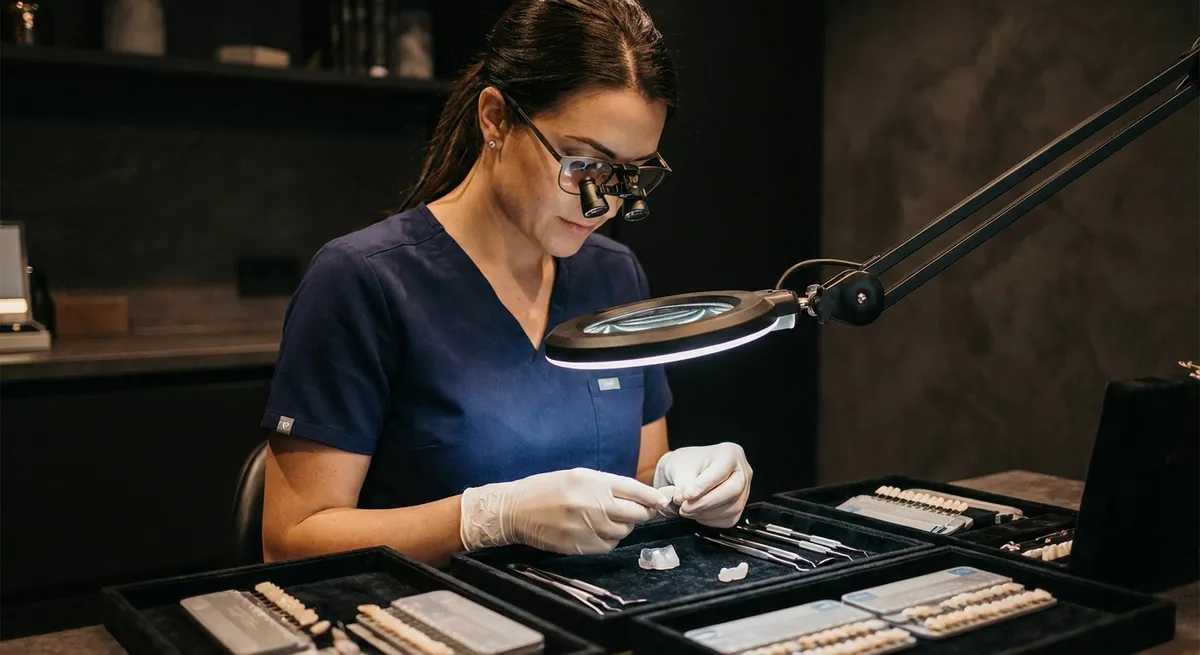
Composite bonding—when executed by a skilled cosmetic dentist—can be an art form in its own right. Hand-layered composites, sculpted and polished to mimic natural anatomy, can correct minor chips, gaps, and asymmetries with almost no tooth reduction. They are often used as a “dress rehearsal” for more permanent procedures, or as a strategic alternative where ceramics would be unnecessarily invasive.
Exclusive Insight #3: Ask to see examples of aging restorations, not just fresh results.
Sophisticated patients review how a dentist’s veneers, crowns, and bonding have held up after 5–10 years. The true test of premium materials and technique is how gracefully they weather time, staining, and daily function.
Digital Design, Human Judgment: Where Technology Meets Taste
Digital smile design systems, 3D scanners, and CAD/CAM milling have revolutionized what’s possible in cosmetic dentistry. They allow for extraordinary precision, faster turnaround times, and increased predictability. You can now preview your anticipated results on-screen or in your mouth via a temporary “mock-up” before committing.
Yet the most refined outcomes still depend on something that cannot be automated: the clinician’s aesthetic judgment. The software can propose symmetrical, “ideal” teeth, but it cannot know that your slightly off-center midline is part of your character, or that a hint of asymmetry will make your smile feel more authentic and less “template-based.”
In elite practices, digital planning is treated as a collaborative draft. You may review multiple iterations, exploring options that are subtly more youthful, more understated, or more dramatic. A premium experience is not a one-click transformation; it is a curated design process guided by your personality, professional image, and long-term preferences.
Exclusive Insight #4: The best smile designs are adjusted after you wear them temporarily.
Top clinicians often use high-quality provisional restorations as a live test phase—letting you speak, eat, and see yourself over days or weeks. Micro-adjustments in length, contour, or brightness are then incorporated into the final ceramics, resulting in a smile that has been refined in real life, not just on a screen.
The Subtle Art of Planning: Timing, Sequencing, and Lifestyle Fit
A premium dental makeover is rarely a single appointment event—it is a choreographed sequence. Orthodontics might precede veneers, gum contouring might refine the framework before ceramics are placed, and whitening is typically completed before any color-matched restorations are fabricated.
This sequencing is not merely logistical; it directly impacts the quality and longevity of the outcome. Moving teeth into ideal positions can reduce how much enamel must be reshaped later. Stabilizing gum health before cosmetic work ensures that edges of veneers and crowns remain invisible as tissues settle. Even considerations like upcoming photography, major events, or speaking engagements can influence the timing of each phase.
Refined practices will also consider your lifestyle: Do you travel frequently? Are you on camera regularly? Do you grind your teeth at night? Do you drink heavily pigmented beverages? These details guide choices in materials, protective night guards, maintenance schedules, and even the exact level of whiteness that will remain flattering—not harsh—under studio lighting or flash.
Exclusive Insight #5: A premium smile plan always includes a long-term “care script.”
Beyond the procedures themselves, expect a detailed maintenance narrative: custom night guards, tailored hygiene intervals, specific product recommendations, and photo-based check-ins over time. In elevated dentistry, the makeover is the beginning of a relationship, not the end of the story.
Conclusion
A truly distinguished dental makeover is not defined by how noticeable it is—but by how inevitably right it looks and feels. Behind every effortless, camera-ready smile lies an intricate interplay of digital planning, artisanal craftsmanship, material science, and long-term oral health strategy.
For those who demand more than a generic “before and after,” understanding these deeper layers is essential. The most rewarding smile transformations are not simply beautiful; they are structurally sound, personally authentic, and meticulously tailored to the way you live, speak, and move through the world.
Sources
- American Dental Association – Cosmetic Dentistry Overview – General overview of cosmetic procedures, including veneers, bonding, and whitening
- Mayo Clinic – Dental Veneers – Explanation of veneer types, risks, and what to expect from treatment
- Harvard School of Dental Medicine – Restorative and Aesthetic Dentistry – Insight into advanced restorative and aesthetic approaches used in academic and specialist settings
- National Institutes of Health (NIH) – Ceramic Materials in Dentistry – Research-based discussion of dental ceramic materials, their properties, and clinical performance
- Cleveland Clinic – Bruxism (Teeth Grinding) – Information on bite forces and grinding, relevant to the longevity of cosmetic restorations
Key Takeaway
The most important thing to remember from this article is that this information can change how you think about Dental Procedures.