A truly elevated smile makeover is never just “before and after.” It is a sequence of meticulously orchestrated procedures—each one chosen, timed, and executed with the same intentionality you’d expect from haute couture tailoring or bespoke interior design. For discerning patients, understanding how these procedures work together is the difference between a generic cosmetic upgrade and a result that feels quietly exceptional.
Below, we explore how high-level dental procedures are planned and performed today—and share five exclusive insights that sophisticated patients increasingly demand from their clinical teams.
From Single Procedure to Curated Treatment Plan
In luxury dentistry, procedures are not selected in isolation; they are curated into a cohesive treatment plan that respects both aesthetics and biology. A veneer, implant, or whitening session is only as successful as the surrounding gum health, bite alignment, and long-term maintainability.
A comprehensive assessment typically begins with detailed photography, radiographs, and often 3D imaging (CBCT scans) to map bone, roots, and airway structures. Your dentist interprets this data across multiple dimensions: how you smile, how you speak, how you chew, and how your facial features interact at rest and in motion.
From there, the practitioner prioritizes biological stability (gum health, bone support, bite harmony) before layering in aesthetic refinement. This sequence avoids the common trap of “quick cosmetic fixes” that look impressive initially but degrade under the constant pressures of chewing, clenching, and time.
When done correctly, procedures such as orthodontics, gum recontouring, implants, bonding, and ceramics become chapters in a single narrative—each one supporting the others for a result that feels both natural and enduring.
The New Frontier of Precision: Digital and Minimally Invasive Dentistry
Modern high-end dentistry is defined by precision. Advanced procedures increasingly rely on digital planning, 3D printing, and minimally invasive preparation to conserve as much natural tooth and tissue as possible.
Digital impressions replace traditional putty in many practices, capturing detail with remarkable accuracy and greater comfort. These scans feed directly into design software, allowing your dentist and lab ceramist to “test-drive” proposed changes before touching a single tooth. For implants, surgical guides fabricated from these scans can direct placement within fractions of a millimeter, increasing aesthetic predictability and reducing trauma.
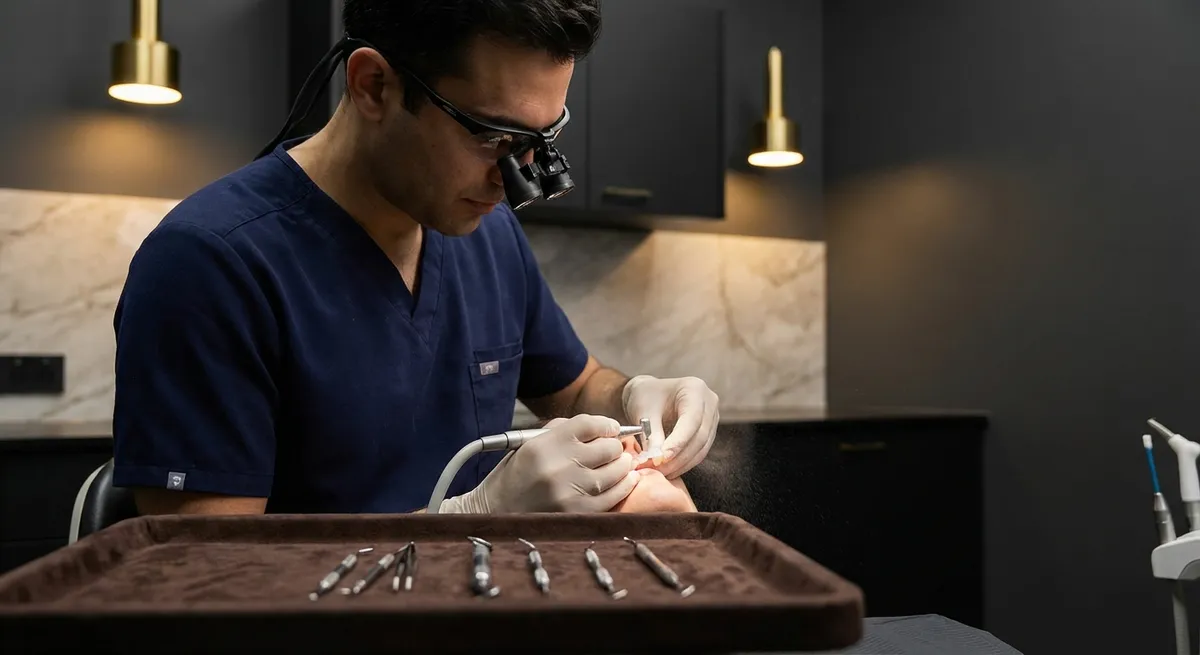
Minimally invasive techniques—such as ultra-thin porcelain veneers, additive bonding rather than aggressive reduction, and microscopic magnification—aim to preserve enamel and avoid unnecessary damage. This conservative approach not only supports long-term tooth health; it also provides a more stable foundation for future refinements if your preferences or facial features evolve with time.
In refined practices, the technical sophistication is invisible to the casual observer. You feel it in the comfort, the accuracy of the fit, and the ease with which your new smile integrates into everyday life.
Five Exclusive Insights for Patients Planning a High-End Makeover
Beyond the obvious questions about cost and treatment time, seasoned patients are asking more nuanced questions—the kind that change both experience and outcome. These five insights can quietly elevate your results.
1. The Lab Behind Your Smile Is as Important as the Dentist
Ceramic work—veneers, crowns, implant restorations—is often created by independent master ceramists or boutique dental laboratories. Their aesthetic sensibility, material choices, and craftsmanship directly shape how your smile looks in natural light.
Ask which lab your dentist partners with, whether they use layered ceramics or monolithic blocks, and if a ceramist can be involved in shade selection. Much like commissioning a custom piece of jewelry, you’re not simply buying “veneers”; you’re commissioning work from a specific atelier.
What this means for you: Results that capture micro-textures, translucency, and color gradations that mimic natural enamel rather than the flat, opaque look associated with lower-tier cosmetic work.
2. Trial Smiles Are No Longer Optional at the Upper End
Sophisticated practices rarely move straight from planning to final ceramics. Instead, they use provisional (temporary) restorations or digital simulations to let you live with the proposed changes—testing tooth length, width, and shape as you speak, laugh, and eat.
These “trial smiles” are more than cosmetic samples; they’re functional prototypes. Your dentist evaluates speech sounds, lip support, and how your jaw joints feel over days or weeks. Subtle refinements made at this stage are then transferred to your final restorations.
What this means for you: Fewer surprises at the end, and a final result that feels intuitive and comfortable in daily life—because it’s already been test-driven.
3. Your Bite (Occlusion) Is the Quiet Guardian of Longevity
An exquisite ceramic veneer can fracture if it is constantly overloaded by an imbalanced bite. High-end practitioners devote significant attention to occlusion—the way your upper and lower teeth meet—before, during, and after cosmetic procedures.
This may involve minor reshaping of certain teeth, clear aligner therapy, or bite adjustments after your new restorations are placed. In some cases, a night guard is recommended to protect against nocturnal clenching or grinding.
What this means for you: Carefully designed procedures that don’t just look stable on day one, but remain harmonious under real-world forces years later.
4. Tissue Architecture Is the Frame—Ignore It at Your Peril
The gums are the frame of every smile. In the most refined makeovers, attention is paid not just to tooth form and color, but to symmetry of gum levels, papillae (those tiny triangular peaks between teeth), and the health and thickness of the tissue.
Procedures such as laser or surgical gum contouring, crown lengthening, or soft tissue grafting may be recommended to restore or enhance this architecture. When performed thoughtfully, they create clean, elegant lines that allow your teeth to look naturally balanced—not “long,” “short,” or uneven.
What this means for you: A smile that reads as naturally harmonious, even to a trained eye, because the soft-tissue frame has been curated as carefully as the teeth themselves.
5. Maintenance Is a Designed Experience, Not an Afterthought
In premium dentistry, the maintenance plan is not a generic “see you in six months.” It is tailored to your procedures, biology, and lifestyle.
Porcelain, composite, and implants each have distinct maintenance needs. Your dentist may recommend specific polishing pastes that protect surface glaze, interdental brushes suitable for implants, or custom schedules for professional cleanings based on your gum health and home care.
For patients who travel frequently or divide their time between cities, coordination between practices and digital record sharing becomes part of the service. Remote check-ins using photos or video can be used for small adjustments between in-person visits.
What this means for you: Your investment is preserved not by chance, but by a deliberately structured care protocol that supports the materials, biology, and aesthetics you’ve chosen.
Navigating Popular Procedures with Discerning Criteria
While every smile makeover is unique, certain procedures appear frequently in elevated treatment plans. The difference at the high end is not what is done, but how and why:
- Porcelain veneers and crowns: Selected not simply for uniform whiteness, but for their relationship to your skin tone, eye color, and facial features. Ultra-thin options may allow for additive, rather than subtractive, techniques.
- Implants and implant restorations: Planned with 3D imaging to optimize bone support and aesthetics, especially in the front of the mouth where gum contours are critical.
- Orthodontics (often clear aligners): Used not only to straighten teeth but to create the proper foundation for conservative porcelain or bonding by repositioning teeth instead of reshaping them aggressively.
- Composite bonding: A sophisticated, sculpted approach to minor reshaping, edge refinement, or closing small gaps, often used as a complement to more extensive work—or as a trial toward future porcelain.
- Professional whitening protocols: Customized to your enamel type and sensitivity, often staged before final shade selection for any permanent restorations.
For each procedure, the key questions are: How does this support long-term oral health? How reversible is it? How does it integrate with my entire treatment plan? And how will it age—visually, functionally, and biologically?
Conclusion
An elevated dental makeover is less about a single dramatic procedure and more about a precisely choreographed series of treatments, each executed with intention. The most refined results arise when technology, biology, and aesthetics are aligned—supported by a thoughtful maintenance strategy and an appreciation for subtlety.
For patients who approach their smile with the same discernment they bring to art, fashion, or design, understanding the nuances behind these procedures transforms the experience. You are no longer a passive recipient of treatment, but an informed collaborator in a process that honors both your health and your personal expression.
Sources
- [American Dental Association – MouthHealthy: Cosmetic Dentistry](https://www.mouthhealthy.org/all-topics-a-z/cosmetic-dentistry) – Overview of common cosmetic procedures and what they involve
- [Mayo Clinic – Dental Implants](https://www.mayoclinic.org/tests-procedures/dental-implant-surgery/about/pac-20384622) – Detailed explanation of implant planning, procedure steps, and risks
- [Cleveland Clinic – Veneers](https://my.clevelandclinic.org/health/treatments/21748-dental-veneers) – Evidence-based information on veneer types, preparation, and aftercare
- [National Institutes of Health (NIH) – Digital Dentistry Review](https://www.ncbi.nlm.nih.gov/pmc/articles/PMC8479432/) – Research article discussing digital workflows, 3D imaging, and precision in modern dentistry
- [Harvard School of Dental Medicine – Occlusion and Oral Health](https://hsdm.harvard.edu/news/occlusion-and-oral-health) – Professional perspective on the role of bite (occlusion) in function and longevity
Key Takeaway
The most important thing to remember from this article is that this information can change how you think about Dental Procedures.