A truly remarkable smile doesn’t appear by accident; it is quietly engineered. For patients pursuing a high-end smile makeover, the distinction between “nice” and “unforgettable” lives in details so subtle they’re rarely discussed in a typical consultation. Modern smile design has evolved into a meticulous fusion of facial aesthetics, material science, and behavioral insight—less about “perfect teeth” and more about creating an authentically elevated expression of you.
Below, we reveal five exclusive insights that discerning patients should understand before committing to a transformation—nuances that separate a standard cosmetic upgrade from a genuinely signature smile.
1. Your Smile Has a “Visual Tempo” — And It Can Be Composed
Most patients think in terms of color and shape; elite smile designers think in terms of rhythm. The human eye doesn’t just register individual teeth—it follows a sequence, moving from the central incisors outward, registering size, brightness, and contour as a visual pattern. This is your smile’s “tempo.”
A sophisticated smile design considers how quickly the viewer’s eye travels across your teeth. Slight gradations in width, proportional changes from tooth to tooth, and the way light reflects off each surface create either a calming, balanced tempo or a rushed, uneven one. For instance, central incisors that are only marginally too wide or too flat can visually “slow” the smile in an unflattering way, while overly uniform teeth can feel oddly synthetic.
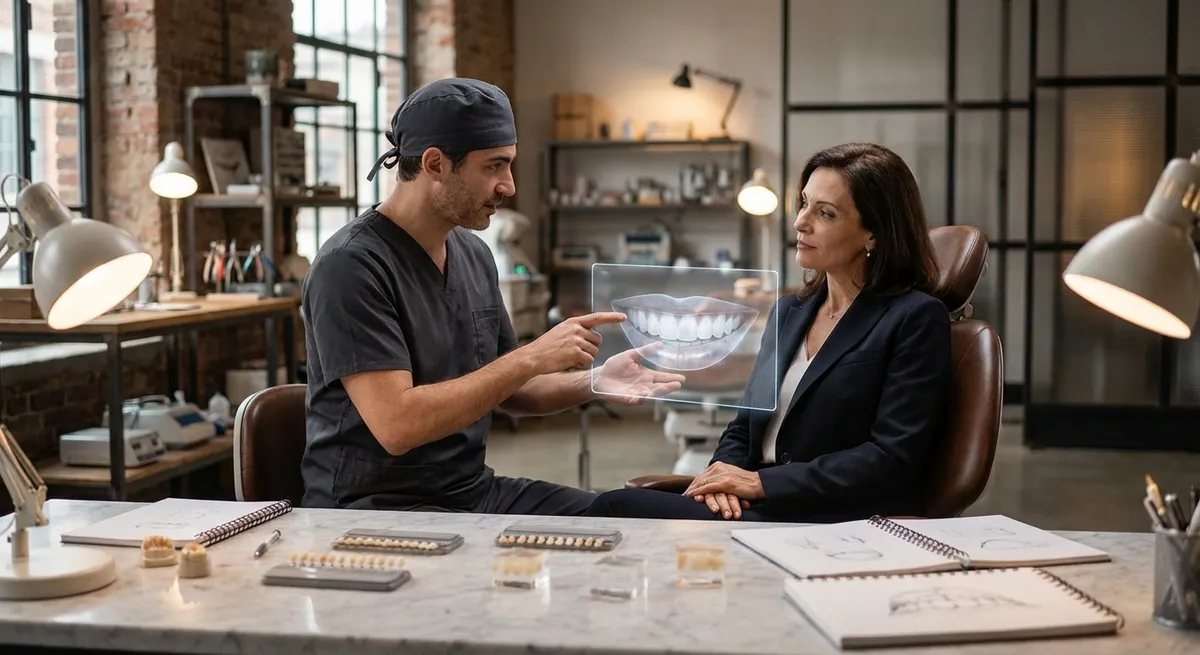
Digital smile design software allows clinicians to test different proportions, but the most refined results come from a dentist–ceramist duo who factor in your facial animation: how widely you laugh, how high your upper lip rises, how much lower teeth you show when you speak. The goal is not mathematical perfection, but a tempo that feels innately “you”—harmonious even in movement, and effortlessly photogenic from every angle.
2. Surface Texture Is the Quiet Luxury Detail Most People Miss
To the untrained eye, “white and straight” might appear sufficient. Yet the true hallmark of a premium restoration is surface texture—those microscopic ridges, subtle undulations, and natural variations that catch and diffuse light in a lifelike way. Overly polished, featureless veneers can reflect light like plastic, especially under flash photography or studio lighting.
High-end ceramists sculpt micro-texture into porcelain, mimicking the way untouched enamel looks in youth: faint vertical striations, a gentle halo at the edge, slight translucency near the biting surfaces. These details influence how the teeth photograph, how they appear under restaurant lighting versus daylight, and whether they look convincingly natural up close.
Texture is also where personalization comes in. A slightly more refined, glassy finish can communicate understated glamour; a softer, more diffused texture aligns with a “barely done” aesthetic. Discussing texture reference photos with your dentist and ceramist—just as you might with a hairstylist or makeup artist—elevates your result from generic cosmetic dentistry to bespoke smile design.
3. Lip Dynamics Are as Important as Tooth Shape
The best smile designers don’t start with your teeth; they start with your lips. Your lip line acts as a moving frame, and if the frame isn’t studied carefully, even technically flawless teeth can feel “off.” Three elements matter in particular: lip mobility, symmetry, and volume distribution.
Lip mobility describes how high and wide your lips move when you smile. A high-mobility smile that reveals a lot of gum requires different planning than a more reserved expression—perhaps incorporating gum contouring, subtle orthodontics, or modified tooth length to avoid a “gummy” appearance. Asymmetry in lip lift can be elegantly balanced by adjusting the gingival margins (where gum meets tooth) or fine-tuning the shape of specific teeth so the overall smile appears more even in motion.
Volume matters as well. Fuller lips can accommodate slightly broader, more luminous teeth without looking overdone; thinner lips may require more restraint in width and brightness to avoid an overpowering effect. In advanced cases, collaboration with a facial aesthetic specialist—strategic, conservative lip enhancement or neuromodulators—can harmonize lip posture with the new teeth, ensuring the frame and the artwork inside it speak the same design language.
4. “Camera-Ready” and “In-Person” Smiles Are Not Always the Same
In the age of 4K video and high-resolution photography, a sophisticated smile must perform across multiple mediums. A result that looks dazzling in a ring-light selfie can appear harsh in natural daylight or under warm evening lighting. High-end smile design anticipates this, planning for how your new restorations will read through a lens and in person.
Porcelain shade selection is no longer just about going “whiter.” Experienced clinicians blend brightness with value (how light or dark a shade appears) and chroma (how saturated the color is). Ultra-opaque, high-value veneers may photograph well but can look flat or artificial at conversational distance. Adding slight translucency, subtle gradation from the gumline to the edge, and nuanced internal characterizations (tiny variations within the porcelain) allows teeth to adapt to different lighting conditions gracefully.
If you live a camera-forward lifestyle—public speaking, media appearances, social content creation—discuss this explicitly. Your dentist can use photography and videography in the planning phase to preview how different designs perform. The most refined smiles are “lighting-intelligent”: they retain depth and authenticity whether captured on an iPhone, under studio softboxes, or seen in candlelight at close range.
5. Longevity Is Designed, Not Assumed
A premium smile is not only about the reveal; it’s about how elegantly it ages. Longevity in smile design is as intentional as the initial aesthetics. This goes far beyond choosing a durable ceramic. Bite forces, parafunctional habits (like clenching or grinding), existing alignments, and even your travel schedule can influence both material and design choices.
For example, a patient with a strong bite and bruxism may benefit from carefully adjusted occlusal (biting) surfaces, protective night guards, and a slightly different ceramic formulation than someone with a lighter, more balanced bite. Micro-adjustments in how the upper and lower teeth meet can reduce microfractures, chipping, and premature wear. Ignoring these forces risks an outcome that looks beautiful on delivery day but begins to show distress within a few years.
Maintenance is part of the design conversation as well. Your dentist should help you understand the cadence of professional cleanings, polishing protocols that preserve porcelain texture and gloss, and safe whitening strategies for any natural teeth adjacent to restorations. Thoughtful design anticipates how your lifestyle will interact with your new smile over a decade or longer, crafting not only a transformation, but an arc of graceful aging.
Conclusion
A truly elevated smile makeover is never just a shade selection or a set of veneers; it is a carefully orchestrated experience that considers rhythm, texture, lip dynamics, visual performance, and long-term resilience. For patients seeking more than a conventional cosmetic upgrade, understanding these deeper layers of smile design is empowering.
When you arrive at your next consultation, bring more than inspiration photos—bring questions about tempo, texture, camera performance, and how your smile is expected to age. The most accomplished clinicians will welcome this level of sophistication. In that shared language, you won’t just receive a new smile; you’ll commission a signature piece of personal design.
Sources
- American Academy of Cosmetic Dentistry (AACD) – What Is Cosmetic Dentistry? - Overview of cosmetic dentistry principles and considerations used by accredited professionals
- Journal of Esthetic and Restorative Dentistry – Digital Smile Design Concepts - Peer-reviewed research and articles on advanced smile design methodologies and aesthetic planning
- American Dental Association – Porcelain Veneers - Evidence-based information about veneers, materials, and longevity considerations
- Harvard School of Dental Medicine – Esthetic Dentistry and the Aging Smile - Educational resource hub with research and discussion around esthetics, function, and long-term oral health
- Mayo Clinic – Bruxism (Teeth Grinding) - Clinical overview of bruxism, its impact on teeth, and implications for restorative and cosmetic treatment
Key Takeaway
The most important thing to remember from this article is that this information can change how you think about Smile Design.