In elevated aesthetics, a dental makeover is no longer a quick fix—it is a curated transformation, designed with the precision of haute couture and the foresight of long-term wellness. Today’s discerning patients are not simply asking for “white and straight”; they are seeking a signature result that feels native to their face, lifestyle, and personal brand. Behind every seemingly effortless, camera-ready smile lies a highly orchestrated sequence of procedures, technologies, and decisions that most people never see.
Below, we reveal five exclusive insights that quietly shape world-class dental makeovers—details that matter to those who expect not just improvement, but refinement.
Elevating the Foundation: Periodontal Couture Before Aesthetics
In premium smile makeovers, the true starting point is not the enamel—it is the architecture of the gums and supporting bone. Elite cosmetic dentists treat your periodontal health as the structural couture beneath any aesthetic “garment.” Without this foundation, even the most exquisite veneers or crowns will age poorly.
Advanced clinics routinely begin with a comprehensive periodontal mapping, often using 3D imaging and digital probing to assess gum levels, tissue thickness, and underlying bone contours. Subtle gum reshaping (gingival recontouring) can rebalance short or uneven teeth, while microsurgical grafting can correct recession and protect exposed roots. In some cases, minimally invasive laser therapy is used to refine tissues with remarkable precision and faster healing.
This meticulous attention to the “frame” of the smile protects long-term stability, reduces inflammatory risk, and ensures that any restorative work sits in perfect harmony with the surrounding tissues. In elevated dental makeovers, the gums are not an afterthought; they are part of the design.
Beyond Shade Charts: The Art of Bespoke Enamel Aesthetics
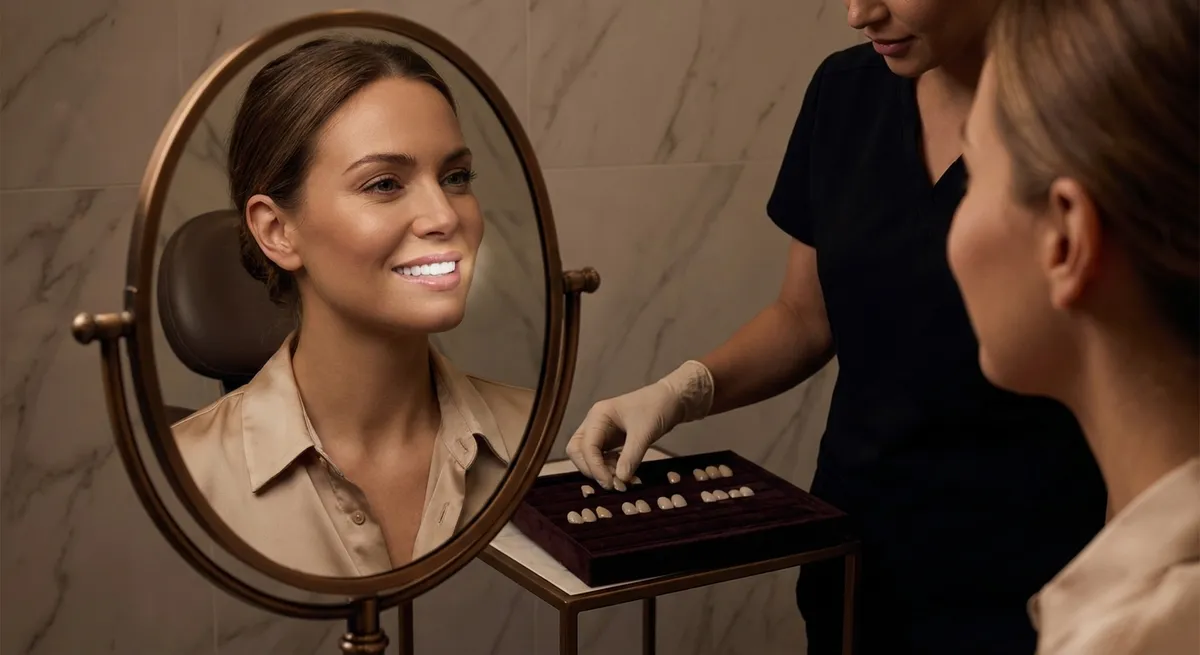
For those accustomed to bespoke tailoring and custom finishes, a standardized shade tab is no longer sufficient. High-end dental procedures prioritize nuance—micro-translucency at the edges, subtle warmth near the gumline, and natural variation from tooth to tooth that mimics youthful enamel rather than a single, flat color.
Master ceramists, often working in boutique dental laboratories, layer multiple porcelains to create depth, just as a painter glazes color to achieve luminosity. They recreate natural characteristics like faint opalescence, delicate texture, and light-reflective “luster” that read beautifully under both daylight and studio lighting. In some cases, patients even attend the lab in person so the ceramist can study skin tone, lip color, and facial movement before finalizing the design.
This level of customization ensures that the final result never appears “overdone” in real life or in high-resolution photography. The smile looks refined rather than artificial—a quiet signal of quality to those with a trained eye.
Precision Planning: Digital Workflow as the New Luxury Standard
Where traditional makeovers relied heavily on manual impressions and chairside guesswork, elevated practices now adopt a fully digital workflow—an investment in precision that dramatically improves both outcomes and experience.
High-resolution intraoral scanners capture the teeth without messy molding materials, creating a 3D model that is infinitely more accurate and comfortable. Cone beam CT (CBCT) scans, when appropriate, provide a detailed look at bone volume, nerve positions, and sinus anatomy for implant planning or advanced restorative work. Digital smile design software simulates tooth length, width, alignment, and proportions against your facial features, allowing you and your clinician to preview different options before a single tooth is touched.
This digital pathway also enables the fabrication of ultra-precise surgical guides for implants, reducing invasiveness and optimizing placement, as well as provisional restorations that closely mirror the anticipated final result. For patients, the experience feels controlled, predictable, and elegantly orchestrated. For the clinician, it unlocks a new level of accuracy that aligns with luxury expectations.
Time as a Design Tool: Staged Treatments for Enduring Results
The most sophisticated dental makeovers are rarely “same-day” experiences. Instead, they unfold in carefully staged phases, using time itself as a design tool. While accelerated makeovers have their place, those seeking truly exceptional and enduring results often benefit from a slower, more strategic sequence.
Orthodontic refinement—often with nearly invisible aligners or low-profile ceramic braces—may first be used to reposition teeth into ideal alignment, reducing how much tooth structure needs to be removed for veneers or crowns. Bite rehabilitation, sometimes involving selective reshaping or temporary restorations, can harmonize jaw position, muscle comfort, and function before final work is delivered.
Temporary “trial” restorations, worn for several weeks, allow you to live with the new length, shape, and feel of your teeth, observing how they perform when speaking, laughing, and dining. Feedback from this phase can inform subtle but meaningful refinements before the permanent restorations are crafted.
This staged approach respects biology, protects tooth structure, and honors the reality that your smile must perform not only under studio lighting but during long dinners, travel days, and high-pressure presentations—year after year.
Invisible Luxury: Microscopic Details That Define a World-Class Result
For the trained observer, the difference between a standard makeover and a truly elite result resides in microscopic details. These are the invisible luxuries—elements you might never think to request, but will certainly feel over time.
Margins (where restorations meet natural teeth) are placed with exacting precision, often at or just beneath the gumline to maintain both aesthetics and cleanability. Contacts between teeth are shaped to allow easy flossing while preserving the sense of natural “interlocking” structure. Biting surfaces are sculpted to accommodate your jaw movements, reducing the risk of microfractures, muscle tension, or premature wear.
Premium cases also pay attention to phonetics: how your teeth and restorations shape certain sounds, particularly “s,” “f,” and “v.” Your dentist and lab team may make iterative adjustments to ensure that speech remains effortless and elegant. Even the surface texture is considered—gentle micro-texturing can deflect light in a way that feels more organic, tone down excessive shine, and minimize visible flaws in photos and video.
These microscopic considerations do not simply create a beautiful smile; they create a comfortable, liveable one—subtle craftsmanship that quietly reveals itself over years, not days.
Conclusion
High-end dental makeovers are no longer defined by a single procedure or a dramatic “before and after.” They are the result of a meticulously orchestrated process—periodontal refinement, bespoke enamel aesthetics, digital precision, thoughtful staging, and microscopic craftsmanship working in concert.
For those who view their smile as an integral part of their personal presentation, the true luxury lies in this deep level of intention. The most compelling smiles are not the brightest or the straightest; they are the ones that feel inevitable, as though they could never have been any other way. That is the essence of a signature smile blueprint—quietly exacting, profoundly personal, and designed to endure.
Sources
- American Academy of Cosmetic Dentistry – About Cosmetic Dentistry - Overview of modern cosmetic dentistry principles and procedures
- Mayo Clinic – Dental Implants - Clinical explanation of implant planning and surgical considerations
- Cleveland Clinic – Periodontal (Gum) Disease - Details on gum health as a foundation for dental treatment
- National Institutes of Health (NIH) – Digital Dentistry: A Review - Research-based overview of digital workflows in dentistry
- Harvard School of Dental Medicine – Esthetic Dentistry Overview - Academic perspective on esthetic and restorative dental care
Key Takeaway
The most important thing to remember from this article is that this information can change how you think about Dental Procedures.