There is a particular kind of smile that never feels “done” yet is immediately memorable—subtle, composed, and quietly luminous. It doesn’t shout transformation; it suggests intention. This is the realm of true smile design: not just upgrading teeth, but curating a visual signature that feels inseparable from who you are. For those considering a dental makeover, understanding the nuances behind that level of refinement can mean the difference between a generic result and a smile that feels like it could belong to no one else.
Below, we explore the art and science of modern smile design, with five exclusive insights that discerning patients rarely hear in consultations—but absolutely should.
Beyond Symmetry: Designing a Smile Around Your Personal Aesthetic
Many people are told that the goal is “straight, white, and symmetrical.” In luxury smile design, that is only the starting line.
A truly bespoke smile begins with your personal aesthetic profile: the clothes you gravitate toward, how you wear your hair, even your typical facial expressions in conversation. Are you drawn to sharp, architectural lines and minimalism, or to softer, romantic silhouettes? Your smile can echo those same qualities.
For example, slightly more rounded incisal edges (the biting edges of front teeth) often harmonize beautifully with softer, more relaxed styles and features. Squarer or more angular edges can suit a sharper jawline, tailored wardrobe, or a more assertive personal style. The dentist is not merely choosing a “veneers template”; they are composing a visual language that matches your overall presence.
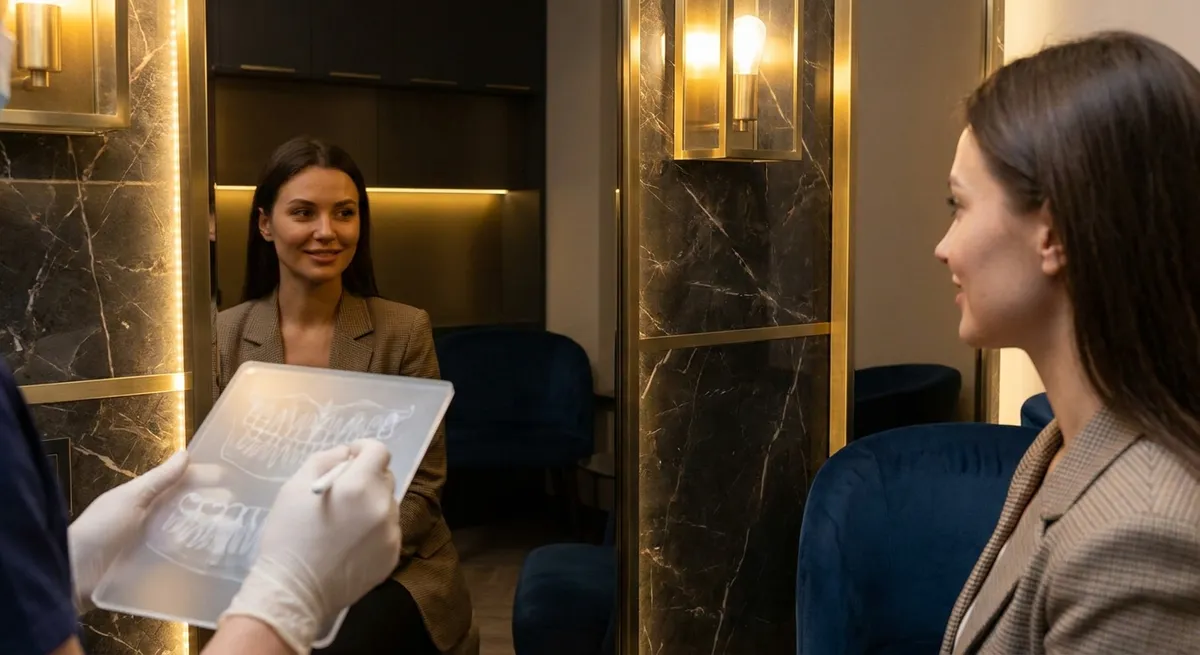
In advanced smile design, digital smile planning software and high‑resolution facial photography help map out how each tooth will look in proportion to your lips, eyes, and facial thirds. The aim is a smile that feels inevitable, as though it has always belonged to you—even if the before‑and‑after photos tell another story.
The Power of Micro‑Asymmetry: Why Flawless Can Look Fake
Ironically, “perfect” can be the enemy of beautiful. Human eyes instinctively pick up on patterns that appear too exact, especially when it comes to teeth. Luxury-level smile design often incorporates micro‑asymmetries—tiny, calibrated variations that are almost imperceptible, but crucial for a natural look.
You might see:
- A whisper of variation in length between the central incisors
- Slightly different translucency at the edges of neighboring teeth
- A subtle difference in surface texture that mimics natural enamel
These details break the uniformity that makes some cosmetic work look artificial. In premium practices, ceramists and dentists collaborate like artisans, using layered ceramics, hand‑polished texture, and custom staining to recreate how light behaves on natural enamel. The goal is not theatrical perfection but believable beauty.
For patients seeking a high‑end makeover, it’s worth asking how your clinician handles micro‑asymmetry, texture, and translucency. If the conversation stops at shade names and “straightening,” you are hearing only a fraction of what modern smile design can achieve.
Time as a Design Element: Planning for How Your Smile Will Age
Most patients think about how their smile will look next month; exceptional smile design considers how it will look in ten years.
Teeth, gums, and facial volume all change over time. A sophisticated treatment plan anticipates this evolution:
- Gum position: If your gums are likely to recede slightly with time, your dentist can plan restorations with margins positioned to remain hidden.
- Enamel wear patterns: Mild bruxism (clenching or grinding) or a history of chipping can influence which materials are chosen and how your bite is adjusted.
- Facial support: Properly designed veneers or crowns can subtly support the lips, helping maintain a youthful contour without looking “overbuilt.”
Premium practitioners often integrate orthodontics, periodontal refinement (such as minor gum contouring), and bite balancing before any cosmetic work is finalized. This phased approach may stretch over months, but the result is a smile that remains stable, comfortable, and elegant long after the initial reveal.
One of the most overlooked questions you can ask: “How is this design planned to age with me?” The answer will reveal a great deal about the philosophy behind your proposed makeover.
Five Exclusive Insights for the Discerning Smile Makeover Patient
Beneath the surface of every polished result lies a series of decisions that most patients never see. These five insights open a window into the kind of thinking that creates truly elevated outcomes.
1. Your Speaking Patterns Quietly Shape the Design
The way you pronounce certain sounds—especially “f,” “v,” “s,” and “th”—has a direct relationship with the position and length of your front teeth. Refined clinicians perform phonetic tests during the trial phase (using temporary restorations or mock‑ups) to fine‑tune tooth length and inclination.
This is why an advanced practice may ask you to read, count, or hold a conversation while wearing provisionals. The goal is a smile that not only looks exquisite in photographs but feels natural when you speak, without lisping, whistling, or constantly “catching” your lips on your teeth.
2. Shade Selection Is More About Skin, Eyes, and Lighting Than a Color Chart
The most luxurious smiles rarely default to the brightest possible shade. Instead, shade is chosen in harmony with:
- Your skin’s undertone (cool, warm, or neutral)
- The whites of your eyes
- The typical lighting you live in—office, on‑camera, or natural light
A highly polished result might involve layering subtle internal characterizations into the ceramic—just enough warmth near the gumline, a breath of translucency at the edge—to create depth rather than a flat “piano key” look. This kind of nuance reads beautifully in real life and on high‑resolution cameras alike.
3. The Trial Smile Is Your Most Valuable Step—Not a Mere Interim
In high‑level cases, the “trial smile” (temporary teeth or a bonded mock‑up) is not just an in‑between stage; it is effectively a live, wearable prototype. Wearing it for several days to a few weeks gives you the chance to evaluate:
- How the shape and length feel during daily life
- Whether your lips move comfortably over the teeth when you smile and speak
- How the design photographs in different lighting and at different angles
Many of the finest refinements—altering a millimeter of length, softening a corner, slightly tilting a tooth surface—happen only after this real‑world test drive. Patients who engage actively in this phase tend to end up with results that feel uncompromisingly personal.
4. Your Bite Is the Invisible Guardian of Longevity
An exquisite smile that fractures, chips, or feels tense within a year was never truly successful. A meticulously calibrated bite (occlusion) is what protects your investment.
Advanced smile designers analyze how your teeth meet in motion—side‑to‑side, forward, and backward, not just when you close. They may incorporate:
- Occlusal guards (night guards) to protect against nighttime clenching
- Subtle reshaping of back teeth to redirect forces safely
- Orthodontic alignment to put teeth in a stable, protective position
You may never “see” this work the way you do the front‑facing veneers, but you will feel the difference in comfort and durability over time.
5. The Most Beautiful Smiles Are Designed Around Your Lifestyle
A truly tailored smile considers how you live, not just how you look.
Frequent public speaking, on‑camera work, or international travel may influence choice of materials, timing, and even the maintenance plan. Patients who enjoy highly pigmented foods and drinks (red wine, espresso, berries, curry) may be guided toward materials that resist staining more predictably, and a maintenance cadence that preserves brightness without over‑bleaching.
Your dentist should be interested in your calendar, not just your X‑rays. Do you have a major event in six months? Are you often under studio lighting? Do you travel extensively? This context helps design not just the teeth themselves, but the entire experience and aftercare strategy.
The Role of Collaboration: Dentist, Ceramist, and You
At the upper end of cosmetic dentistry, smiles are not “delivered”; they are co‑created. The most memorable outcomes emerge when three voices are heard: the patient, the dentist, and the master ceramist.
- You bring your aesthetic preferences, lifestyle, and comfort feedback.
- The dentist orchestrates the clinical plan, facial analysis, and functional harmony.
- The ceramist interprets subtle cues—texture, luster, translucency—at a level of craftsmanship that rivals fine jewelry.
Some practices will even arrange a direct conversation between you and the ceramist or invite you to approve the shape and shade before final glazing. This level of transparency and collaboration ensures that the final restorations reflect both artistic vision and your own sense of self.
When evaluating potential providers, ask how they work with their laboratory partners, how frequently they revise provisional designs, and whether you will have a voice in the process beyond “before” and “after.” The answers will quickly reveal whether you are being offered a commodity—or a true bespoke experience.
Conclusion
A signature smile is not simply whiter teeth or straighter edges; it is the visual expression of who you are at your most composed and confident. Behind that seemingly effortless result lies careful consideration of micro‑asymmetry, phonetics, aging, bite dynamics, and lifestyle—elements that rarely appear on glossy brochures but define the caliber of the final outcome.
For those seeking a dental makeover that feels understated yet unforgettable, the real luxury is not excess; it is intention. When every detail is aligned with your features, your habits, and your sense of self, your smile stops looking “redesigned” and starts feeling inevitable—as though it has always been the way it was meant to be.
Sources
- [American Academy of Cosmetic Dentistry – What Is Cosmetic Dentistry?](https://www.aacd.com/cosmetic_dentistry) – Overview of cosmetic procedures and principles used in modern smile design
- [Mayo Clinic – Dental Veneers](https://www.mayoclinic.org/tests-procedures/dental-veneer/about/pac-20384696) – Clinical explanation of veneers, indications, benefits, and risks
- [Columbia University College of Dental Medicine – Esthetic Dentistry](https://www.dental.columbia.edu/patient-care/services/esthetic-dentistry) – Describes esthetic dental services, including the role of ceramics and smile planning
- [National Institutes of Health (NIH) – Digital Smile Design in Interdisciplinary Dentistry](https://www.ncbi.nlm.nih.gov/pmc/articles/PMC5996621/) – Research article exploring digital smile design and multidisciplinary planning
- [American Dental Association – Bruxism (Teeth Grinding)](https://www.mouthhealthy.org/all-topics-a-z/bruxism) – Details on how grinding/clenching affects teeth and why occlusal protection matters for long‑term restorations
Key Takeaway
The most important thing to remember from this article is that this information can change how you think about Smile Design.