A refined smile is no longer about “perfect teeth” in the abstract; it is about a signature look that feels unmistakably yours. In high-end cosmetic dentistry, smile design has evolved into a disciplined fusion of aesthetics, psychology, and digital precision—less makeover, more tailored identity. Patients today are not simply asking for whiter or straighter teeth; they are seeking a smile that aligns with their lifestyle, their facial character, and even their personal brand.
This is where modern smile design distinguishes itself: quietly meticulous, relentlessly bespoke, and anchored in long-term function. Below are five exclusive insights that those considering an elevated smile transformation should understand—nuances that separate a generic cosmetic result from a truly world-class outcome.
Beyond Symmetry: Designing for Micro-Asymmetries, Not Perfection
Most patients arrive believing that the goal is perfect symmetry. In reality, the most captivating smiles are rarely mathematically identical; they are artfully calibrated around micro-asymmetries that keep the smile looking alive rather than “done.”
A discerning clinician will study how light plays across your midface, how your upper lip lifts on one side when you speak, and how your chin subtly deviates when you laugh. Instead of forcing your teeth into strict symmetry, they may intentionally favor one side in contour or translucency to echo your natural expressions. This is not imperfection—it is customization.
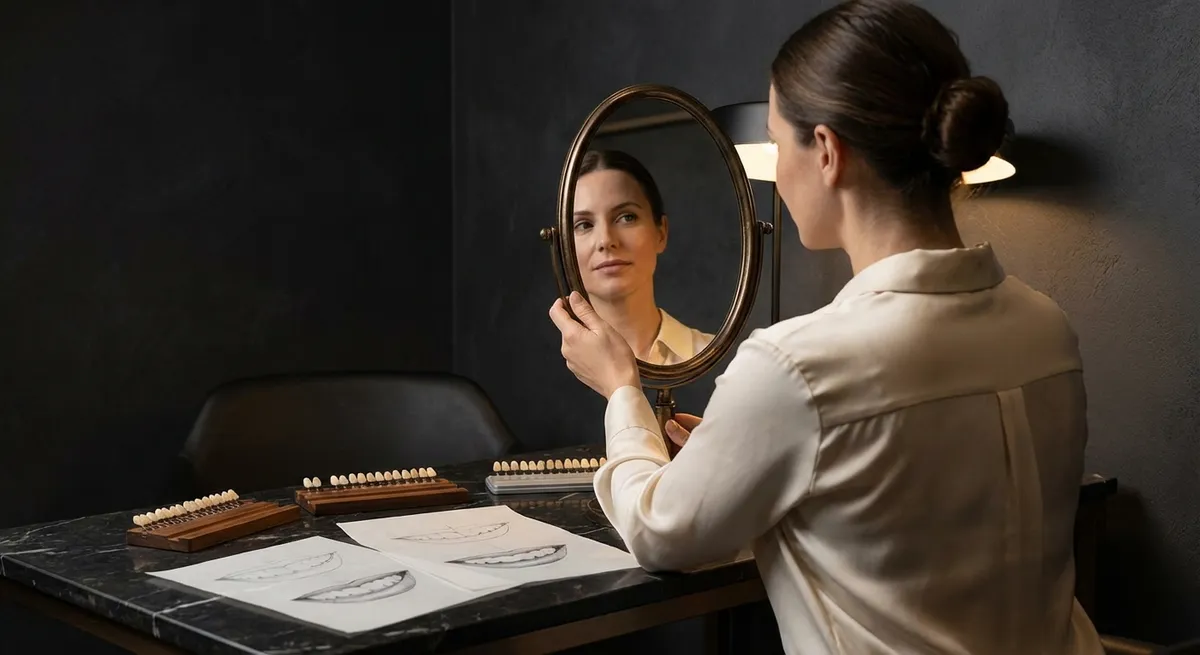
Elite smile design also considers “visual symmetry,” which is what the eye perceives at a glance, rather than exact measurements. A slightly shorter lateral incisor or a barely softened edge can make veneers or aligner results appear strikingly natural. When you look in the mirror, you see harmony, not dental work, and that distinction is at the heart of true luxury dentistry.
The Smile-in-Motion: Designing for Video, Not Just Photographs
Historically, cosmetic dentistry focused on how teeth looked in static before-and-after photos. Today, your smile exists as much in 4K video calls and social media stories as it does in photographs. High-end smile design, therefore, has shifted from “snapshot aesthetics” to “cinematic aesthetics.”
A sophisticated treatment plan will evaluate:
- How your teeth show when you pronounce certain consonants
- The vertical reveal of your upper and lower teeth during laughter
- The way your lips frame your incisors as your head naturally turns
- How your gumline appears in motion, not just at full smile
Digital video analysis, combined with 3D scans, allows your dentist to simulate your smile in motion before any permanent work is done. They are not only designing the moment you pose; they are designing the way your smile breathes and moves through conversation, presentations, and candid interactions.
For patients frequently in front of cameras or audiences, this dynamic approach is non-negotiable. The result is a smile that remains elegant and convincing from every angle and in every frame—still or moving.
Shade as a Luxury Detail: Custom Color Mapping over “Hollywood White”
The era of a single, blindingly white veneer shade is giving way to a more cultured aesthetic: layered, nuanced color mapping that looks luminous rather than artificial. Premium smile design treats tooth color the way haute couture treats fabric tones—subtle gradations, deliberate depth, and texture that reads beautifully in natural and artificial light.
Rather than selecting “one shade fits all,” a skilled cosmetic dentist may:
- Use a slightly warmer tone near the gumline to complement your skin undertone
- Introduce gentle translucency at the edges to mimic youthful enamel
- Adjust brightness on a tooth-by-tooth basis if you have natural asymmetries
- Design a custom shade map that harmonizes with your eyes, lips, and complexion
This level of color refinement is particularly important under studio lighting, flash photography, and high-definition video—contexts where opaque, over-whitened restorations can appear flat and obviously synthetic. When shade is handled as a luxury detail, your teeth don’t simply look “white”; they look intrinsically radiant, as though they have always belonged to you.
The Lifestyle Blueprint: Aligning Design with How You Actually Live
An exquisite smile that does not align with your daily life will not age gracefully. Thoughtful smile design quietly interrogates your habits, routines, and professional environment to ensure your result remains both beautiful and sustainable.
A sophisticated planning process will take into account:
- Diet and travel: Frequent coffee, red wine, or travel? This can shift the choice of materials and surface finishes for better stain resistance and easier maintenance.
- Public-facing roles: If you speak, present, or perform, phonetics and breath flow are treated as central design parameters, not afterthoughts.
- Bruxism and stress habits: Night clenching or grinding calls for reinforced materials, protective night guards, and sometimes subtle adjustments in bite design to reduce stress on restorations.
- Time tolerance for maintenance: If you prefer discreet, low-touch care, your dentist may favor solutions that require fewer long-term visits and simpler upkeep.
In elite practices, lifestyle mapping becomes part of the design dossier. Your smile is not created for a single unveiling—it is engineered to live comfortably with your calendar, your travel schedule, and even your stress patterns. The result is not only elegant but enduring.
Trial Smiles and Emotional Fit: Experiencing Your Design Before It’s Final
One of the most underappreciated luxuries in modern smile design is the ability to “test-drive” your future smile. This goes beyond a digital mock-up on a screen. Using advanced design software and high-precision 3D printing, your dentist can create a reversible, temporary rendition of your ideal smile for you to wear in real life before any irreversible changes are made.
This trial phase offers several advantages:
- You experience how the new shapes and lengths feel when you speak, laugh, and chew.
- You can see how your smile interacts with your wardrobe, makeup, or grooming style.
- You have space to refine details—shortening an incisor edge, adjusting contour, softening a corner—based on how you truly feel, not just what you see in a rendering.
- You gain emotional certainty that the design aligns with your identity, not just your aspiration.
For many patients, this emotional “click” is the defining moment: the realization that the proposed design doesn’t merely look attractive; it feels like an elevated version of themselves. That sense of ownership is the hallmark of an exceptional makeover. The final ceramics, composites, or aligner results become a polished expression of something already familiar—your signature, not a costume.
Conclusion
Sophisticated smile design is not about chasing an abstract ideal of beauty. It is a measured, highly tailored process that honors your facial architecture, your lifestyle, and your personal aesthetic language. From micro-asymmetries and motion-aware planning to nuanced shade mapping, lifestyle alignment, and trial smiles, the true luxury lies in the thinking behind the transformation.
When executed at this level, a smile makeover does not announce itself. It simply makes everything else about you—your presence, your confidence, your ease—feel unusually complete. That is the quiet power of a signature smile, designed with intention and crafted to last.
Sources
- [American Academy of Cosmetic Dentistry – About Cosmetic Dentistry](https://aacd.com/aboutcosmeticdentistry) - Overview of modern cosmetic dentistry principles, including aesthetics and function
- [Journal of Esthetic and Restorative Dentistry – The 10 Commandments of Smile Esthetics](https://onlinelibrary.wiley.com/doi/10.1111/j.1708-8240.2007.00096.x) - Peer-reviewed discussion of key parameters in smile design and esthetics
- [Harvard School of Dental Medicine – Digital Dentistry and 3D Printing](https://hsdm.harvard.edu/news/digital-dentistry-and-3d-printing) - Insight into how digital tools and 3D printing are transforming treatment planning and mock-ups
- [Mayo Clinic – Bruxism (Teeth Grinding)](https://www.mayoclinic.org/diseases-conditions/bruxism/symptoms-causes/syc-20356095) - Explanation of bruxism and its implications for long-term dental restorations
- [UCLA School of Dentistry – Veneers and Esthetic Dentistry](https://www.uclahealth.org/dentistry/patient-care/dental-services/restorative-dentistry/veneers) - Clinical overview of veneers, materials, and esthetic considerations in treatment planning
Key Takeaway
The most important thing to remember from this article is that this information can change how you think about Smile Design.