There is a particular quiet confidence that comes from a smile designed, not simply repaired. Today’s most sophisticated dental makeovers are no longer about “perfect” teeth in the abstract; they are about harmony—between face, character, lifestyle, and long-term health. Smile design, at its best, is a bespoke process that treats your smile as a living, evolving part of your identity.
In this guide, we explore how refined smile design is conceived, planned, and executed—and reveal five exclusive insights that discerning patients often only discover once they are already deep into the process.
Beyond “White and Straight”: The Architecture of an Elegant Smile
Elegant smile design begins with proportion, not color. A truly refined result respects the architectural balance of your face: the width of your smile relative to your cheekbones, the height of your upper lip at rest, the way your teeth follow the curve of your lower lip when you speak.
Instead of chasing uniform, ultra-white veneers, top clinicians analyze “golden proportion” principles and facial thirds, then soften those rules to suit your unique anatomy. Tooth length, incisal edge position, and midline are mapped in relation to your pupils, nose, and chin. Even subtle canting of the smile line is evaluated in dynamic motion—smiling, laughing, speaking—rather than in a single static photograph.
This level of design elevates the smile from “nice teeth” to visual coherence. The goal is not to make your teeth the first thing people notice, but to create a face that simply reads as fresher, more open, and more balanced—without an obvious trace of what changed.
The Digital Canvas: How Technology Quietly Refines Every Choice
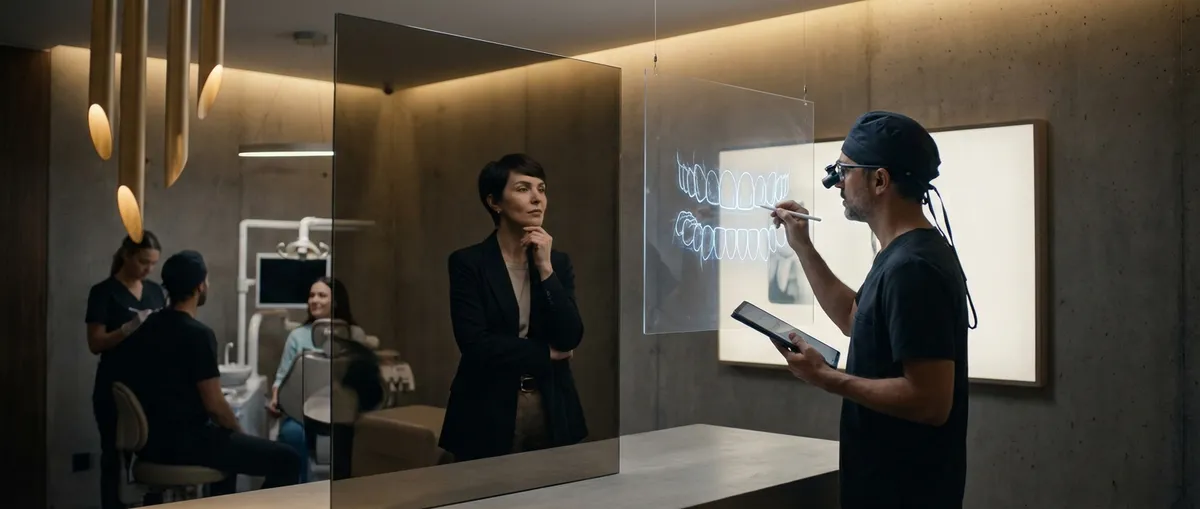
Modern smile design now unfolds first in the digital realm. High-resolution photography, intraoral scanning, and sometimes 3D facial imaging allow your dental team to create a virtual version of you—teeth, lips, gums, and facial contours included.
Instead of guessing how a veneer will look, they simulate it. They adjust tooth length by tenths of a millimeter on screen, alter the translucency and edge shape, then assess how the changes affect lip support and facial profile. This digital preview can be transferred into a “mock-up” you actually wear, allowing you to experience the new smile before any irreversible changes are made.
Digital workflow also supports precision: your restorations can be designed with exact thickness, contour, and occlusion (bite) tailored to how your jaw moves. For patients seeking a refined, understated enhancement, this means your dentist can dial in extremely subtle adjustments that would be nearly impossible to visualize with traditional methods alone.
Five Exclusive Insights Savvy Patients Use to Shape Superior Outcomes
Those who achieve the most elevated, natural-looking results tend to understand a few behind-the-scenes truths about smile design. These five insights can quietly transform your experience—and your final result.
1. Your “Resting Smile” Matters as Much as Your Full Smile
Most patients fixate on their broadest grin, yet you actually show your teeth far more often in miniature expressions: a half-smile, a polite laugh, a moment of concentration. An elegant makeover is designed first around how your teeth appear when your face is at rest and during slight expression.
Ask your dentist to evaluate:
- How many millimeters of upper teeth show when your lips are relaxed
- Whether your lower teeth appear when you speak
- If your gums flash during a subtle smile, not just a full one
Designing for these micro-moments ensures that your smile enhancement feels authentic in daily life, not only in posed, social-media-ready photos.
2. Texture and Translucency Are the Secret to Avoiding the “Done” Look
High-end smile design is not simply a matter of shade selection. Natural teeth are layered: more translucent at the edges, slightly warmer near the gumline, with microscopic texture that breaks up light. Overly opaque, flat-surfaced restorations are what often create that unmistakable “veneers” look.
Sophisticated patients discuss:
- Surface texture (subtle vertical ridges, gentle undulations)
- Incisal translucency (a more glass-like effect at the very edge)
- Micro-characterizations (extremely soft, natural-looking variations that simulate real enamel)
These refinements require close collaboration between dentist and master ceramist; they are the small, often unspoken details that make your smile read as “naturally exceptional” rather than “recently renovated.”
3. Your Bite Is a Long-Term Beauty Investment, Not Just a Comfort Issue
A beautifully designed smile will not remain beautiful if the bite beneath it is unstable. Tiny imbalances in how your upper and lower teeth meet can lead to chipping, fractures, gum recession, and jaw tension—problems that quietly erode aesthetics over time.
Elite smile design incorporates:
- A functional analysis of your jaw movements (lateral, protrusive, and at rest)
- Consideration of existing grinding or clenching habits
- Adjustment of tooth length and shape to distribute forces more evenly
This is why some patients are advised to correct alignment with clear aligners or limited orthodontics before cosmetic work. A refined smile is engineered to age gracefully; optimizing function is a powerful way to protect both its appearance and your investment.
4. The Lips and Gums Are Co-Stars, Not Supporting Characters
The finest smiles are framed with intent. Your lips and gums are not incidental—they are designed into the final aesthetic. A subtle lip asymmetry, an uneven gumline, or an overly flat upper lip can all limit how elevated the result can appear.
Thoughtful smile design may include:
- Gentle gum contouring to create a smoother, more symmetrical frame
- Evaluating lip volume and support (sometimes improved simply with tooth position and length)
- Planning tooth shapes that complement your lip curvature
Patients who appreciate this broader canvas often collaborate not only with their dentist, but also with dermatologists or facial aesthetic specialists when appropriate. The result is a cohesive, balanced look where no single element feels like an afterthought.
5. A Premium Result Extends to Maintenance—By Design
What distinguishes a truly elevated smile design is not just how it looks on day one, but how effortlessly it integrates into your routines. The best plans anticipate maintenance from the outset: how easily you can clean between teeth, how polished surfaces resist staining, and how realistically you can protect the work with your lifestyle.
Ask about:
- Customized night guards if you clench or grind
- Professional maintenance protocols tailored to your specific restorations (ceramic, composite, or hybrid materials)
- How often polishing or refinishing may be needed to maintain luster
This lens turns “aftercare” into part of the original design brief. A refined makeover is meant to withstand coffee, red wine, travel, and long working days—not ask you to live in fear of enjoying your life.
Choosing a Team That Designs, Not Just “Does Dentistry”
Smile design is a collaborative craft. While technology and materials have advanced dramatically, the outcome still depends on the eye, restraint, and aesthetic sensitivity of the people you choose.
Look for a dentist who:
- Shows full-face before-and-after images, including different expressions and angles
- Speaks as much about function and longevity as they do about shade and shape
- Works closely with a dedicated ceramist and can explain their material choices clearly
- Invites your input on style—subtle versus more transformative—rather than imposing a single aesthetic
When the process is approached with this level of nuance, a smile makeover stops being a “procedure” and becomes a tailored aesthetic project. You are not simply leaving with brighter teeth; you are investing in a thoughtfully designed feature that complements your face, your personality, and your future.
Conclusion
Smile design at its highest level is a quiet art: measured, intentional, and deeply personal. It lives at the intersection of digital precision, artisanal craftsmanship, and an intimate understanding of how you present yourself to the world.
By looking beyond simple notions of “white and straight,” honoring bite function, framing the smile with lips and gums, and planning from the start for real-life maintenance, you transform a cosmetic treatment into a curated, long-term asset. In the end, the most luxurious result is not the one that announces itself, but the one that lets your presence feel effortlessly, convincingly elevated—before anyone even realizes why.
Sources
- American Academy of Cosmetic Dentistry – Smile Makeover Overview – Discusses principles and options involved in modern smile enhancement
- Mayo Clinic – Dental Veneers – Explains veneer indications, risks, and maintenance considerations
- Columbia University College of Dental Medicine – Esthetic Dentistry – Outlines approaches to esthetic treatment planning in an academic setting
- National Institute of Dental and Craniofacial Research (NIDCR) – Provides information on tooth wear, bite forces, and factors affecting long-term dental health
- Journal of Prosthodontic Research – Digital Smile Design Article – Research-based discussion of digital smile design concepts and workflows
Key Takeaway
The most important thing to remember from this article is that this information can change how you think about Smile Design.