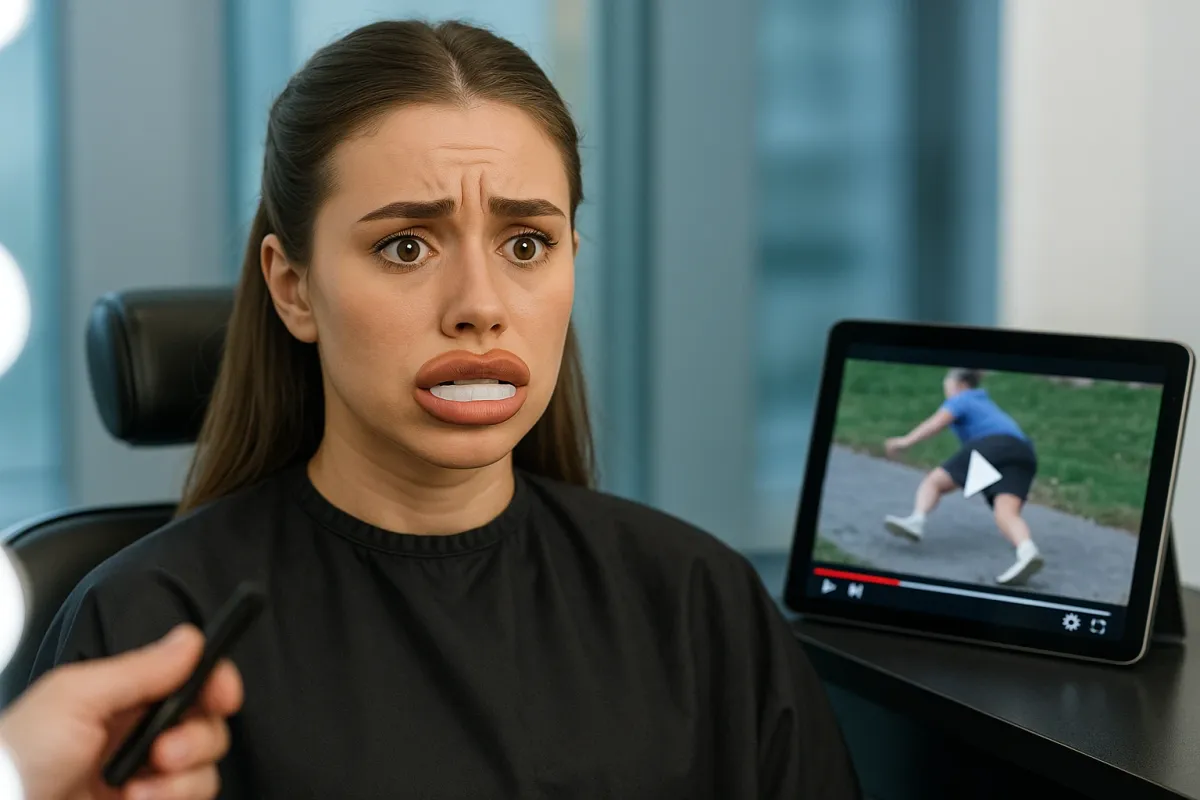
There’s a particular kind of horror reserved for beauty trends gone wrong. This week, a Bored Panda feature on the subreddit r/BadMakeupArtists—showcasing some of the most dramatic foundation mishaps, contour catastrophes, and lash disasters—has been circulating widely. The thread captures something very real about today’s aesthetics culture: the race to look “camera-ready” can quickly slide into looking over-processed, over-filled, and overdone.
What’s fascinating is how closely this conversation mirrors what we see in cosmetic dentistry. Just as a heavy-handed contour can erase the natural architecture of the face, an aggressive, one-size-fits-all veneer case can strip away the character and elegance of a smile. Viral makeup fails are, unintentionally, a masterclass in what not to do—and a perfect lens for understanding refined, modern smile design.
Below are five exclusive insights inspired by this viral beauty conversation—distilled for anyone considering a high-end smile makeover and looking to avoid the dental equivalent of a “bad makeup artist” moment.
1. The “Filter Face” Problem Has a Dental Twin
Many looks featured in the BadMakeupArtists thread share one common theme: they’re designed for the algorithm, not for real life. Over-baked skin, exaggerated brows, and harsh contour can sometimes photograph “striking” for a split second on social media—yet in natural light, they appear mask-like and disconnected from the person wearing them.
The same phenomenon is emerging in cosmetic dentistry. We increasingly see patients requesting “Instagram teeth”: ultra-white, large, and aggressively uniform. These “filter smiles” can appear impressive in a heavily edited selfie, but in a real-world setting—under daylight, in motion, in conversation—they can read as artificial, even distracting. A genuinely luxurious smile design resists this temptation. Instead of trying to erase individuality, it elevates it. The most sophisticated cosmetic dentists design teeth that harmonize with your facial proportions, complexion, lip dynamics, and even your speaking style. If the end result only looks good in filtered photos, it’s not high-end smile design—it’s just dental makeup.
2. Color That Matches You Beats “Whiter Than White”
One of the recurring critiques in the viral makeup fails is mismatched foundation: faces several shades lighter than the neck, visible lines along the jaw, and oxidized tones that shift color throughout the day. The lesson is simple yet powerful—color that doesn’t belong to you is always noticeable.
Teeth shade works the same way. Many people arrive at their consultation asking for the “whitest possible shade,” often referencing celebrity photos lit by professional lighting or heavily edited images. But just as an ultra-light foundation can flatten your features, an excessively bright dental shade can overpower your face and make the teeth the only thing anyone sees. A premium smile designer considers the full palette of you: your skin undertone, eye color, lip pigmentation, and even the hue of your natural sclera (the whites of your eyes). The ideal shade is luminous rather than loud—radiant enough to read as pristine and youthful, yet balanced enough to sit effortlessly within your overall coloring. Refined dentistry is not about blinding white—it’s about believable brilliance.
3. Texture and Detail Separate Luxury From “Plastic”
In the most extreme makeup fails, the skin appears flat, chalky, and textureless—more like a mask than a face. This is often the result of too much product and not enough respect for the skin’s natural topography. Luxury makeup artistry, by contrast, embraces micro-detail: soft sheen where skin naturally reflects light, subtle dimension around the eyes and mouth, and strategically preserved texture that keeps the look alive.
Porcelain veneers and ceramic restorations follow the same principle. Mass-produced or poorly executed veneers often appear uniformly flat and overly glossy—what many patients describe as “keyboard teeth” or “dentures-on-a-Netflix-budget.” High-caliber labs and cosmetic dentists, however, labor over micro-texture: faint vertical striations in the enamel, nuanced translucency near the edges, and soft internal character that mimics natural teeth. Under close-up photography and natural light, this level of craftsmanship is the difference between “I can tell you’ve had work done” and “I can’t quite put my finger on it, but you look incredible.” The more detail you can’t see at a glance, the more convincingly natural—and luxuriously understated—your smile will appear.
4. One Template Fits No One: Why Copy-Paste Smiles Fail
Scrolling through the viral BadMakeupArtists looks, you notice a clear pattern: the same contour placement, the same overdrawn lips, the same over-carved brows—applied to completely different faces. It’s as if a generic template were stamped onto everyone, regardless of bone structure or personality. The outcome is predictable: certain features are exaggerated the wrong way, while others are drowned out altogether.
This “template problem” is increasingly visible in dentistry as well. Some clinics promote a single signature look—identical arch form, identical tooth length, identical ultra-white shade—regardless of the patient’s facial architecture or aesthetic preferences. A premium smile design experience rejects this approach. Instead, it begins with a deep aesthetic analysis: your facial thirds, lip mobility when you talk and laugh, how much gum shows when you smile, and even what you want your smile to communicate—approachability, power, youthfulness, or understated elegance. The design process becomes collaborative and bespoke, not prescriptive. If your proposed smile could be copy-pasted onto ten other people with no modification, it isn’t truly designed for you—it’s just applied to you.
5. Trend-Proof Elegance Is the Ultimate Luxury
What makes the viral makeup fails so compelling is how quickly they feel dated. Over-sculpted cheeks and hyper-dramatic brows that once dominated certain corners of Instagram already read as “of an era.” In a culture that cycles through aesthetics at speed—clean girl one month, heavy glam the next—even beautiful makeup can feel temporary if it chases a trend too closely.
Your smile, however, is not seasonal. A high-end veneer case or full-mouth makeover is a long-term commitment—and should be conceptualized as such. That’s why elite cosmetic dentists think more like timeless fashion houses than trend-driven beauty brands. They study classical proportions, enduring aesthetic principles, and how smiles age over decades, not just how they photograph today. Subtle gradation in tooth length, moderated incisal translucency, and balanced gingival contours all contribute to a look that will still feel refined ten years from now. The goal isn’t to make you look like the latest viral celebrity; it’s to create a smile that could sit comfortably in a black-and-white portrait or a 4K close-up and still feel perfectly, effortlessly right. In a world of fast-trend beauty, true luxury is a smile that never needs a filter—or an apology.
Conclusion
The viral BadMakeupArtists thread may be entertaining, but it carries a quietly powerful message: when aesthetics are treated as a quick fix rather than a considered craft, the results are rarely kind, rarely subtle, and never truly premium. The same holds for your smile.
A sophisticated smile makeover is not about chasing the brightest shade, the straightest line, or the most dramatic “after” photo. It’s about meticulous color harmony, lifelike texture, individualized design, and an elegance that outlasts every algorithmic trend. In other words, the opposite of a beauty fail—not just beautiful for now, but beautifully, convincingly, enduringly you.
Key Takeaway
The most important thing to remember from this article is that this information can change how you think about Smile Design.