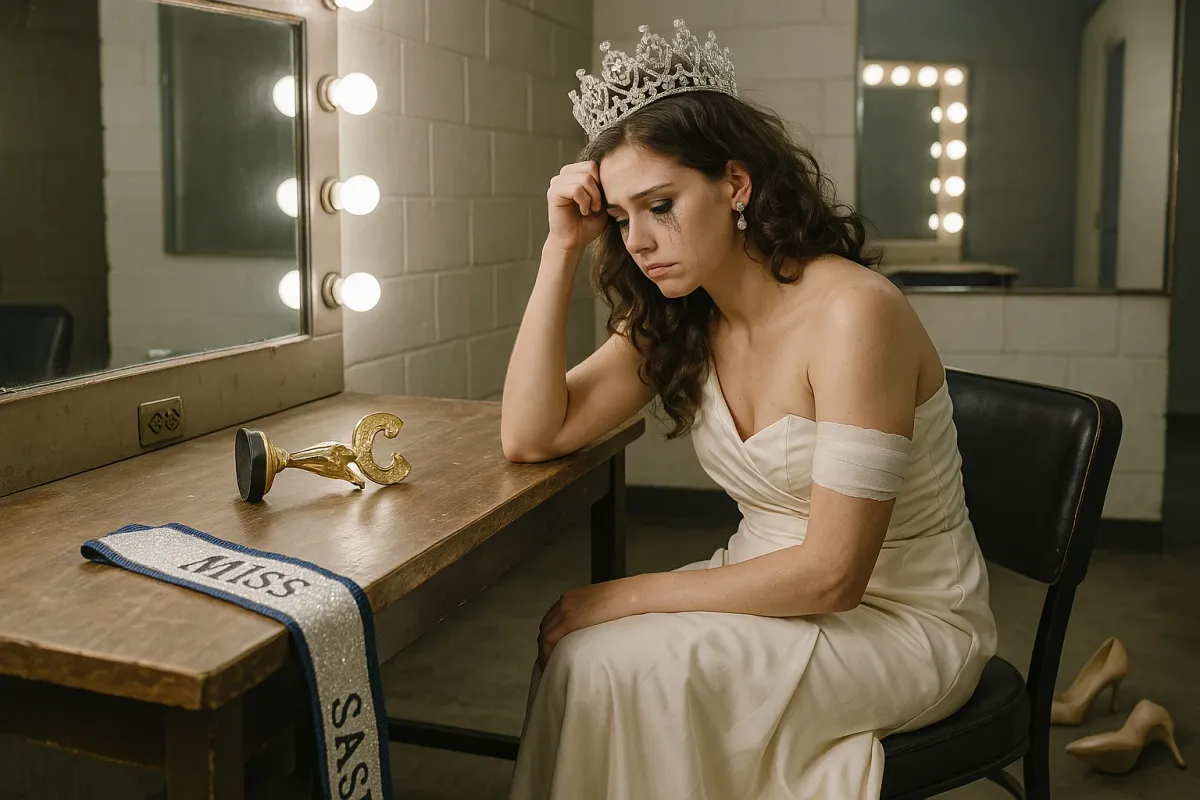
The viral courtroom images of the former beauty queen—once crowned and celebrated, now described as looking “nothing like her past”—have ignited a fresh conversation about the darker side of transformation culture. As the media fixates on how dramatically her appearance has changed, one theme keeps resurfacing: how far people will go to rewrite their faces, and how brutally the public reacts when beauty “fails” to meet expectation.
This week’s coverage of the “heartless” beauty queen’s court appearance is not a cosmetic dentistry story on the surface. Yet the narrative—obsession with before-and-after images, shock at an altered appearance, and the ruthless scrutiny of a woman’s face—perfectly mirrors the pressure many patients feel when they sit down to plan a new smile. In an era where crowns and veneers can be as coveted as literal crowns and sashes, the line between enhancement and erasure has never been thinner.
Below, we’re not dissecting her case, but the culture around it. Here are five refined, reality-grounded insights for anyone considering a high-end dental makeover in a world that still treats faces like public property.
1. The “New Face” Effect: Why Drastic Changes Feel So Disturbing On Camera
The shock commentary around the beauty queen “looking nothing like her past” is less about morality and more about psychology. Humans are wired to read faces in milliseconds, and we rely heavily on continuity—especially with familiar public figures. When a face appears suddenly altered (weight changes, stress, aging, or aesthetic work), it can trigger a visceral reaction: “What happened to her?”
Cosmetic dentistry can create the same effect when it is too aggressive or not harmonized with the rest of the face. Overly white, overly uniform veneers can give a “recast” feeling, as if the person has been replaced by a glossier version of themselves. Luxury smile design now leans away from this. Top-tier cosmetic dentists are designing “incremental transformations”—adjusting shade, shape, and symmetry in ways that feel elevated but believable. The goal is not that people say, “You look different,” but rather, “You look rested, expensive, and somehow… incredible.”
If the backlash to the beauty queen’s updated look proves anything, it is this: in the court of public opinion, radical reinvention is always on trial. A sophisticated smile makeover aims to protect you from that shock factor by preserving your recognizability.
2. From Pageant Perfection To Courtroom Reality: Beauty Standards Are Changing—Your Smile Plan Should Too
Pageant culture has long glorified a hyper-polished, almost plastic ideal: big hair, bright teeth, immaculate makeup. The recent courtroom images—stripped of lights, filters, and red carpets—expose a stark contrast between performance beauty and everyday reality. Under harsh lenses and zero glamour, every filler, whitening session, or veneer decision reads differently.
Modern cosmetic dentistry is quietly pivoting away from the pageant-perfect smile and toward something more editorial: think “French luxury campaign” rather than “talent show finale.” This means slightly softened shapes, a more nuanced shade of white (with warmth, not chalk), and an acceptance of tiny, artfully preserved imperfections that keep a smile human.
When you plan your makeover, ask your dentist a question almost no one thinks to ask: “How will this smile look in unfiltered daylight, under fluorescent office lights, and in three years?” Elite clinicians now design with “real life conditions” in mind—ceramics that age gracefully, gum lines that won’t betray the work, and proportions that still feel elegant when the camera isn’t kind.
3. The Ethics Of Reinvention: Why Your Smile Shouldn’t Be A Mask
The media fascination with this case has an uncomfortable subtext: people seem almost eager to interpret her changed face as proof of inner corruption—“Look at her; she’s not the same person.” That’s dangerous territory. Faces age. Stress carves into us. Illness, medication, trauma, or simply life can reorder bone, skin, and teeth. None of that makes someone more or less moral.
In the world of cosmetic dentistry, the same ethical question appears in softer form: are we helping you feel more like yourself, or helping you hide? High-end practitioners are increasingly acting as gatekeepers, declining to perform treatment plans that would obliterate identity—like shaving down healthy teeth for a reality-TV smile that bears no resemblance to the patient’s natural features.
An ethical smile makeover enhances personality rather than erasing it. Your laugh lines, lip shape, and facial symmetry should guide the design. If your proposed result could realistically be copy-pasted onto ten other people, it’s not luxury—it’s mass production. Ask your dentist how your new smile will preserve your uniqueness. Their answer will tell you a great deal about their values.
4. Viral Scrutiny Is Real: Design Your Smile For High-Definition, Not Just High Drama
The commentary swirling around the beauty queen’s court appearance proves a simple truth: we now consume faces like content. Screens magnify everything—lip dryness, enamel translucency, gum inflammation, the way teeth catch (or fail to catch) the light. While most of us will never be trending on X, we still live in a high-definition era: Zoom meetings, 4K phones, deeply unforgiving front-facing cameras.
Sophisticated cosmetic dentistry acknowledges this and designs with the lens in mind. That doesn’t mean creating theatrically bright veneers. It means:
- Using layered ceramics that mimic the way natural enamel refracts and reflects light on camera.
- Contouring teeth and gum lines so shadows fall elegantly, not harshly, in photographs.
- Balancing symmetry with micro-asymmetries so the smile is flattering from multiple angles, not only the straight-on “after” shot.
The irony of today’s case coverage is that the same public that demands “flawless” also delights in dissecting flaws. The most intelligent protection is a smile that looks impeccable in motion—speaking, laughing, and expressing—not only in a single dramatic still.
5. From Crisis To Curation: Why The Most Luxurious Smile Makeovers Take Their Time
One quiet thread in the beauty queen story is stress: legal battles, public judgment, intense media exposure. Chronic stress is notorious for manifesting in the mouth—clenching, grinding, enamel fractures, gum inflammation, even changes in facial muscle tone. It’s entirely plausible for someone under sustained pressure to emerge looking radically different without a single treatment.
Many patients, facing their own version of crisis (divorce, career pivot, health scare), rush toward a makeover as emotional armor. But premium cosmetic dentistry is moving resolutely in the opposite direction: slower, more curated, more medically anchored. The best clinicians now:
- Begin with comprehensive health diagnostics (jaw joints, bite dynamics, airway, gum health) before any aesthetic design.
- Use temporary mock-ups and trial smiles so you can live with the proposed look before committing to final ceramics.
- Stage treatment over months rather than days to refine proportions, phonetics, and comfort.
The result is a smile that doesn’t feel like a sudden mask thrown over chaos, but a considered, enduring asset that still feels right five, ten, fifteen years from now. In a world eager to pronounce judgment on “what she’s done to her face,” thoughtful pacing is a quiet act of self-respect.
Conclusion
The courtroom images of a once-celebrated beauty queen—now scrutinized for looking “nothing like her past”—are a cautionary mirror for all of us navigating a culture obsessed with transformation. Faces change, sometimes by choice, sometimes by force of circumstance. What we can control is how intentionally, how ethically, and how sustainably we pursue our own reinvention.
A truly luxurious smile makeover doesn’t chase a viral “after.” It protects your recognizability, aligns with your health, withstands harsh lighting and harsher opinions, and, above all, allows you to inhabit your own face with quiet confidence. In an era where appearance is evidence and images are weaponized, the most elegant smile is not the loudest—it’s the one that still looks unmistakably, undeniably like you.
Key Takeaway
The most important thing to remember from this article is that this information can change how you think about Cosmetic Dentistry.