If a single misplaced space can ruin a luxury logo, imagine what one misaligned tooth can do to an otherwise exquisite face. As design lovers share “real estate listings from hell” and hilariously botched typography online, one lesson keeps surfacing: details are everything. A trending Bored Panda feature highlighting how poor spacing can completely change the meaning of text is going viral right now—and it’s the perfect metaphor for modern cosmetic dentistry.
Your smile is, quite literally, the typography of your face. Tooth shape, spacing, alignment, and color work together like fonts, kerning, and line height in a high‑end brand identity. When just one of those elements is off, the entire “design” feels cheap, chaotic, or simply not you. Today’s most sought‑after dental procedures—porcelain veneers, minimal‑prep bonding, clear aligners, and laser gum contouring—are no longer just about “fixing teeth.” They’re about design precision at the millimeter level.
Below are five refined insights, inspired by this design‑gone‑wrong moment online, that discerning patients should know before investing in a serious smile makeover.
1. Spacing Is The New Status Symbol
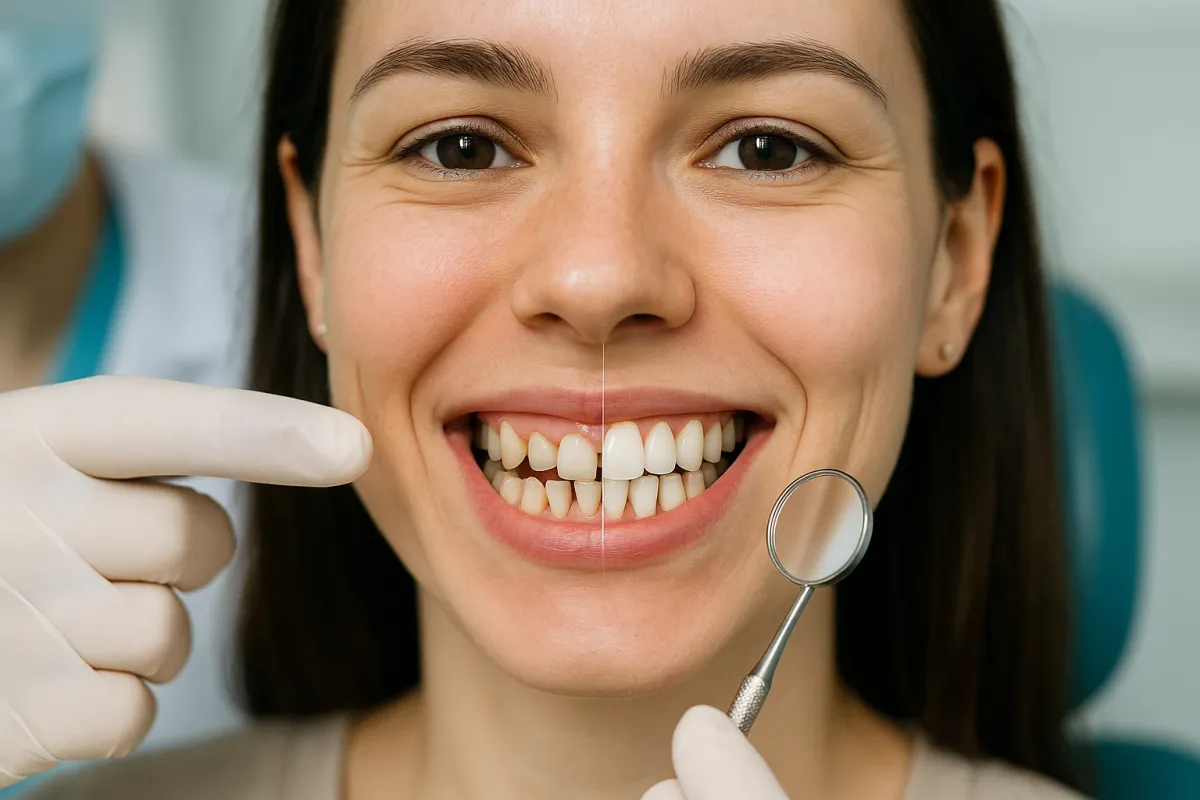
The viral “bad spacing” examples in graphic design prove how a small gap can completely alter perception. The same is true for teeth. Overly tight contacts can make a smile look crowded and tense; overly wide spaces can read as unfinished or childish. In luxury cosmetic dentistry, diastemas (gaps) are no longer automatically “fixed”—they are curated. Think of the subtle, deliberate space in fashion models’ smiles versus the uniform, hyper‑compressed look of older veneer trends.
Elite cosmetic dentists now talk in tenths of a millimeter when planning interdental spacing. Digital smile design software lets them adjust gaps on screen and test how light, shadow, and lip movement play with every micro‑space. The goal is not a wall of perfectly touching porcelain, but a rhythm of space that flatters your facial structure and expresses your personality—elegant, playful, dramatic, or understated. Before accepting any treatment plan, ask your dentist not just how many veneers you “need,” but how they are intentionally managing spacing and proportion along your entire smile line.
2. Symmetry Matters—But So Does Character
Those meme‑worthy design fails online are rarely just about spacing; they’re about broken symmetry and awkward balance. In smile design, strict mathematical symmetry used to be the gold standard. Today, the benchmark has evolved into “harmonious asymmetry”—mirroring nature rather than manufacturing perfection. If both front teeth are identical, both can look fake. If they are carefully non‑identical—slight variations in width, line angle, or translucency—the result can look naturally expensive.
Contemporary procedures like layered porcelain veneers and additive bonding allow a master ceramist to sculpt this nuance tooth by tooth. They’ll refine incisal edges (the biting ends of front teeth) like a couture dressmaker works a hemline—clean, but not sterile. When reviewing mock‑ups or provisionals, don’t just ask, “Does this look straight?” Ask, “Does this look alive?” True luxury dentistry preserves—and even enhances—the small, human irregularities that mass‑market smile templates often erase.
3. Color Is No Longer About “Whiter” – It’s About Tone, Depth, And Context
In the same way that luxury branding has moved away from flat, neon colors toward nuanced palettes, high‑end smiles have shifted from “TV white” to bespoke shade design. We see this everywhere right now—from TikTok discourse on “too white” veneers to celebrity makeovers that favor dimensional, age‑appropriate brightness over blinding opacity. Just as the Bored Panda design examples show that a single wrong color choice can cheapen an entire layout, a too‑white, too‑opaque veneer can instantly telegraph “dental work” instead of “effortless beauty.”
Modern ceramic systems offer translucent, multi‑layered materials that mimic how light moves through natural enamel and dentin. A sophisticated dentist will evaluate your skin tone, lip color, sclera (the whites of your eyes), and even your typical makeup choices before deciding on shade. The refinement is in the undertone: cool versus warm, gray versus cream, high‑value versus slightly softened. If your consultation doesn’t include a discussion of color temperature and translucency—not just “Shade BL1 or BL2?”—you’re not having a truly premium experience.
4. Gum Contours: The “Negative Space” That Defines A Luxe Smile
Designers obsess over negative space—the area around letters and images—because it shapes how we perceive the entire composition. In dentistry, your gums are that negative space. The recent online fascination with disastrous real estate layouts and cramped typography underscores a truth many patients overlook: architecture matters. You can’t have a refined interior if the walls are crooked.
Procedures like laser gum contouring, crown lengthening, and even minimally invasive surgical reshaping quietly redefine this “frame” around your teeth. A gummy smile can be softened, uneven gumlines can be balanced, and short teeth can be visually elongated without necessarily resorting to aggressive crown work. In comprehensive makeovers, elite clinicians now plan gingival architecture first, then layer orthodontics, veneers, and whitening on top—much like an architect defines the structure before an interior designer chooses fabrics. If your smile plan jumps straight to veneers without a serious look at your gum line symmetry, you’re seeing cosmetics, not true design.
5. Digital Mock‑Ups Are Essential—But The Final Result Must Be Hand‑Finished
The viral typography disasters circulating now often stem from over‑reliance on automated tools without human quality control. Cosmetic dentistry faces a similar risk as digital workflows and AI‑assisted design become more accessible. In skilled hands, digital smile design is transformative. Your dentist can overlay proposed veneer shapes on high‑resolution photos and video, simulate orthodontic movements, and share 3D renderings so you can “try on” your new smile before a single tooth is touched.
But the most elevated results still depend on meticulous human refinement—especially at the very end. A ceramist hand‑polishing the edge of a veneer, a dentist adjusting bite contacts by feel, or reshaping a single line angle can be the difference between “good” and “this looks like I was born with it.” When evaluating a practice, ask who is actually fabricating your restorations (in‑house master ceramist? boutique lab?) and whether you will have a “test‑drive” phase with provisionals that can be sculpted and refined before the final porcelain is made.
Conclusion
The internet’s delight in terrible spacing and chaotic design isn’t just entertainment; it’s a reminder that visual harmony is fragile—and unmistakable when achieved. Your smile is one of the most visible design decisions you’ll ever make. Like a beautifully typeset book or a flawlessly staged home, a premium smile makeover is defined not by a single dramatic procedure, but by the disciplined control of spacing, symmetry, color, negative space, and finish.
As you consider veneers, clear aligners, gum contouring, or full‑mouth rehabilitation in this era of hyper‑visual online critique, approach your smile the way a creative director approaches a luxury brand: with intention, restraint, and an uncompromising eye for detail. The result is not just straight, white teeth—but a quietly powerful, camera‑ready smile that feels inevitable on your face, rather than added afterward.
Key Takeaway
The most important thing to remember from this article is that this information can change how you think about Dental Procedures.