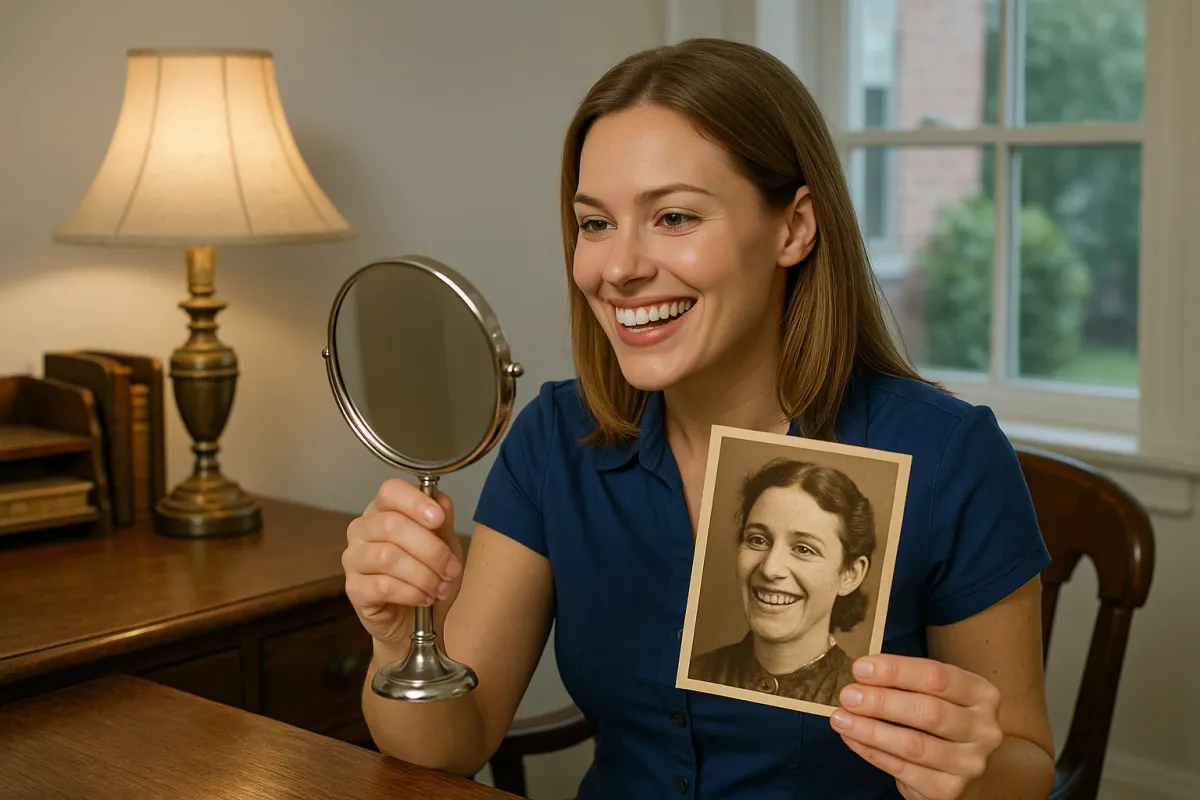
There is a quiet, haunting elegance in the smiles captured in 19th‑ and early 20th‑century photographs. As Hugh Nini and Neal Treadwell’s acclaimed collection of vintage male couple portraits demonstrates, a single, softly upturned lip or a barely parted smile can hold decades of story, emotion, and identity. In an age before filters, injectables, and digital touch‑ups, those smiles—often subtle, sometimes imperfect—were entirely, exquisitely human.
Today, as cosmetic dentistry reaches new heights of precision and artistry, those archival images are unexpectedly shaping modern “luxury veneer” conversations. Patients are increasingly arriving at consultations with not just celebrity Instagram feeds, but also screenshots from historical photo archives, viral Reddit threads of restored 1800s portraits, and even images from Nini and Treadwell’s book. The request is almost always the same: “I want my teeth to look timeless, not trendy.”
Below are five exclusive insights for anyone considering a high‑end smile makeover in this moment—where 1850s elegance quietly meets 2025 technology.
1. The New Gold Standard: “Photographic Authenticity,” Not Perfection
The viral resurgence of historical photography—from Nini and Treadwell’s 2,700‑image archive of male couples to trending Reddit posts of 1700s figures brought to life in early photographs—has subtly recalibrated our beauty expectations. These images remind us how compelling an unretouched face can be. Teeth are present, but rarely the focal point; they support the story rather than dominating it.
In premium cosmetic dentistry today, that idea is becoming the north star: authenticity over artificiality. Rather than the ultra‑bright, uniform “piano key” aesthetic of the early veneer era, discerning patients are prioritizing smiles that would still look credible in a sepia‑toned portrait a century from now. That means nuanced shade selection instead of default “Hollywood white,” micro‑asymmetries that mimic real enamel, and contouring that respects your facial architecture instead of forcing a one‑size‑fits‑all grin.
If you’re planning veneers or a full smile redesign, ask your dentist a simple but powerful question: “Would this smile still look believable in a black‑and‑white portrait?” If the answer is yes, you’re closer to a result that will age with the quiet confidence of those archival photographs—elegant, not dated.
2. Why Ultra‑HD Cameras Are Quietly Rewriting Veneer Design
The couples in Nini and Treadwell’s collection were photographed on glass plates and early film—soft focus, long exposures, and low resolution hid a multitude of dental imperfections. In 2025, the opposite is true. Ultra‑HD smartphone cameras, 4K video calls, and social media filters magnify every line, reflection, and contour of your teeth, often more harshly than any mirror ever could.
Luxury cosmetic dentistry has responded by embracing technologies that match, and surpass, the scrutiny of our devices. High‑resolution intraoral scanners capture every micro‑texture of your teeth. Digital smile design software simulates how light will bounce off porcelain in real life and on camera. Lab technicians now craft veneers with layered translucency and subtle surface ridges—tiny refractive details that keep your smile from looking “flat” when lit by LED ring lights or studio flashes.
If you are investing in top‑tier veneers, insist on a workflow that includes digital photography and video analysis as part of the planning. A sophisticated practice will film you speaking, laughing, and turning your head side‑to‑side, then design your restorations to perform not just in a dental chair, but in every candid image and high‑resolution frame of your daily life. The result: a smile that looks as natural in a spontaneous snapshot as those couples captured decades ago—only sharper, clearer, and flawlessly customized.
3. The Return of Understated Smiles: Power in the “Almost Closed” Look
One striking detail in the historical male couple photographs now circulating widely online: many of the most intimate images feature soft, nearly closed‑mouth smiles. The emotional intensity comes from the eyes, posture, and proximity—not from a wide, tooth‑dominant grin. This aesthetic is quietly influencing how sophisticated patients think about their smiles today.
Modern cosmetic dentistry is no longer only about the “big reveal” with every laugh. A well‑designed premium smile has to be beautiful in three positions: lips closed at rest, a conversational half‑smile, and a full, open laugh. This is where proportion and tooth length become crucial. Overly long or aggressively white veneers can make a closed‑mouth expression seem tense and artificial, especially in photos where the lips just barely part.
During your consultation, ask your dentist to evaluate—and photograph—your smile at rest, not just at maximum grin. A refined clinician will consider:
- How much incisor edge peeks through when your lips are at rest
- Whether your front teeth gently support the upper lip or push it outward
- How your smile line harmonizes with subtle expressions, not just staged ones
The goal is a smile that looks composed and quietly confident when you’re barely smiling—much like those historic portraits—yet luminous and effortless when you do choose to laugh out loud.
4. Heritage, Identity, and the Subtle Art of Not Erasing Yourself
Nini and Treadwell’s book is powerful not just because of its aesthetics, but because it restores something history often tried to erase: same‑sex love lived, documented, and preserved in intimate portraits. Many of the couples share similar features, clothing, or grooming styles, yet each retains a distinct identity. Their smiles are not interchangeable.
A similar conversation is happening in cosmetic dentistry. Patients—especially those attentive to their cultural, ethnic, or familial heritage—are pushing back against generic, globalized smiles. They do not want veneers that erase the small idiosyncrasies linking them to parents, grandparents, or the faces in their own family photo albums. Instead, they’re seeking upgrades that honor their roots: refined, not replaced.
A truly premium cosmetic dentist understands how to:
- Preserve a characteristic gap—or close it partially, not completely
- Maintain the natural curvature or tilt that gives your smile personality
- Match tooth form and shade to your skin tone, lip volume, and facial features
- Use high‑end ceramics to mimic the density and color gradient of your natural enamel
When interviewing clinicians, listen to how they talk about “correction.” Do they speak primarily in terms of what’s “wrong,” or do they describe what’s worth preserving? A luxury makeover should feel like a restoration of your best, truest self—much like those rediscovered portraits bring hidden histories into the light, without rewriting who those people were.
5. Timeless Investment: Planning a Smile That Will Age Like a Fine Photograph
The renewed fascination with antique photographs—from curated volumes like Nini and Treadwell’s to viral online archives of 18th‑ and 19th‑century faces—reminds us of one simple truth: images outlive fashions. A rushed, trend‑driven smile may look current this year but conspicuously artificial decades later, especially as your face, lips, and skin naturally evolve around it.
If you’re contemplating a high‑end smile makeover in 2025, think like a curator, not just a consumer:
- Plan for future facial changes. Work with a dentist who understands how aging affects lip support, gum levels, and jaw posture, and who chooses veneer shapes and thicknesses that will remain harmonious as you age.
- Choose shades with history in mind. Hyper‑bleached smiles can look jarringly synthetic in softer lighting and in monochrome photography. A slightly warmer, layered white often photographs more luxuriously and ages more gracefully.
- Prioritize structural health under the beauty. Just as an archival photograph survives because the paper and chemicals were well chosen, veneers last when they’re built on a foundation of healthy gums, stable bite, and minimally reduced tooth structure.
- Insist on previewing the future. High‑end practices will offer digital mock‑ups and temporary “trial smiles” so you can live with the proposed design before committing. This is your equivalent of a contact sheet: a pre‑edit before the final image is printed forever.
The most sophisticated smile makeovers are less like cosmetic edits and more like a considered body of work—crafted now, but meant to look effortless and honest in every photograph taken 10, 20, or 30 years from today.
Conclusion
As the world rediscovers forgotten faces through collections like Hugh Nini and Neal Treadwell’s vintage male couple photographs, we’re reminded that the most memorable smiles are not the loudest or the whitest—they are the ones that feel real, even across centuries. In the era of ultra‑HD cameras, AI filters, and social media virality, the true luxury is a smile that could belong in both a 1900s album and a 2025 portrait: refined, dignified, unmistakably yours.
When you plan your cosmetic dental journey, think beyond today’s trends. Ask for a smile that would look at home in an old photograph, that withstands modern scrutiny, and that still tells your story when someone, decades from now, happens to find your image in an archive and quietly thinks, “They were beautiful—exactly as they were.”
Key Takeaway
The most important thing to remember from this article is that this information can change how you think about Cosmetic Dentistry.