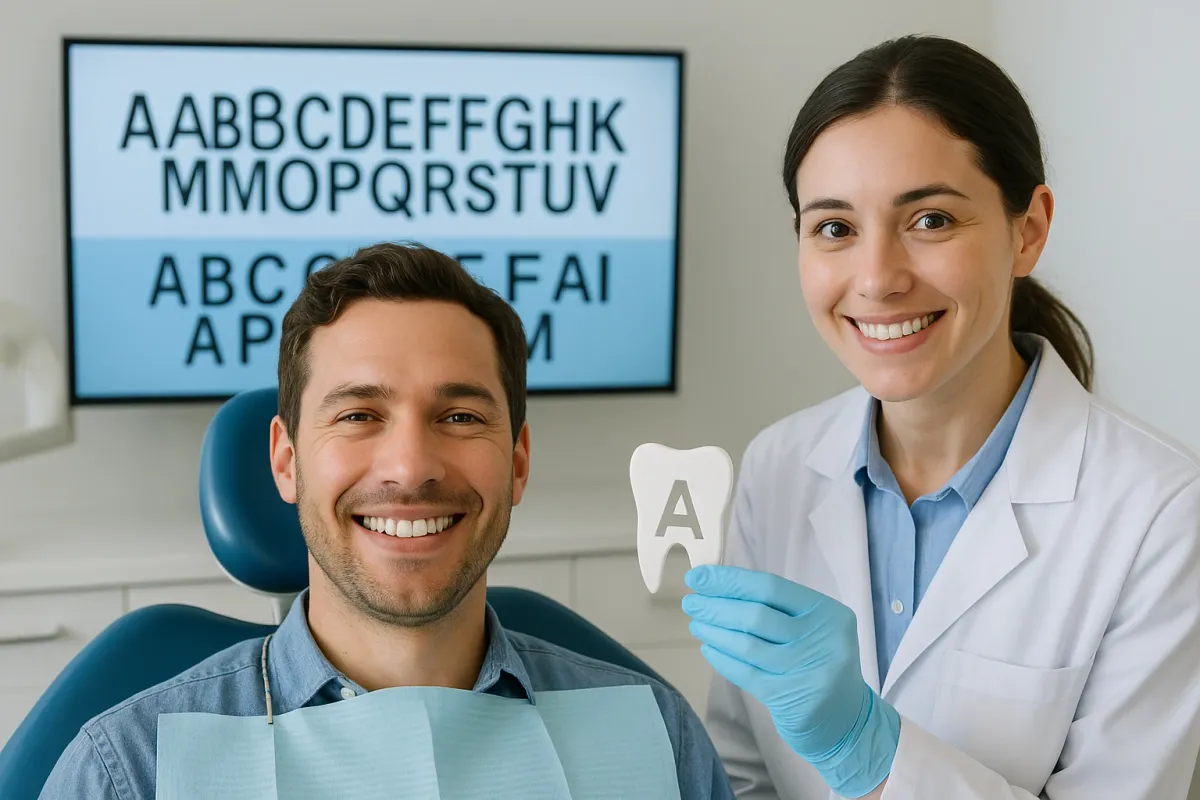
Few things travel the internet faster than a design disaster. One of today’s trending stories spotlights a viral collection of graphic design fails where simple spacing errors completely altered the meaning of everyday signs and logos. The piece, originally focused on word spacing and kerning, has quietly become a masterclass in how one tiny misalignment can sabotage an entire message.
For anyone considering a smile makeover, that story is more relevant than it looks. Typography and teeth share the same quiet secret: spacing is everything. Just as a misplaced letter can turn an elegant brand into an unintentional joke, a single poorly positioned tooth can make even the whitest smile feel “off” or unfinished.
Below, we translate that viral design lesson into five refined, under‑the‑radar insights for people planning high‑end cosmetic dentistry right now.
1. Symmetry Is Overrated—Refined Balance Is What Looks Truly Luxurious
In the viral design examples, some of the funniest mistakes come from forcing everything to be “even” rather than visually balanced. The same principle applies to your smile: strict mathematical symmetry is not the goal—natural harmony is.
Luxury smile design today, especially in top cosmetic practices in New York, London, Dubai, and Los Angeles, leans toward “perfectly imperfect” aesthetics. Dentists use facially driven treatment planning software to align your teeth to your midline, lip line, and smile arc, not to a ruler. Micro‑asymmetries—like a millimeter difference between lateral incisors—often look more youthful and believable than cloned mirror images.
If your dentist is aiming for rigid, identical shapes across your front teeth, ask to see digital smile designs that follow proportional rules instead—such as the recurring width ratios from central incisor to canine. The most elevated smiles today echo the quiet sophistication of good editorial design: structured, but never sterile.
2. Tiny Gaps, Big Signals: Spacing Between Teeth Acts Like Kerning For Your Face
The trending typography story shows how a fraction of a millimeter can turn “THERAPIST” into “THE RAPIST.” In dentistry, inter‑tooth spacing plays the same role as kerning between letters—tiny gaps broadcast big messages.
High‑end smile makeovers now obsess over:
- Black triangles at the gumline that can instantly age a smile
- Overly tight contacts that create a flat, “picket fence” effect
- Lateral incisor spacing that can make veneers look like clip‑ons rather than part of you
With modern aligner systems and minimally invasive bonding, elite cosmetic dentists can refine these micro‑spaces instead of simply masking them with bulky porcelain. This is one of the biggest shifts happening right now: the focus has moved from “straight and white” to dimensional and intentional—much like a luxury logo where every gap is considered, not just filled.
When you review mock‑ups (wax‑ups or digital previews), don’t just look at color. Zoom in on the negative space between the teeth. That “air” is where your smile quietly announces whether it’s custom‑crafted or just corrected.
3. Your Gum Line Is the “Margin” Of Your Smile—And Premium Work Never Ignores the Margins
In the viral design roundup, poor margins—text jammed too close to an edge, imagery cut off abruptly—immediately made pieces feel amateur. Your gums function exactly the same way for your teeth.
Today’s top cosmetic practices treat the gingival architecture—the scalloped line of your gums—as seriously as they treat porcelain. Techniques like laser gum contouring, crown lengthening, and even lip repositioning are increasingly integrated into comprehensive makeovers. This is especially timely now, as more patients come in with “DIY veneer” regrets or generic overseas crowns that ignored the gums altogether, creating swollen, uneven, or inflamed margins.
If your smile plan involves veneers, implants, or crowns, insist on a conversation about:
- Gum symmetry over the front six teeth
- The height of gum peaks (papillae) between teeth
- How your gums look when you deliver a full, unguarded laugh
Your teeth can be flawless, but if the margins are chaotic, the overall effect will never feel truly high‑end—just as no luxury magazine would tolerate text colliding with the edge of the page.
4. Texture and Gloss Are the “Font Finish” Of Your Teeth
In the trending article, some of the worst designs used the right letters but the wrong finish—cheap gradients, harsh shadows, or awkward bevels that felt dated rather than polished. Cosmetic dentistry has its own version of this problem: surface texture and gloss.
Premium veneers and bonded restorations now mimic:
- Micro‑texture: subtle vertical striations and natural enamel irregularities
- Translucency at the edges, rather than opaque “bathroom tile” white
- Layered chroma: a warmer core with cooler surface tones for depth
High‑gloss, ultra‑flat, hyper‑white veneers are the dental equivalent of a clumsy WordArt logo—loud, obvious, and wildly 2010. The most sought‑after smile designers in 2025 are deliberately dialing things back, creating a finish that catches light like natural enamel instead of tile.
During your consultation, ask to feel sample veneers with your fingertip and see them under natural daylight, not just operatory lighting. You’re looking for that subtle interplay of light and texture that luxury jewelry has: complex, not merely shiny.
5. Context Is King: Your Smile Must Fit The “Brand” Of Your Face And Lifestyle
One recurring theme in the viral spacing article is context failure—a font that fights the logo, a word break that contradicts the message, a cheerful design beside a serious warning. The elements don’t belong together. Many disappointing smile makeovers suffer the same fate: the teeth are objectively attractive, but they don’t belong to the person wearing them.
Contemporary, high‑end dentistry takes a brand‑level approach to your face:
- Your profession and public persona (boardroom, camera, clinic, or studio)
- Your natural lip mobility and typical expressions
- The textures and tones of your skin, hair, and eyes
- Your personal style—minimalist, bold, classic, or avant‑garde
From there, your dentist calibrates tooth shape, color depth, and incisal edge length the way a luxury brand would refine its typography for different touchpoints. A tech founder seeking subtle authority may need something completely different from a performer who lives under stage lighting, even if they start from the same clinical situation.
In 2025, the most successful smile makeovers are not aiming for “perfect teeth.” They’re building a cohesive visual identity—where your smile supports your life, rather than competing with it.
Conclusion
Today’s viral fascination with spacing and kerning isn’t just a design industry in‑joke; it’s a mirror held up to how we perceive form, balance, and intention. Every misaligned letter in those trending images is a reminder that details are not decorative—they are decisive.
Your smile is read in exactly the same way. Millimeters matter. Margins matter. Texture, context, and negative space matter. In an era where cosmetic dentistry is more accessible than ever, true luxury is no longer about how many teeth you treat, but how precisely and thoughtfully each one is positioned, shaped, and finished.
If you’re planning a smile makeover now, step beyond “white and straight” and start asking typography‑level questions. The difference between a nice result and a breathtaking one lives in the same place as those viral design fails: the space between what most people overlook—and what a discerning eye will never ignore.
Key Takeaway
The most important thing to remember from this article is that this information can change how you think about Oral Health.